 Follow Us on Google News
 Follow Us on Google Discover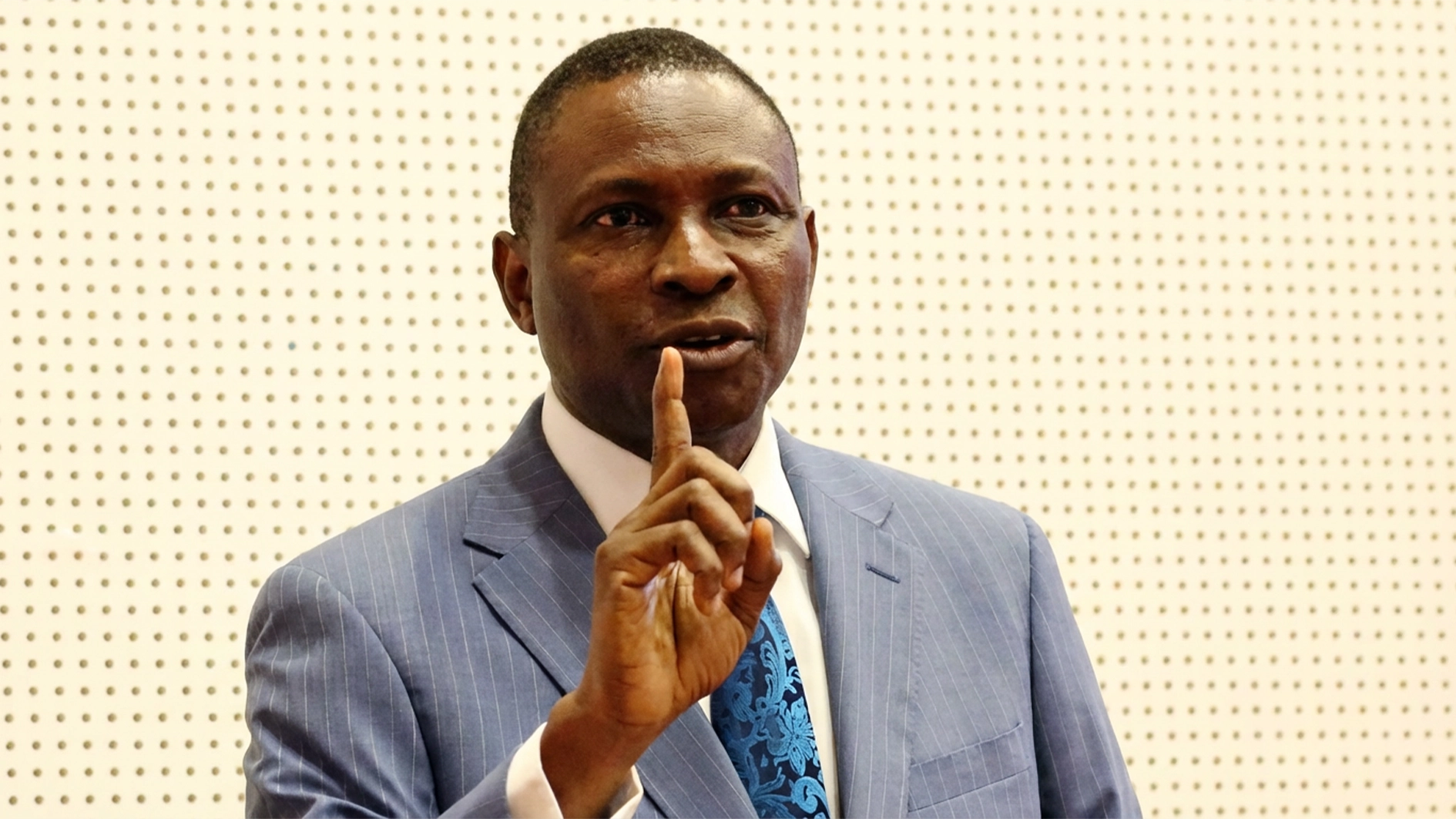
National Association of Nigerian Students (NANS) has faulted a statement credited to the Chairman of the Economic and Financial Crimes Commission (EFCC), Ola Olukoyede, that the majority of Nigerian university students are involved in cybercrime, popularly known as “yahoo yahoo.”
Also, former Labour Party (LP) presidential candidate Peter Obi described the statement as deeply troubling.

Meanwhile, public affairs commentator, Mahdi Shehu, in a post shared on his official X handle yesterday, questioned how the EFCC arrived at the figure and called for transparency.
The anti-crime czar had alleged that six out of every 10 Nigerian university students were involved in Internet fraud, adding that such reports must not be taken lightly.
In a statement made available to The Guardian in Ibadan, the Senate President of NANS, Usman Nagwaza, described the claim as “misleading, unfounded and unacceptable,” insisting that it does not reflect the reality of Nigerian students.
Nagwaza said the association, which he described as the apex body representing Nigerian students at home and in the Diaspora, was concerned about the implications of such remarks on the image and integrity of students across the country.
He argued that while the students’body remained firmly opposed to all forms of financial crimes, “it is inappropriate to generalise criminal behaviour” to a majority of the student population.
The NANS leader further criticised a growing perception that the EFCC’s enforcement efforts were disproportionately focused on cyber-related offences, while high-profile corruption cases involving Politically Exposed Persons (PEPs) appear to receive less visible attention.
He urged the anti-graft agency to refocus its operations in line with its statutory mandate and avoid actions or statements that could be interpreted as selective enforcement.
Nagwaza also called on the EFCC chairman to retract the statement in the interest of fairness and national cohesion, stressing that Nigerian students were largely law-abiding and committed to academic and professional development.
OBI stated yesterday that “if the assertion is accurate, it signals a far-reaching crisis that goes beyond criminality” to reflect a breakdown in the country’s value system.
Noting that Nigeria already has a relatively small higher education population, estimated at between 2 million and 2.5 million students, the African Democratic Congress (ADC) chieftain warned that the implications of the EFCC’s claim were severe.
The former governor of Anambra State questioned the societal influences shaping young Nigerians, asking: “What has brought us to this level? Who are the role models these students are looking up to? What values are they learning from society?”
SHEHU urged the anti-graft agency to make public the data behind the claim.
He called on NANS to challenge the claim “because it is damaging to their future and integrity, especially those who are innocent.”
Shehu also said that for a fair picture to emerge, the EFCC must publish details of corruption cases involving public officials.

