 Follow Us on Google News


 Follow Us on Google Discover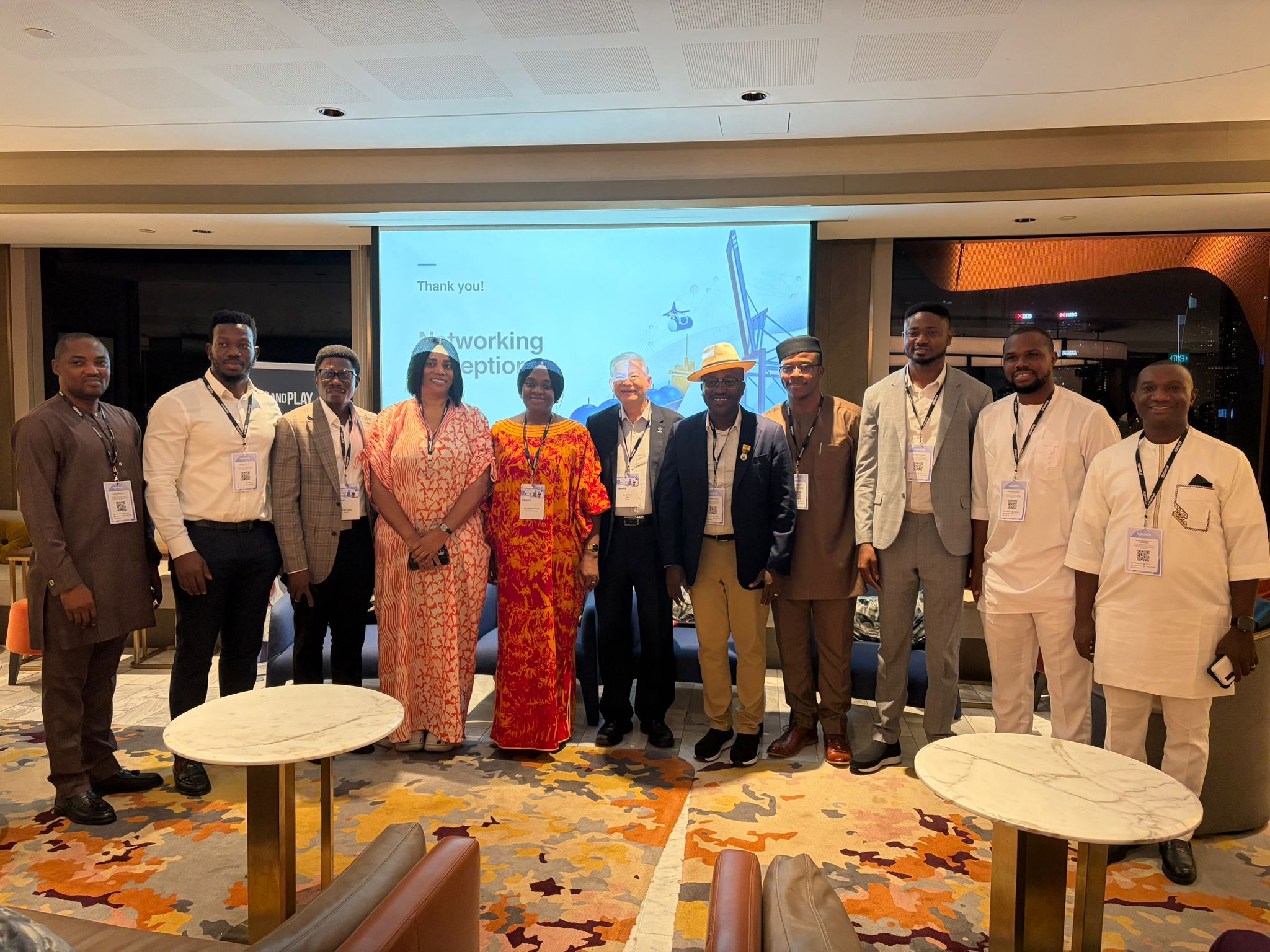
Nigeria has been urged to reposition itself from a peripheral player to a dominant force in the global maritime industry, as stakeholders intensify calls for greater investment in local capacity and innovation.
This charge was delivered by Eferebo I. Sylvanus, National Chairman of the Nigerian Institution of Marine Engineers and Naval Architects (NIMENA), during the Plug and Play x NIMENA Innovation Night held on the sidelines of Singapore Maritime Week.
Speaking before an audience of global maritime leaders, investors, and policymakers, Sylvanus stressed that Nigeria’s vast blue economy potential can only be realized through deliberate efforts to build technical independence.
He argued that economic sovereignty is closely tied to a nation’s ability to innovate internally rather than depend on foreign expertise for critical sectors.
“Technical sovereignty is the foundation of economic sovereignty. We cannot continue to build critical sectors on imported expertise alone,” he said.
Sylvanus further underscored the need for Nigeria to establish an indigenous maritime classification system, noting that local standards and vessel certification frameworks are essential to strengthening oversight and competitiveness.

To drive this transformation, he advocated the adoption of the Triple Helix model, which promotes collaboration among government, industry, and academia to foster innovation and sustainable development.
The event also drew participation from key figures including Boma Goodhead, Chairman of the House of Representatives Committee on Nigerian Content Development and Monitoring, who reaffirmed legislative backing for local content policies.
Goodhead stated that the National Assembly remains committed to creating policies that prioritize indigenous talent and resources in order to position the maritime sector as a key contributor to Nigeria’s economy.
Drawing comparisons with Singapore’s maritime success, Sylvanus highlighted the importance of consistent policies and the integration of academic research into industrial growth as critical factors behind the Asian nation’s dominance.
Other speakers, including John Ang and Hemant Naik, emphasized that innovation thrives in environments where collaboration is institutionalized and supported by clear regulatory frameworks.
The gathering, attended by Francisca K. Omayuli and Seng-Chuan Tan, also explored practical steps such as establishing maritime innovation hubs and fostering joint Nigeria-Singapore research initiatives.
In his contribution, Augustine Ada Elakpa stressed the need for applied research tailored to solving industry-specific challenges, noting that innovation must be practical, scalable, and locally relevant.
The event featured a showcase of emerging startups, with entrepreneurs pitching maritime technology solutions to a global pool of investors, highlighting Nigeria’s growing technical talent base.
Sylvanus maintained that while Nigeria’s maritime sector holds vast untapped potential, the priority must now shift toward structured execution driven by policy alignment, skilled manpower, and strategic partnerships.

