 Follow Us on Google News
 Follow Us on Google Discover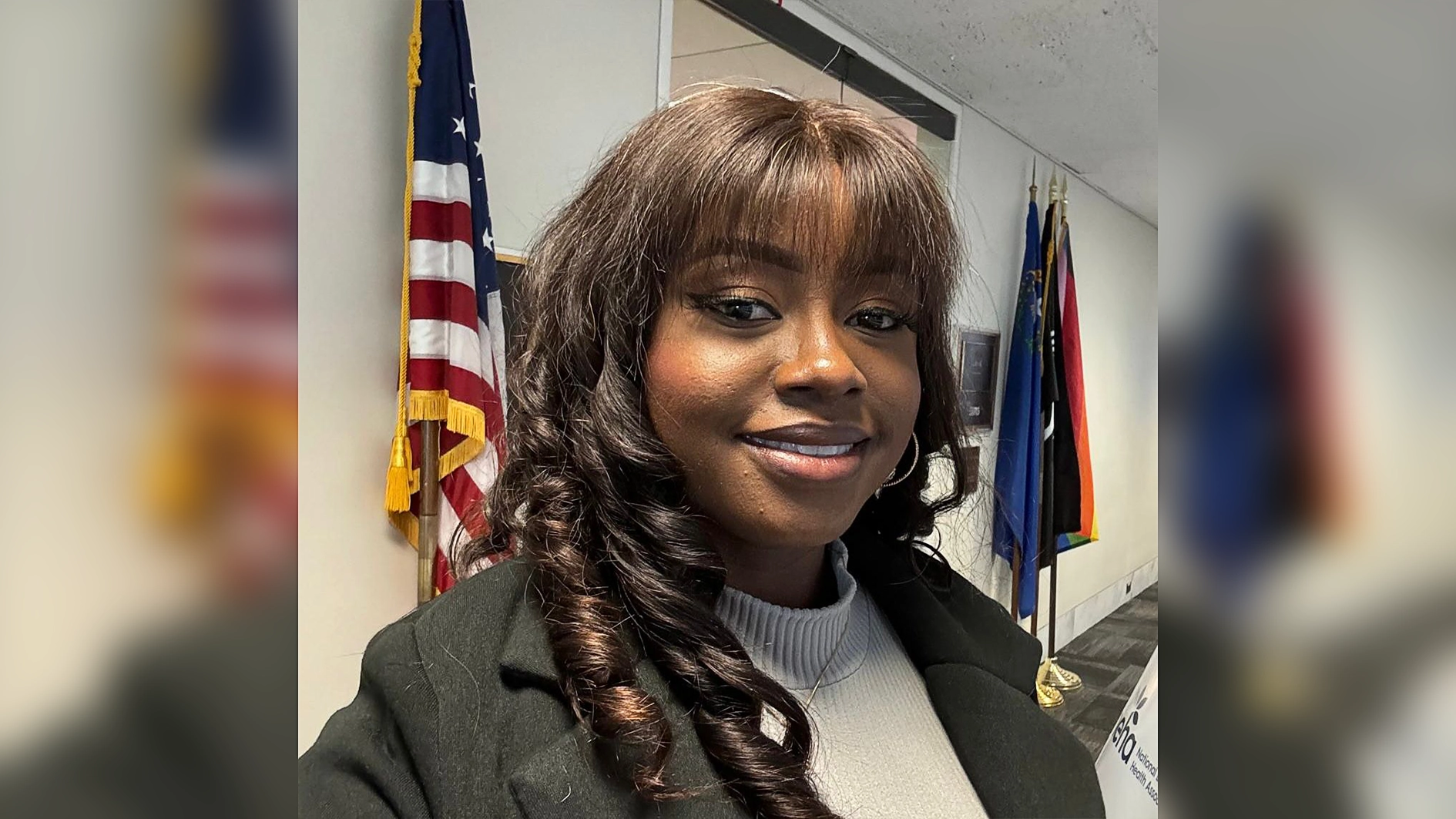
While Nigerian youths are daily departing their country in search of greener pastures, there remains a resolute cadre of young Nigerians who are building their own corners of excellence in the global knowledge economy and, while at it, inscribing their nation’s name in the annals of international science. In the world of analytical and environmental chemistry, one such young woman is Benin City-born Faith Osaretin Osabuohien, who is quietly but unmistakably distinguishing herself in the fields of green analytical science, pharmaceutical environmental chemistry, and sustainable materials research, with a trajectory that encompasses rigorous academic training, prolific peer-reviewed scholarship, and a scientific mission rooted in the environmental realities she witnessed growing up in southern Nigeria.
Currently a graduate researcher and Adjunct Faculty Instructor at the University of New Haven in Connecticut, United States, Osabuohien’s academic journey commenced at Ambrose Alli University, Ekpoma, Edo state where she pursued a Bachelor of Science degree in Industrial Chemistry and graduated with a distinction. Her commitment to environmental protection and scientific precision became evident from her undergraduate years, when she first encountered the connection between the chemistry of everyday materials and the health of the environments those materials inhabit.
“Growing up in Benin City, I saw things that disturbed me scientifically,” she told Saturday Guardian. “Pharmaceutical waste finding its way into water sources. Plastic packaging accumulates in communities. Chemicals that were supposed to heal people are becoming an ecological problem. I realised very early that analytical chemistry, the science of measuring what is in things, could be an instrument of environmental accountability. That realization has guided every research decision I have made since.”
That guiding conviction shaped her undergraduate career and followed her across the Atlantic. Before pursuing graduate studies, Osabuohien served as a Quality Control Chemist at Edo Pharmaceutical Limited, where she applied her analytical training to pharmaceutical manufacturing: testing raw materials, monitoring production standards, and developing the industrial discipline that distinguishes a scientist who understands not only how to conduct experiments but why precision in those experiments matters to the public. It was an instructive season, one that gave her a practitioner’s understanding of the pharmaceutical supply chain and the consequences of analytical failure at every point in it.
She then departed for the United States, enrolling in the Master of Science programme in Chemistry at the University of New Haven and once again, she did not simply arrive to study. She arrived to produce.
At the heart of Osabuohien’s graduate research is a set of questions that are simultaneously scientific and urgent: “how do pharmaceutical compounds behave when they enter the environment? How can analytical chemistry be made greener, more efficient, and more defensible? What do microplastics from drug packaging release into biological systems? And how can the tools of computational science accelerate the discovery of new medicines for diseases that continue to claim lives?” These are not narrow questions. They are the kinds of questions whose answers matter to regulators, to pharmaceutical manufacturers, to public health authorities, and to the communities that live downstream of industrial activity.

Her investigations into green chromatographic method optimization employed chemometric modelling and multivariate statistical approaches to develop analytical methods that reduce chemical waste, shorten analysis time, and improve the reproducibility of pharmaceutical quality testing, with direct applicability to quality control laboratories across the pharmaceutical industry. Her research on advanced oxidation processes for the removal of pharmaceutical residues from wastewater addressed one of the most pressing environmental crises of the present moment: the contamination of water sources with antibiotic and hormonal compounds that escape conventional treatment systems and contribute to antimicrobial resistance, a global health emergency that the World Health Organisation has described as one of the greatest threats facing humanity.
“When pharmaceutical compounds enter wastewater systems and are not adequately removed, they do not disappear,” Osabuohien explained patiently. “They persist. They interact with ecosystems. They enter drinking water at concentrations that treatment plants were not designed to handle. The connection between a pharmaceutical laboratory and a community’s water supply is closer than most people realise. My research is an attempt to close that gap analytically: to develop the methods that detect these compounds, and the treatment approaches that remove them.”
She has extended this environmental analysis to pharmaceutical packaging itself, investigating the quantification of microplastics released from primary drug packaging materials, a field of research that sits at the intersection of materials science, environmental chemistry, and pharmaceutical regulation, and one in which her published findings have drawn the attention of researchers across multiple disciplines.
Expanding her range further, Osabuohien has applied computational chemistry tools to the design of novel drug candidates targeting cancer, work that represents the convergence of her analytical chemistry training with the computational methods increasingly transforming pharmaceutical discovery. Her molecular modelling investigations explore the binding affinity and pharmacokinetic properties of candidate compounds, contributing to a field where the gap between laboratory synthesis and clinical candidate identification can be narrowed by the power of predictive computation.
Within two years of her graduate programme, Osabuohien had accomplished what eludes many researchers over considerably longer careers. By December 2023, she had authored nine peer-reviewed publications in respected international journals, with her work accumulating citations from researchers across four continents. She had reviewed several manuscripts for peer-reviewed journals spanning chemistry, environmental science, materials science, pharmaceutical science, and computational drug design, a volume of scientific service that reflects the consistent trust of the international publishing community in her expert judgment. She had been appointed to the editorial boards of three international scientific journals. She had received formal peer review recognition awards from scientific publications that evaluate the quality and impact of referee contributions.
What sets Osabuohien apart is not merely the volume of this output, though it is striking, but its purposeful coherence. Every strand of her research connects to a central commitment: the application of rigorous analytical chemistry to the protection of human health and the natural environment. There is no scatter in her scientific programme. There is, instead, a deeply integrated vision of what chemistry can and should do in the world.
“I have never thought of my research as separate threads,” she says. “Green methods, pharmaceutical effluents, microplastics, computational drug design: these all connect. They are all asking, in different ways, whether we can make the science of medicine safer for the people it is supposed to serve and for the planet that sustains them. That is the question I will spend my career answering.”
Her scientific influence has not been confined to the laboratory or the journal. In March 2024, she represented the National Environmental Health Association as an Advocate Speaker in Washington D.C., presenting before the White House, the United States Senate, and the House of Representatives on environmental and public health issues of national significance. It is a remarkable platform for any scientist, and a particularly striking one for a young Nigerian woman whose scientific career began at Ambrose Alli University less than a decade prior.
Beyond her research, Osabuohien has invested deeply in the formation of the next generation of scientists. As an Adjunct Faculty Instructor at the University of New Haven, she redesigned the spectroscopic analysis curriculum for the general chemistry laboratory sequence, producing a fifteen percent improvement in student examination scores that led to the permanent adoption of her module into the departmental curriculum. She built an automated assessment infrastructure from the ground up. She mentored students who went on to win competitive awards from the American Chemical Society. She served as a judge for science competitions at the secondary school level, carrying her commitment to scientific formation beyond the university campus.
Her story is, in one sense, familiar: a talented young Nigerian who found the conditions abroad that allowed her gifts to flourish. But in a more important sense, it is something rarer, a scientist who left Nigeria carrying the questions that Nigeria gave her, and who has built a research programme in the United States devoted to answering them. The waterways of Benin City, the pharmaceutical supply chain of the Nigerian market, the plastic waste she observed as a child: these are the origins of a scientific mission that now reaches journals, conferences, government hearings, and classrooms across the world.
Faith Osaretin Osabuohien is not a finished story. She is a scientist in full stride: publishing, reviewing, teaching, advocating, and building a body of work whose consequences will outlast any single paper or award. Nigeria, which has given her the questions, ought to know her name.

