 Follow Us on Google News
 Follow Us on Google Discover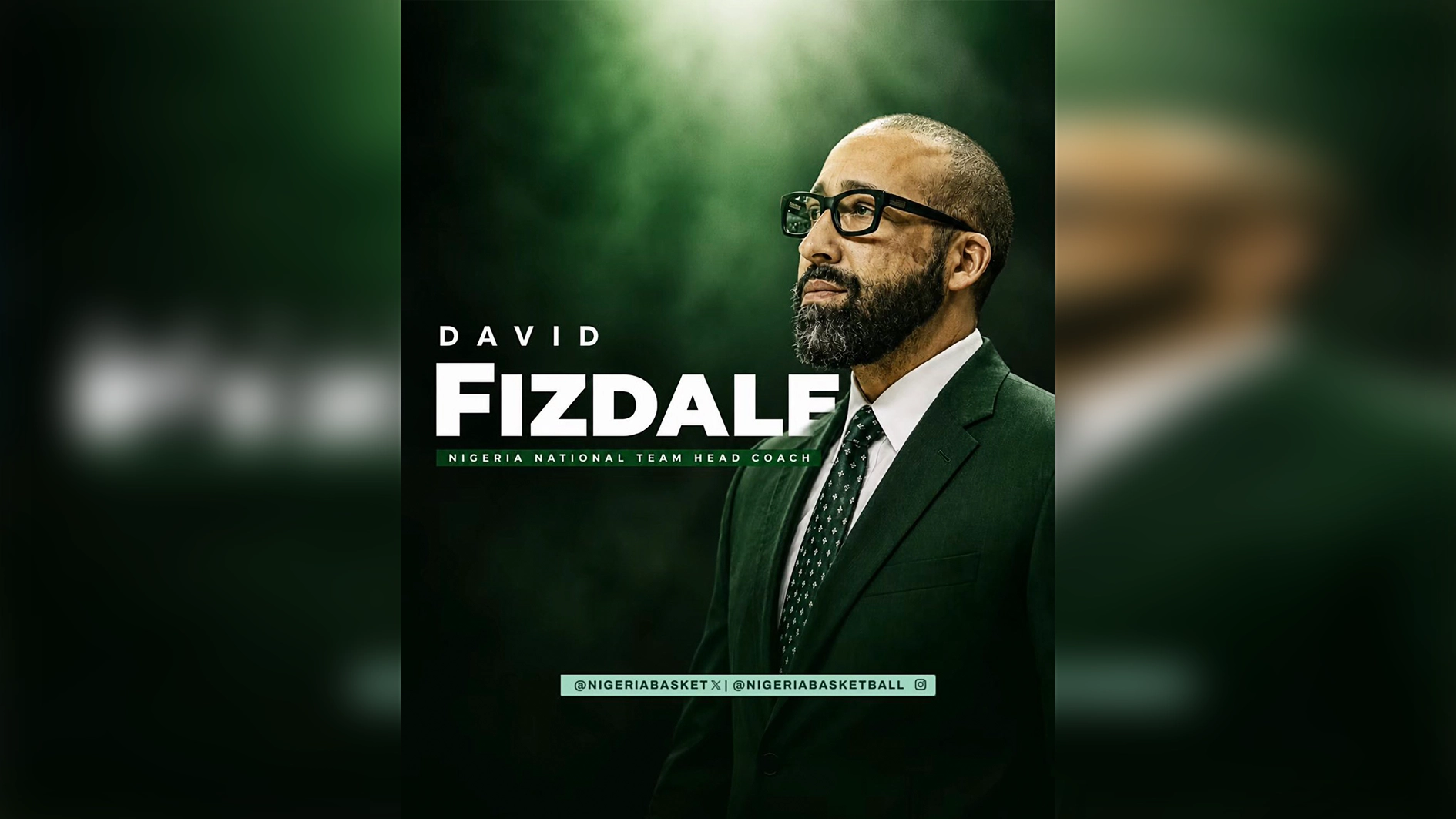
The Nigeria Basketball Federation (NBBF) has officially confirmed the appointment of David Fizdale as new head coach of D’Tigers.
“David Fizdale, former NBA head coach, has been named the new head coach for D’Tigers,” announced the NBBF in a statement on Saturday.
A 51-year-old Los Angeles native and former NBA head coach for the Memphis Grizzlies (50-51 record) and New York Knicks (21-83), Fizdale won two NBA titles as an assistant with the Miami Heat and most recently served as an assistant with the Phoenix Suns and Lakers.
Replacing Mike Brown as D’Tigers head coach, the NBBF aims to elevate the team’s profile, attract diaspora talent, and target qualification for the 2027 Federation of International Basketball (FIBA) World Cup and 2028 LA Olympics, sparking fan excitement alongside questions about federation support and local player development.
Fizdale’s NBA coaching strategies
Fizdale’s NBA coaching strategies emphasised player relationships, defensive intensity, and a modern “Pace and Space” offensive approach, heavily influenced by his time as an assistant with the Miami Heat under Erik Spoelstra and Pat Riley.
Core Philosophy and Culture-Building
Fizdale is widely regarded as a players’ coach who prioritizes relationship-building, trust, and culture. He has repeatedly emphasized that “You Can’t Rush the Culture,” stressing patience in developing accountability, buy-in, and a winning mindset.
He focuses on upfront honesty, explaining why certain actions benefit the team and individuals. Self-reflection is a key tenet he instills in players (and applies himself).
His style is motivational and teacher-oriented rather than purely authoritarian, though he has reflected on needing to be more demanding at times.
This approach stems from his Heat championship pedigree (two titles as an assistant), where he helped foster a tough, professional culture.
Offensive Strategies
In Memphis (his most successful head coaching stint), Fizdale shifted the Grizzlies away from pure “Grit and Grind” (heavy post-ups and midrange play) toward a more modern style.
Pace and Space: He pushed for a faster tempo, better floor spacing, and increased three-point volume. The Grizzlies jumped from near the bottom of the league in 3PT attempt rate to middle of the pack, while reducing midrange shots.
Increased emphasis on spot-up opportunities, off-screen actions (especially for guards like Mike Conley), and motion elements (e.g., Floppy and Horns sets).
Retained some post play (Memphis still led the league in post-ups in his main season) but tried to incorporate more ball movement and 4-out/5-out concepts for spacing.
Overall, the offense became more free-flowing and inclusive, with pace and spacing as priorities. He aimed to play to roster strengths while modernizing (e.g., allowing Conley to flourish off-ball).
Results were mixed due to roster fit (aging bigs like Zach Randolph weren’t ideal for spacing), but offensive rating improved modestly.
Defensive Strategies
Fizdale is more hands-on defensively and prioritizes it as the foundation for everything else. Aggressive, disruptive, versatile defense that generates transition opportunities. He wants it to be “tough-minded,” loud, physical, and fast.
Emphasis on rotations, closeouts, and contesting shots. In Memphis, they reduced shots at the rim (forcing more midrange) and ranked top-10 in defensive efficiency one season.
Schemes often involved help defense/collapsing, with bigs (like Marc Gasol) dropping or helping on pick-and-rolls. He has experience with complex schemes (e.g., later with the Lakers).
Goal: Turn defense into offense through disruption and rebounding.
Strengths and Limitations
Strengths: Strong at player development/motivation, modernizing offenses, defensive focus, and leveraging stars (e.g., Conley in Memphis, work with LeBron James, KD, etc., as an assistant).
Challenges: Roster fit issues (e.g., forcing pace/space on post-heavy teams), occasional lineup/rotation questions, and short tenures that limited full implementation. He has acknowledged learning from ego/frustration in losing situations and the need for patience vs. demands.

