 Follow Us on Google News
 Follow Us on Google Discover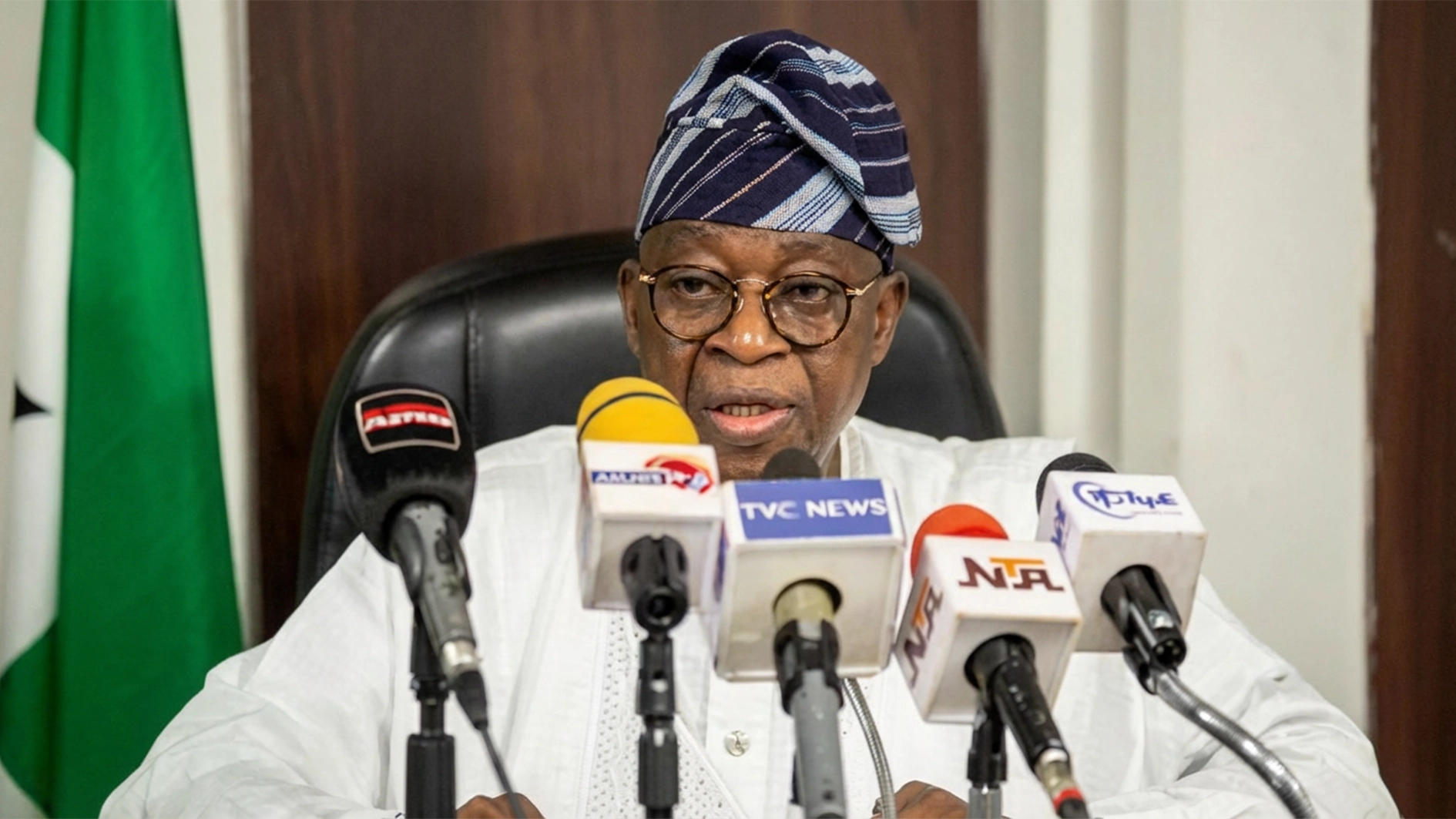
Nigeria and other countries in West and Central Africa are witnessing a major resurgence in maritime infrastructure investment, with over $27 billion committed to port capacity expansion projects, drawing international attention to the region.
This was disclosed yesterday, at the Mid-Year Session of the Board of Directors of the Port Management Association of West and Central Africa (PMAWCA) in Lagos.
Declaring the session open, the Minister of Marine and Blue Economy, Dr Adegboyega Oyetola, said Nigeria is already expanding its port capacity and implementing major maritime reforms aimed at positioning the country as the leading trade and logistics hub in West and Central Africa.
Oyetola, while declaring open the Mid-Year Session of the Board of Directors of the Port Management Association of West and Central Africa (PMAWCA) in Lagos, said the Federal Government had approved the development of additional deep seaports across the country to strengthen supply chain resilience and improve Nigeria’s competitiveness in the global maritime industry.
He said the development of additional deep seaports was to complement existing infrastructure, strengthen supply chain resilience and reinforce Nigeria’s position as the preferred maritime and logistics hub for West and Central Africa.
The minister also disclosed that existing seaports would undergo comprehensive upgrades, including channel deepening, to attract larger vessels.

“These upgrades are critical to ensuring that our ports remain globally competitive and capable of supporting larger volumes of trade in the years ahead,” the minister stated.
Oyetola added that the administration of President Bola Tinubu remained committed to modernising the nation’s ports through infrastructure upgrades, digital transformation and improved operational efficiency.
According to him, coordinated policy interventions and stronger inter-agency collaboration had significantly reduced logistics bottlenecks at major seaports.
“These efforts have contributed to improved cargo evacuation, reduced vessel waiting time, greater operational efficiency, and a more predictable business environment for port users and investors,” he said.
On maritime security, Oyetola said the implementation of the Deep Blue Project had eliminated piracy in Nigerian waters and drastically reduced maritime crimes across the Gulf of Guinea, restoring investors’ confidence and strengthening the region’s attractiveness as a secure maritime corridor for international commerce.
he minister charged delegates to advance initiatives that would strengthen logistical resilience in port operations and regional supply chains, while also promoting sustainable port management, innovation, digital transformation and inclusive community development linked to maritime activities.
In his welcome address, the President of PMAWCA and the Managing Director, Nigerian Ports Authority (NPA), Dr Abubakar Dantsoho, said the subregion was witnessing a major resurgence in maritime infrastructure investment, with over $27 billion worth of port projects.
Dantsoho cited major projects including the $20 billion Simandou-Morebaya Deep Sea Port project in Guinea, the $2 billion Port San Pedro project in Côte d’Ivoire, the $1.5 billion Lekki Deep Sea Port in Lagos, the $1.2 billion Ndayane Port in Dakar and the $1.5 billion Tema port developments in Ghana and Senegal, respectively.
He also highlighted ongoing $1 billion investments in Nigeria’s Apapa and Tin Can Island ports, alongside a $600 million investment by APM Terminals.
The NPA boss stated that ports in West and Central Africa must move beyond their traditional role as cargo gateways and become drivers of broader blue economy growth, integrating maritime value creation, encompassing sustainable fisheries, renewable marine energy, coastal tourism, aquaculture and marine biotechnology.
Also speaking, the Lagos State Governor, Babajide Sanwo-Olu, represented by the Commissioner for Transport, Oluwaseun Osiyemi, said the conference, with over 350 international trade facilitators and industry leaders in the state, reflects growing confidence in Nigeria’s capacity to shape the future of regional maritime trade.
Sanwo-Olu explained that the Lagos port corridor, stretching from Apapa to Tin Can Island and Lekki, accounted for a substantial share of the country’s international trade, making discussions around port efficiency, logistics and trade facilitation critical to businesses and livelihoods across the country.
The Governor said the meeting would strengthen institutional relationships among African countries and encourage collective solutions to shared maritime challenges, including port congestion, digitalisation, climate exposure and security concerns.
Sanwo-Olu added that regional cooperation remained critical in improving intra-African trade and unlocking the economic potential of the maritime sector.
The governor said the Lagos State government remains committed to supporting initiatives that would strengthen port operations, trade facilitation and regional maritime integration.

