GDN SIDEBAR
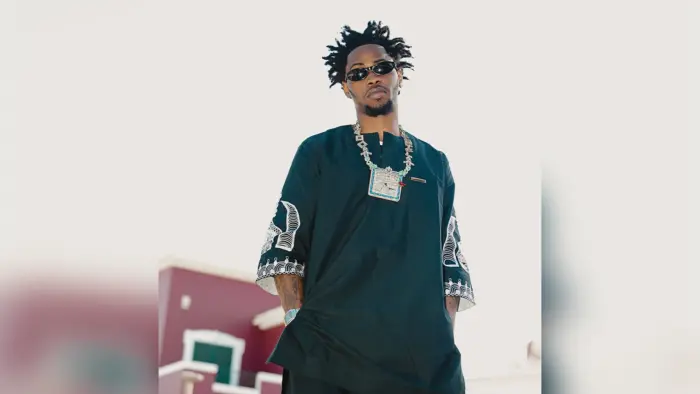
CKay Is Quietly Becoming One of Afrobeats’ Most Versatile Hitmakers There is a version of CKay the internet decided to remember permanently.
The soft-spoken romantic. The emotionally bruised hitmaker. The artist behind one of the most globally recognizable Afrobeats records of the streaming era.
For a while, that version became impossible to separate from the artist himself.
Love Nwantiti did not simply become successful. It became a cultural memory. The record traveled across continents, entered Billboard charts, dominated TikTok ecosystems, crossed language barriers, and eventually earned multiple international certifications, including 8x Platinum recognition in the United States. Few Afrobeats records from that period embedded themselves into public consciousness quite the same way.
But global success has a strange way of flattening artists into singular identities and perhaps that is what makes CKay’s current evolution more interesting than people initially realized.
Because quietly, almost without announcement, he has spent the last few years successfully transitioning away from emotionally driven “lover boy” records into rhythm-driven, club-banging records, and the transition has already been met with major commercial and cultural success.

The important thing here is that the shift did not happen suddenly. It happened gradually enough that many people did not immediately notice the scale of it. Emiliana became one of the first signs that CKay could sustain momentum beyond Love Nwantiti. The record traveled internationally, performed strongly across multiple territories, and reinforced the idea that his global audience was not tied to one singular moment. Then came Hallelujah with Blaqbonez, which reached No. 1 in Nigeria and quietly became one of the most important records in understanding CKay’s evolution. Not because it sounded radically different, but because it proved he could still command local momentum after becoming globally defined.
That distinction matters as a lot of artists achieve crossover success and slowly lose cultural grounding at home. CKay appears to have done the opposite. He expanded globally while simultaneously rebuilding local energy around himself.
Then BODY happened and that was the record that truly shifted perception. BODY featuring Mavo did not feel like an artist attempting reinvention. It felt like someone stepping fully into a direction that had already been forming underneath the surface. The production carried Mara-inspired movement, Nigerian street-house bounce, nightlife rhythm, and club-banging confidence while still maintaining the melodic instincts that made CKay connect emotionally
in the first place.
More importantly, the audience responded immediately.
The record became one of the clearest commercial validations of CKay’s newer direction. BODY dominated nightlife spaces, generated significant chart longevity, and emerged as one of the strongest-performing records of its cycle. At one point, it became one of the longest-lasting songs on Nigerian charts during its run, further proving that the newer sound
was not simply culturally visible, but commercially durable.
That success changes the conversation around him entirely because once an artist successfully transitions from emotionally driven records into rhythm-driven club records while maintaining audience loyalty, the “one hit wonder” conversation becomes increasingly difficult to sustain seriously and yet, strangely, parts of the internet still try to attach CKay to that outdated framing, which is surprising when you actually step back and examine the catalog properly.
Love Nwantiti. Emiliana. Hallelujah. BODY. WAHALA with Olamide. Trumpet. Badaminton. These are not isolated moments anymore, this is a body of work beginning to reveal range. What also makes the evolution particularly compelling is the timing of it. Over the last few years, Afrobeats has leaned heavily into Amapiano influence. The sound became so dominant across African music that many artists understandably moved in that direction completely.
CKay did not at least, not entirely, instead, what has gradually emerged around his music feels closer to a distinctly Nigerian interpretation of house and street-house rhythm through Mara-inspired elements. The bounce feels different. The movement feels different. Even the emotional energy of the records feels different. Less inward. More physical. More
nightlife-oriented. More socially alive.
That distinction matters because artists often struggle publicly once audiences emotionally freeze them inside one successful era. The internet tends to reward familiarity while punishing visible growth. But CKay appears to have navigated that transition more successfully than people expected.
Especially because the newer direction was initially met with skepticism. There were audiences who seemed deeply attached to the softer emotional framing around him. Some people questioned whether the newer records would connect the same way. Others unconsciously wanted him to remain inside the version of himself they first encountered
globally.
Then the charts responded, then the clubs responded, then audience responded and suddenly the transition no longer felt theoretical, it felt proven. Now, with a new release arriving, we can anticipate another club banger that would not not
feel like the beginning of a new direction but rather the continuation of one already working successfully. Which is important because it reinforces the idea that CKay is no longer experimenting publicly. He is building and perhaps most importantly, building beyond the limitations people once placed on him.
At this point, the more interesting conversation around CKay is no longer whether he can evolve. That question has already been answered, the more interesting question now may simply be how far this newer version of him can go.