 Follow Us on Google News


 Follow Us on Google Discover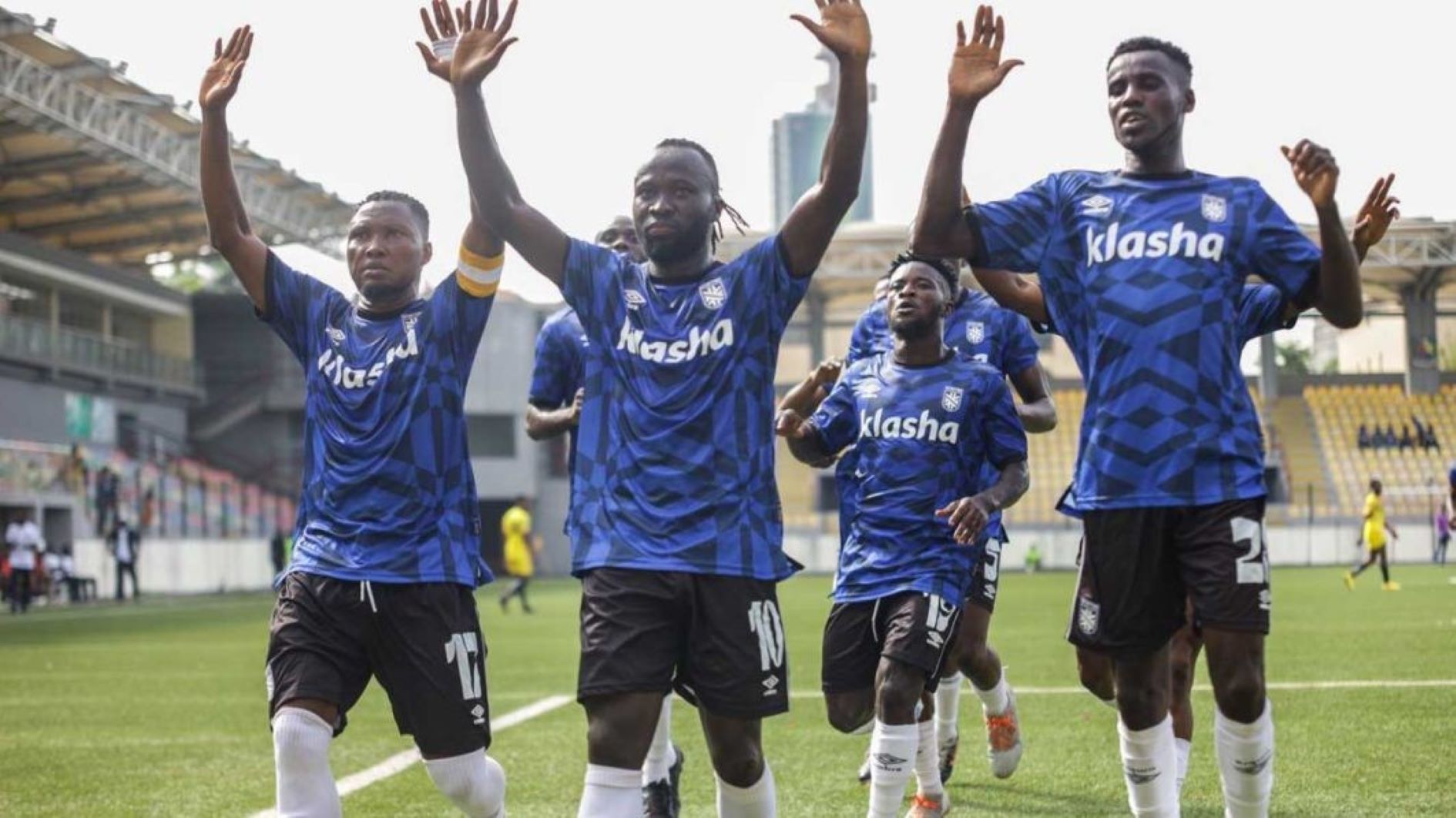
The entrance of four privately-owned clubs into the elite Nigeria Professional League (NPFL) ahead of the 2026/2027 season has been the talking point in recent weeks. In this report, GOWON AKPODONOR examines the significance of this milestone and asks whether government-run clubs, along with “the league system”, will ever allow them to flourish.
A wave of renewed optimism appears to be wafting across the Nigeria Professional League (NPFL) following the doubling of the number of privately owned clubs that will do business in the country’s elite league come next season.
The four privately-owned clubs – Remo Stars FC of Ikenne; Barau FC of Kano; Kunkhalifa FC of Owerri and Ikorodu City FC of Lagos, presently in the league, would be joined by Sporting Lagos FC, Inter FC of Lagos, Doma FC of Bauchi and Ranchers Bees of Kaduna next season.
The scenario, which is pregnant with many possibilities, is also trailed by immense anxiety given the country’s unpredictable and sometimes inclement football ecosystem, as well as the truckload of man-made challenges that have kept the country’s football in its infancy.
Football, the world over, is big business, and becoming a club owner is one way to gain access to the big bucks available in the beautiful game.
In the developed world, professional football clubs are mostly owned by communities, who recruit players from within their society, spiced up with skilful stars from neighbouring communities. Clubs are formed by groups of associates who come together to start a team for various reasons.

For instance, newly crowned English champions, Arsenal of London, was formed by a group of munitions workers, who pooled resources from 15 factory workers to buy the club’s first football.
From such beginnings, the club grew into a professional entity governed by a board of directors, with professionals now running the team.
The club grew from humble beginnings into a public liability company owned by investors, with the majority shareholder as the boss.
In contrast, German clubs are wholly owned by fans and shareholders, with no single individual holding the largest stake to call the shots. These owners, like their English counterparts, initially pooled resources to start the club before growing it into quoted companies.
In the early days of Nigerian football, clubs were owned by big multinational companies and rich individuals who invested in them as part of their corporate social responsibility.
Till around 1970s, the majority of the teams in the country’s club football system were either owned by such firms as PZ, Lever Brothers, GB Oliphant, Nigerian Railways, the Nigerian Ports Authority, Nigeria Airways, the Nigerian Police Force, the Nigerian Customs Service and the Nigerian Army or by such private entities as banks, insurance companies, private individuals and town/traders unions.
The club ownership structure began to change in the 1970s, when state governments began entering the sector.
These state governments had deep pockets and could fund their clubs without considering the business side. All they were interested in was winning and the accolades that came with it.
This mindset introduced the win-at-all-costs mentality into the game, leading to corruption and allegations of shady deals by unscrupulous managers under pressure to impress their states’ governors.
Faced with the inclement football weather, some of the private football clubs were forced to close shop as they found themselves unable to compete in “an environment lacking fair play.”
Others struggled and eventually collapsed due to the high operational costs and the lack of a sustainable business environment.
The disappearance of most historic clubs didn’t come as a surprise, as private owners often faced an “unfavourable ecosystem” in which they had to shoulder all financial responsibilities, from players’ welfare to travel logistics, while state clubs benefited from consistent government funding and political influence.
The gradual return of private clubs to the elite league began in the early 2000s with the emergence of clubs such as Giwa FC of Jos, FC Ifeanyi Ubah of Nnewi, and MFM of Lagos.
Although they could not survive due to issues related to their ownership structure, many others have taken their place in the system.
The promotion of four new privately owned clubs to the top flight, where they will campaign for honours in the 2026/27 season, marks a significant step in the development of Nigerian football, as these clubs bring modern administrative practices and long-term planning to the league.
Remo Stars FC, a club financed by businessman Kunle Soname, won the 2025 NPFL title, becoming the first private club to do so in 25 years (since Julius Berger in 2000).
In the current NPFL season, another privately-owned club, Ikorodu City, is among the serious contenders for one of the three continental tickets available in the league.
Down in the NNL and the amateur National League One (NLO), there are as many privately-owned clubs fighting to join the big league.
The questions are “what has changed? Why are privately-owned clubs returning to prominence in the league?”
For some stakeholders, the answers lie in the approach these clubs have adopted.
Sporting Lagos Chairman, Godwin Enakhena, whose club will return to the NPFL next season, said the club has invested in the Nigerian league because it sees the bigger picture.
On the resurgence of privately-owned clubs in the NPFL, he said: “To be candid, I can’t say if this was the result of methodical planning or just happenstance. What I can say is that there are times you go into wars better prepared with superior weaponry.
“I’ll use Sporting Lagos as an example. We decided to invest in younger players, motivate them and didn’t pressure them to win at all costs. Gaining promotion to the Nigeria Premier Football League (NPFL) wasn’t a matter of life and death.
“But surprisingly, the kids were determined to get the ticket, playing the kind of football that was result-oriented. And their efforts were crowned with the NPFL ticket. So, I’ll say that the promoted private clubs recruited well, worked hard, and got the tickets on merit.”
Enakhena said that the panacea for success in the Nigerian league is “investing in the youth, hiring the kind of coaches who will bring the best out of their players, and staying true to a philosophy that is sustainable.”
He added: “Football is big business; this is what we say always, but only on paper. Fortunately, the four promoted private clubs are embracing this lifelong commitment to success because only young players will attract the interests of clubs outside of Nigeria.”
Enakhena said that many more private individuals would be enticed to invest in the clubs if the managers of the country’s football put in place the basic facilities for the game.
“Even some of the biggest club-sides in world football don’t own their own stadiums. AC Milan and Inter Milan readily come to mind. They play in the San Siro Stadium in Italy.
“This facility is one of the best in the world, but the same can’t be said about Nigeria, where just one stadium is approved by the Confederation of African Football (CAF), the Godswill Akpabio Stadium in Uyo, Akwa Ibom State.
“Our stadiums are not good. If you’re fortunate to have one that you’re playing in as your home turf, you’ll not have the same luxury when you play away from home.
“Secondly, the state of the economy is not helping matters. Sport is capital-intensive, and football is one. A good economy has a positive effect on the sector.”
A manager at one of the private clubs, who requested anonymity, said the clubs are thriving despite the many natural and man-made problems they face every season.
“Some of the operators of the clubs look at the bigger picture. For example, the owner of Remo Stars, Kunle Soname, also owns a club in Portugal, which is a ready avenue to recoup the money he is spending in the league.
“At the end of the 2024/25 season, which Remo Stars won, the club transferred almost its entire starting 11 and some reserves to clubs in Europe.
“You can imagine how much the club made from selling these players at, let’s say, 500 euros each or even more.
“Until recently, Shola Akinlade held majority shares in Danish club Aarhus Fremad, with a mission to create a trusted pathway for the transfer of their best talent from Nigeria to Europe.
“These clubs rely on transferring players to Europe to sustain their operations.”
Former Super Eagles goalkeeper, David Aigbovo, who was part of the golden era of the nation’s domestic football when he featured for Flash Flamingoes of Benin City, and the IICC of Ibadan, said that “a league with a mixture of privately-owned clubs and those owned by governments has its unique nature.
“The league would be more competitive if we had private clubs in the Nigerian premiership.
Government teams don’t know what it is to bring flair into the game. They have surplus money, the one we call ‘Awuf’ money in Benin.
“But an individual who invests his money knows the worth and value of his money and can go for quality players. That is why I say we should encourage more private teams into the league, and I salute the management of the four clubs that just gained promotion into the NPFL.”
Edema Fuludu played for three defunct privately-owned clubs, NNB of Benin City, BCC Lions of Gboko and Julius Berger of Lagos, and therefore knows the sort of treatment players get in these clubs.
Fuludu said: “I think privately owned clubs are better structured like business entities and not for political gains or patronage, which almost all government-owned clubs are.
“The coming of these four new clubs into the NPFL itself means a lot to the advancement of the league since they will want to get returns on investment on their hard-earned finances. This, though, is with a caveat if the league owners will allow a level playing field.”

