 Follow Us on Google News
 Follow Us on Google Discover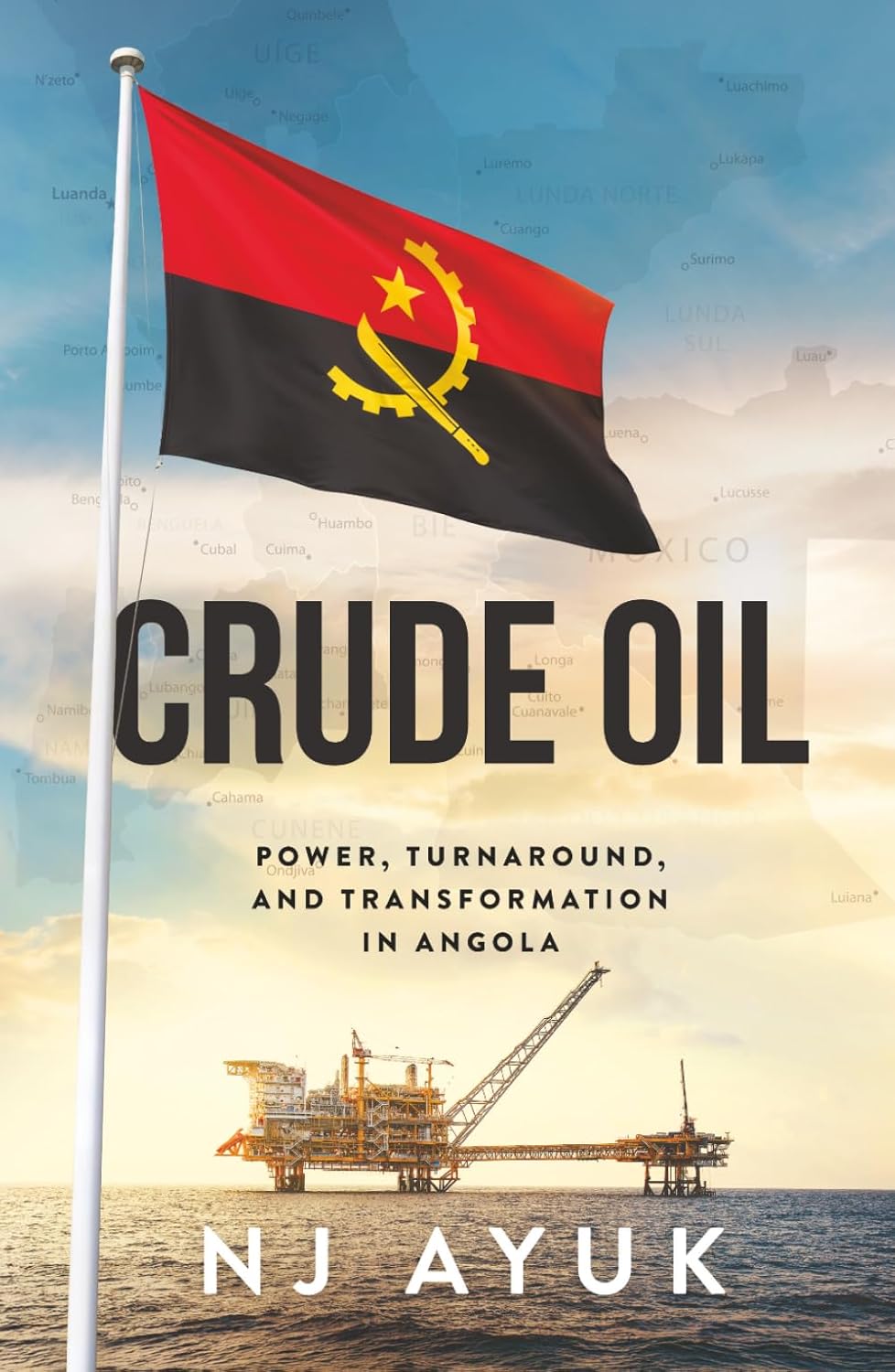
By: Onome Amawhe
NJ Ayuk’s Crude Oil: Power, Turnaround and Transformation in Angola is not merely a book about oil. It is a story about power, history, statecraft, reform and the difficult attempt by an African resource economy to rescue itself from the consequences of overdependence, corruption and institutional weakness.
From the introduction, Ayuk makes clear that Angola is being presented as more than a national case study. It is offered as a possible blueprint for other African countries struggling with energy poverty, weak infrastructure and the politics of natural resource management.
The opening anecdote — a virtual conversation interrupted by the shared anxiety of possible electricity failure — provides a simple but effective entry point into the wider African energy crisis.
For Ayuk, Angola’s story matters because it speaks directly to the continent’s unresolved question: how can African countries use oil, gas and natural resources to build reliable energy systems, attract investment and improve lives?
The book’s structure gives the review its strongest frame. Ayuk does not begin with oil blocks, licensing rounds or investment figures.
He starts with Angola itself: its land, people, geography, demography and natural resources. This is important because it gives the book a wider historical and national foundation. Angola’s oil industry is not treated as an isolated commercial sector.
It is rooted in the country’s geography, colonial past, wars, post-independence struggles and political evolution.
The contents show a deliberate movement from foundation to crisis, and then from crisis to reform. The early chapters examine Angola’s land and resources, its colonial history, the slave trade, the struggle for self-determination, the war for independence and the long civil conflict that shaped the country’s modern state.
This historical sequencing helps the reader understand why Angola’s oil wealth became both a blessing and a burden. Oil financed reconstruction and growth, but it also deepened dependence, strengthened elite power and exposed the country to the volatility of global markets.
The introduction captures this contradiction forcefully. Angola’s postwar oil boom was dramatic. After the end of the civil war in 2002, oil production and high crude prices helped drive extraordinary GDP growth. Angola became one of Africa’s leading producers and attracted global oil companies eager to secure a place in its offshore fields. But the book also shows how fragile this prosperity was.
The 2008 global financial crisis and the collapse in oil prices exposed the danger of building national growth on a single commodity. Falling revenues, reduced investment, aging fields, OPEC quota constraints and weak diversification all combined to weaken the sector and the wider economy.
Ayuk’s argument becomes sharper when he turns to governance. The book suggests that Angola’s oil crisis was not caused by global markets alone. It was also worsened by mismanagement, lack of transparency and the failure to translate oil wealth into broad-based human development.
This is where the book moves from energy history into political economy. The central question is not simply whether Angola has oil. It is whether Angola can govern oil well.
The reform chapters are therefore central to the book’s thesis. President João Lourenço is presented as the political figure who opened a new chapter after taking office in 2017.
His administration’s anti-corruption posture, institutional restructuring and attempt to improve transparency are treated as key turning points.
The creation of the National Agency for Petroleum, Gas and Biofuels separated regulatory oversight from Sonangol’s operational role, signalling a shift away from the old model in which the national oil company carried too many conflicting responsibilities.
Diamantino Azevedo, Minister of Mineral Resources, Petroleum and Gas, receives major attention as the technocratic figure behind many of the reforms. Azevedo is portrayed as central to Angola’s new energy direction: improving governance, encouraging investment, promoting onshore and marginal field development, sustaining offshore exploration and positioning oil and gas revenues as tools for wider national development.
The contents also show that the book is not only about government actors. Chapter 8, focused on Angolan change-makers, widens the story by introducing entrepreneurs and industry participants working across services, logistics, technology and local content.
This is useful because it prevents the book from becoming only a top-down political account. It suggests that reform is not complete unless it creates space for domestic enterprise and Angolan participation.
The later chapters move the book into the future. Angola’s current outlook is framed around resilience, refining and renewed investor interest.
The discussion of natural gas is especially important. Ayuk places gas at the centre of Africa’s energy transition debate, arguing that countries such as Angola should not be forced into a Western-designed transition timeline that ignores African energy poverty. The book’s position is clear: Africa must develop cleaner energy, but it must also use its gas resources to industrialise, provide electricity and build economic resilience.
This is one of the book’s strongest and most controversial arguments.
Ayuk rejects the idea that African countries should abandon hydrocarbons before they have achieved basic energy security. He argues instead for a pragmatic transition, one that includes natural gas, renewables, hydropower, green hydrogen and critical minerals.
For readers interested in climate politics, this section will likely provoke debate. But it also reflects the central African energy argument of the book: development, energy access and climate responsibility must be balanced, not treated as mutually exclusive.
As a review subject, Crude Oil succeeds because it tells Angola’s oil story as a national transformation story.
It is strongest when it links resource wealth to governance reform, and governance reform to human development.
Its optimism is evident, especially in its portrayal of the Lourenço-Azevedo reform era. Some readers may want a more sceptical interrogation of whether the reforms have gone far enough, whether ordinary Angolans are already feeling the benefits, and whether the old structures of power have truly been dismantled. But the book’s value lies in the seriousness with which it treats Angola as a reform case study rather than merely another oil-dependent African economy.
Ultimately, Ayuk’s book argues that Angola looked at the failures of its oil-dependent past and chose a new path. Whether that path produces lasting transformation remains an open question.
But Crude Oil: Power, Turnaround and Transformation in Angola makes a compelling case that Angola’s experience deserves close attention from policymakers, investors, energy executives and African governments seeking to turn natural wealth into national renewal.
Onome Amawhe is a Culture journalist and advocate.

