 Follow Us on Google News
 Follow Us on Google Discover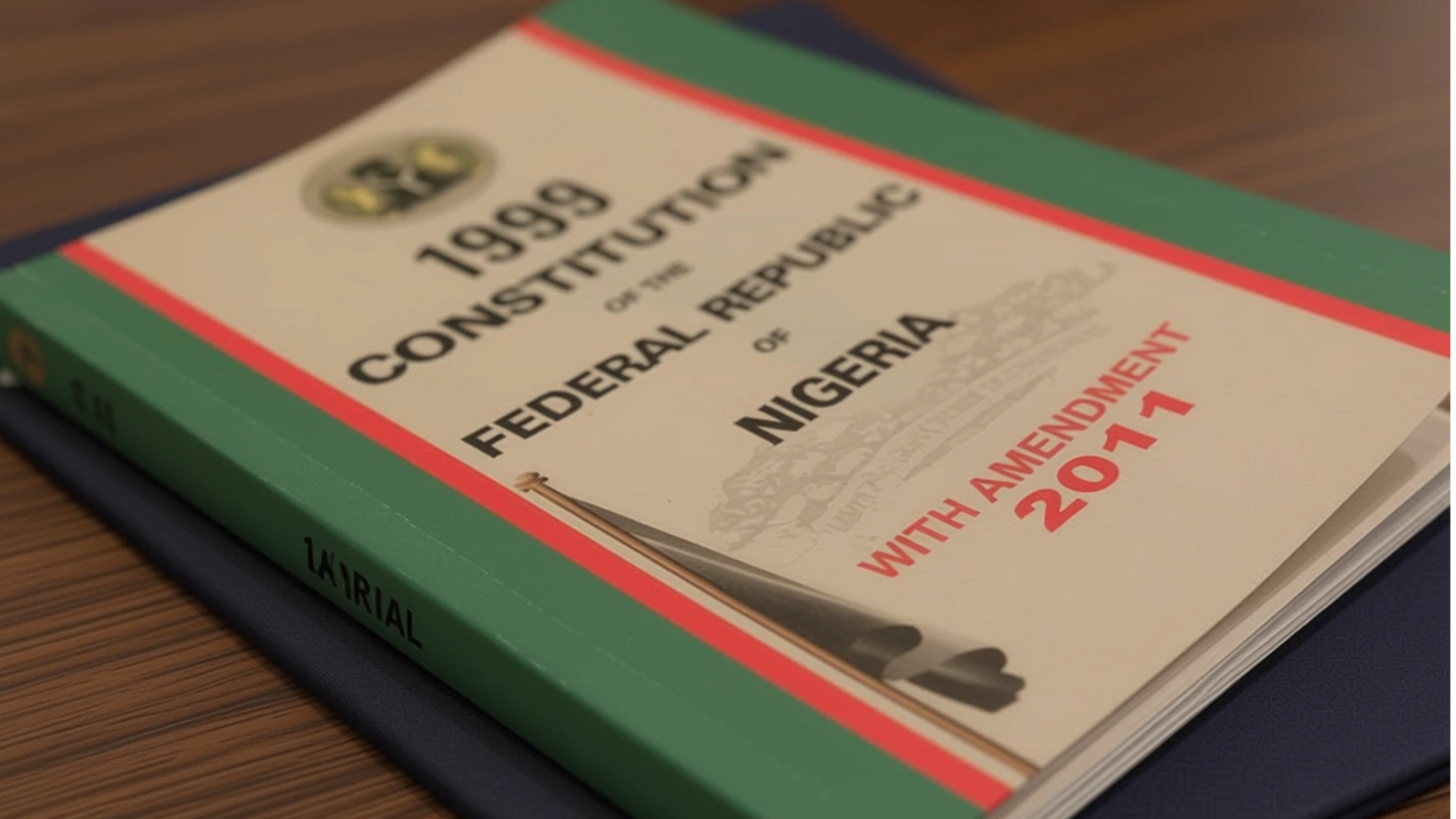
By Precious Taiwo
It’s a very common scenario in Nigeria where a Grade-one, entry level civil servant; A cleaner, employed at a federal ministry is paid N70,000 at the end of the month but the cost of rent in the worst of Lagos slums is N50,000 per month. According to the law of public service, He is not authorized to sell Airtime at his gate or run a small pos business briefly after work because he could get sacked.
Another scenario is a driver who earns N115,000 drives a director home in a Prado, then treks to his one room apartment. The law bans him from driving Uber on weekends but of course, he could farm. As it appears to be by policy one of the many passive activities a civil servant can get into without it conflicting with his duties.
This is the reality for millions of public officers under the 1999 constitution. Nigeria today has 85.6% of the workforce self employed, 11.1 % draws salaries from the private sector alongside personal ventures. All that is left is the 3.7% which consists of the civil servants and are prohibited from engaging in any private business.
The problem is Paragraph 6 (b) of the Fifth Schedule to the 1999 Constitution. It bans every public officer from running ‘any private business, profession or trade’. I am writing to call for an urgent amendment to this clause.
The Law:
The Constitution of the Federalist Republic of Nigeria 1999 (as amended), Fifth schedule, Part 1, paragraph 6 (b) states “except where he is not employed on full-time basis, engage or participate in the management of any private business, profession or trade; but nothing shall prevent a public officer from engaging in farming.”
This clearly states that as long as the government pays your salary every month, you are not to engage in any other business activity. It bans every public officer from running any private business, profession or trade.
Why was this law originally in place?
The 1999 constitution was drafted after 16 years of military rule and at the time corruption festered unchallenged. Military governors and public officers would run private companies with the use of government contracts, creating massive conflicts of interest. The ban was reapplied to break that culture.
Meanwhile, this ban was already a pre-existing policy. The 1979 Constitution, Fifth Schedule, Part 1, Paragraph 1 was written in the same identical language.
_“A public officer shall not…engage or participate in the management or running of any private business, profession or trade.” This was the same rule that guided the public service during the Second Republic before the Military takeover in 1983 which suspended the Constitution and ruled by decree.
The 1999 ruling goal was to force public officers to choose between serving the state or running a private business. Under the military rule, It became a practice for directors in works, health and education ministries to own construction firms. Ministers of commerce and finance often owning import companies, while setting tariff policy in council chambers, they’d issue waivers to their own firms. The ministry became a procurement arm for the director’s business.
By 1999, the public service had become the fastest route to private wealth and public good secondary, if not completely forfeited. Thereby was the constitution drafted to put an end to the military style looting. A choice either to serve the state fully or run your business. The public office becomes a full time call with farming as the sole exemption to safeguard national food security.
Under the 1979 constitution, a Director’s salary could buy a Peugeot 504 and train four children abroad comfortably and still have a lot to save afterwards. In fact, at the time the United Kingdom, America and Canada were full of Nigerian civil servants’ kids in the 80s. Their salaries were robust enough to cover it.
By 1999, when the Law was reapplied and strengthened by Code of conduct bureau, the structural Adjustment Program (SAP) had killed the naira and depreciated its value. By 2026, that same Director-level job can’t buy a tire of a 504, let alone train 1 child in Ikeja. The problem was that the government enforced the ban without restoring the economic dignity that made the ban fair in 1979 and continually it has remained so.
Poverty as we know it is sitting ducks in Nigeria. In 2026, the least earned by a public officer is N70,000, in Nigeria today that’s the price of a bag of rice. For basic living for a month which includes Food, transport, utilities, data/phone health care, school fees and others? The cost of living in Lagos and Abuja needs N300k for a fairly decent life.
But in the government such pay is limited to ranks for senior officers or managerial positions with about six-nine years of experience. The ban, written when government salaries could sustain a household now forces public officers to choose between obeying the policy and living in destitution. If obeying the constitution means working honestly and staying poor, then the law itself is producing poverty not alleviating it. Right now, the unintended consequence is a civil service populated by those who either have external family wealth or have already decided to break the law to survive. When a newly recruited constable N55,000 salary cannot cover Lagos rent, petty bribery helps his daily expenses.
Due to the Structural Adjustment Program in 1999, Farming was mandated as the only activity for civil servants at the time aimed at Food security. Let’s be realistic, not every civil servant would take up the idea as skills and knowledge varies, so it was a trap. A public officer who cannot earn beyond a non-living wage will either quit, steal, hide or have a secret business.
Most of these public officers do not quit, so this policy although unintended allows a shadow economy of proxy companies; register in the names of spouses, siblings and drivers, but controlled by the officer who then steers contract and favor their way. This opacity makes corruption easier, not harder, because the real conflict is now invisible to the code of conduct bureau, EFCC and the public.
Nigeria’s 2026 economy runs on MSMEs, innovation and private enterprises, yet this same policy prevents millions of the country’s most educated workers from participating legally. A director in the ministry of communication cannot run a tech school, a government doctor cannot own a gym. A university lecturer cannot own a publishing firm. A cleric cannot be a videographer and photographer during weekends. This economic waste is nearly unrecoverable, businesses that would have been created, taxes that would have been paid, jobs that would have been generated, and expertise that would have circulated between public and private sectors, all forfeited. We are grossly loading GDP to a 1979 ideology, whereas African countries like Kenya, South Africa allow regulated business ownership with disclosure.
Kenya’s Public officer Ethics Act 2003 and Leadership Act 2012, permits public officers to engage in business, but mandates annual wealth declarations to the Ethics and Anti corruption commission. Public disclosure of registrable interests and strict recusal from any government dealing that engages their private venture; A teacher can own a full store of provisions, A doctor can run a clinic after hours and co-partner a gym but cannot bid for ministry of health contract and must file yearly asset returns or face prosecution for unexplained wealth. The same goes for South Africa, under its Public service regulation, where employees may likewise perform remunerative work outside state hours with written approval. A system that understands a salary of R200,000 cannot feed a family in Cape Town.
Foreign countries like, The United States, United Kingdom, Australia, New Zealand, Canada practices same flexible policy.
The shared principle among these other countries is regulation, not prohibition; public officers may own businesses, farm, consultancies, or shares but must declare interest for concealment. These democracies retain the skills, taxes and service of public officers while deterring abuse. So it is quite evident that our country can have a constitution where conflict of interest can be effectively managed rather than banned.
The solution to this is not to repeal the law, rather revise it. The law should permit public officers to have businesses if they get approval from the code of conduct bureau while retaining the previous stance that it should not conflict with their service to the state and also listed on a public website to hold them accountable.
As of the moment, over two million Nigerians are public servants and these same percentage are legally banned from running businesses. That is two million potential founders sitting on ideas, capital and networks. Let’s have a scenario that 10% started side businesses, that is 200,000 new SMEs. SMEs contribute 48% of Nigeria’s GDP. By so doing, we have just injected billions into the economy.
The Tax revenue also scales up, now instead of business in secrecy, the public servants register the business, file CAC, pay company tax, VAT, PAYE for staff. FIRS benefits, enabling a wider tax net without raising tax rates.
What about the faster innovation in public service. Smart civil servants see problems in the government daily. A civil servant understands that procurement can be slow, and can start up a company to fix it. He builds a solution, tests it and scales it…he solves a civil problem and the government benefits!
Americans didn’t ban their public servants from business. It turned them into founders, DARPA built the Internet, NASA built GPS, NIH built Moderna.
The law should be amended. The total ban should be replaced with conditional permission. The amendment should be that ‘’A public officer can engage or participate in the management of any private business, profession or trade, provided that:
He obtains prior approval from the code of conduct bureau/ Business must be registered under CAC/ State his degree of influence(management)over the business. The business would not conflict with official duties. He would not use government property for personal gain. Declare such interest annually in a public register.
Government agencies planning and launching a civil service entrepreneurship programme to uncover dormant skills among the civil workers, that way the prosperity of a nation is at its bloom.
If despite this and conflict of interest arises in public service, the rules are very clear and would be upheld and by doing this we’ve opened a chance for the few who are looking for a way out and hopefully others will follow.
Amend the law. Nigeria should have a constitution that protects, sustains and guides the public service. Give the Public service its due dignity.
Precious Taiwo is a Broadcaster and Presenter at UNIZIK FM

