 Follow Us on Google News


 Follow Us on Google Discover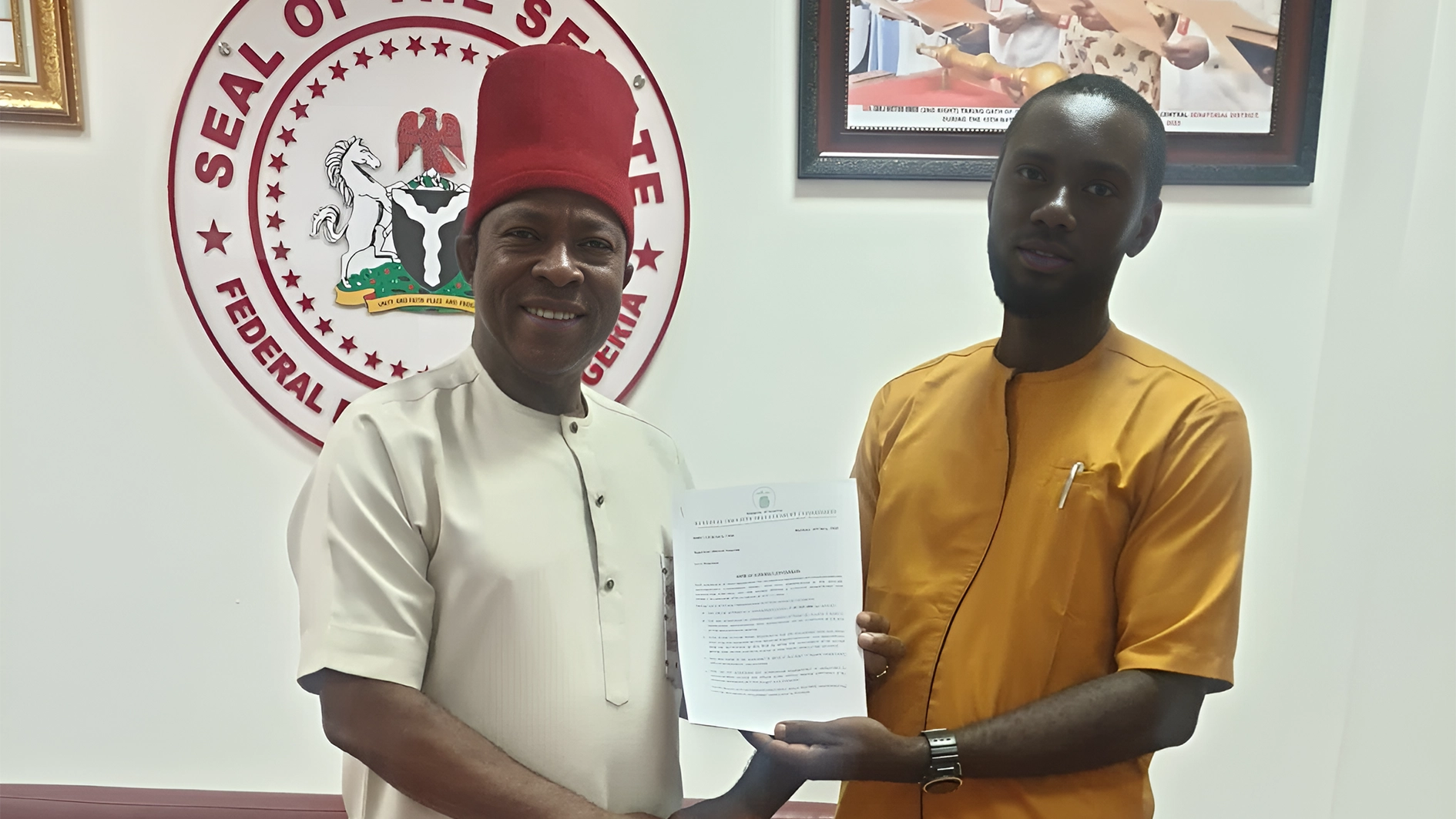
Despite civil service rule, lawmakers circumvent merit distributing appointment letters as constituency projects
AS a young undergraduate student of the University of Benin, Edo State, Babatunde Balogun, fell in love with the Department of State Services (DSS).
He had attended an event where some officers of the DSS who were on ground displayed a very high professional conduct. And since that experience, he had longed to work with the DSS after graduation. He was constantly making enquiries and looking out for vacancy opportunities with the agency. And one of such efforts yielded fruits that led him submitting his credentials.
Hear him: “Basically, the job requires thorough investigation and intelligence gathering. The job keeps you unraveling a lot of things related to security matter. I love the job, and I see it as a call to national service. It was my dream job because I love dealing with classified information.”
On hearing that the DSS was recruiting around 2010 at age 24, already a graduate of banking and finance from the University of Benin, he submitted his credentials and was shortlisted, thereafter, for a test, inclusive of objectives and theory though the recruitment was not publicised.
“You either get information from DSS officers or friends who are working with other security agencies. Upon writing the test, I was short listed for an interview. The interview was an open interview, you faced a panel of about seven interviewers asking different unique questions.”

Balogun disclosed that after the interview there was no feedback and he did not get the employment. Although Balogun has moved on, that experience left a bitter pill in him.
“I never heard anything from DSS recruitment team. Out of worry and curiosity, I approached, privately, one personnel of DSS for assistance, that was when he requested that I get a letter of endorsement from either a senator or a member of house of representatives. He said with that, we can do a follow up. I honestly couldn’t get a senator’s endorsement inspite my efforts. I felt bad, and it re-enforces my belief that there is no equity and fairness in Nigeria generally.”
There are many young Nigerians who are not only qualified for jobs with federal agencies, especially specialised ones like DSS, Central Bank of Nigeria (CBN), Federal Inland Revenue Service, now recently changed to Nigeria Revenue Service (NRS), among others, the inability to have a lawmaker or political heavyweight to give them recommendation letters have been stumbling block to being gainfully employed.
While in the past, it was done secretly. Now, lawmakers openly present employment letters facilitated by them to constituents, claiming it is part of their constituency projects.
Worthy to mention is that for many Nigerians, government employment remains a prized and highly competitive path to economic security.
That context has made the spectacle of some lawmakers handing out or promoting employment letters as constituency projects, especially controversial, not just as political theatre but as a possible breach of the laws and public service rules designed to regulate recruitment.
In Nigeria, appointment to the Federal public service is governed by detailed statutory provisions that mandate transparent advertising of vacancies, competitive selection processes, and issuance of appointment letters only through authorised channels like the Federal Civil Service Commission (FCSC).
Under Nigeria’s recruitment framework, the Federal Civil Service Commission (FCSC) and the Federal Character Commission (FCC) have legally established roles in public service appointments and recruitment.
According to the FCC’s Procedures for Recruitment, ministries, departments, and agencies (MDAs) must advertise vacancies publicly, apply basic qualification criteria, and ensure equitable state-by-state distribution before issuing appointment letters, and no MDA is permitted to issue letters of appointment without first obtaining a Certificate of Compliance from the FCC certifying that federal character principles have been met.
This means that formal appointment letters in the federal public service must be generated only after a structured, transparent recruitment exercise has taken place.
The rules require that vacancies be advertised in at least two national newspapers, candidates meet minimum requirements, shortlisted applicants compete for positions, and the FCC verifies compliance before letters can be issued.
Nevertheless, lawmakers have continued to announce that they have secured or facilitated jobs for select individuals, even as the FCSC, sometimes, publicly deny any ongoing recruitment exercises and warns the public to disregard fake or unofficial job claims.
While many politicians defend their interventions as efforts to help their communities, commentators and critics warn that such practices may erode public trust in official recruitment systems, contravene established civil service rules, and risk deeper entrenchment of patronage politics in the public sector.
However, the culture of the lawmakers presenting employment letters to constituents is not limited to any region as it is being done by legislators from South West to Northeast, South-south, Northwest, Southeast to North Central.
Recently, Miriam Onuoha, a member of the House of Representatives, representing the Okigwe North Federal Constituency of Imo State, through her X handle @miriam_Onuoha, announced securing Federal employment” for her constituents in the National Assembly Commission, Federal Inland Revenue Service (FIRS), and Tertiary Education Trust Fund (TETFund).
Onuoha shared pictures showing three of her constituents holding what seemed employment letters including presenting the employment letters to the beneficiaries.
Similarly, on January 19, 2026, Goni Hassan Bukar Monguno, shared a facebook post titled: ‘Employment: Borno North is Witnessing the Dividends of Effective Representation at the National Level, as Senator Monguno Facilitated Three Employment Opportunities for Constituents.’
The post was accompanied with four pictures showing each of the beneficiaries with the employment letters and another where the beneficiaries took a group photograph.
In the post, he said: “In continuation of his steadfast commitment to the people of the Borno North Senatorial District, the Chief Whip of the Senate and Vice Chairman of the Senate Committee on Appropriations, Sen MT Monguno, has facilitated three federal appointments, both permanent and pensionable, for deserving constituents of the district.
This development goes beyond the announcement of appointments. It signifies job security, dignity of labour, and long-term stability for the beneficiaries and their families, while strengthening the sense of inclusion of Borno North in federal governance.
“It further reflects the senator’s resolve to ensure that the district is adequately represented and not left behind in accessing national opportunities. Senator Monguno remains focused on translating representation into tangible benefits that positively impact the lives of ordinary people across our communities. The beneficiaries have conveyed their heartfelt appreciation to the Senator for facilitating the federal appointments, describing the gesture as timely and life-changing, while reaffirming their confidence in his people-centred leadership and unwavering commitment to the development of Borno North.”
Also, on October 14, 2025, one Adam Zabin Alla had posted on facebook how Senator Monguno secured permanent and pensionable Federal appointments for four constituents.
Alla accompanied the post with a picture of the beneficiaries displaying their employment letters.
AS a young undergraduate student of the University of Benin, Edo State, Babatunde Balogun, fell in love with the Department of State Services (DSS). He had attended an event where some officers of the DSS who were on ground displayed a very high professional conduct. And since that experience, he had longed to work with the DSS after graduation. He was constantly making enquiries and looking out for vacancy opportunities with the agency. And one of such efforts yielded fruits that led him submitting his credentials.
Hear him: “Basically, the job requires thorough investigation and intelligence gathering. The job keeps you unraveling a lot of things related to security matter. I love the job, and I see it as a call to national service. It was my dream job because I love dealing with classified information.”
On hearing that the DSS was recruiting around 2010 at age 24, already a graduate of banking and finance from the University of Benin, he submitted his credentials and was shortlisted, thereafter, for a test, inclusive of objectives and theory though the recruitment was not publicised.
“You either get information from DSS officers or friends who are working with other security agencies. Upon writing the test, I was short listed for an interview. The interview was an open interview, you faced a panel of about seven interviewers asking different unique questions.”
Balogun disclosed that after the interview there was no feedback and he did not get the employment. Although Balogun has moved on, that experience left a bitter pill in him.
“I never heard anything from DSS recruitment team. Out of worry and curiosity, I approached, privately, one personnel of DSS for assistance, that was when he requested that I get a letter of endorsement from either a senator or a member of house of representatives. He said with that, we can do a follow up. I honestly couldn’t get a senator’s endorsement inspite my efforts. I felt bad, and it re-enforces my belief that there is no equity and fairness in Nigeria generally.”
There are many young Nigerians who are not only qualified for jobs with federal agencies, especially specialised ones like DSS, Central Bank of Nigeria (CBN), Federal Inland Revenue Service, now recently changed to Nigeria Revenue Service (NRS), among others, the inability to have a lawmaker or political heavyweight to give them recommendation letters have been stumbling block to being gainfully employed.
While in the past, it was done secretly. Now, lawmakers openly present employment letters facilitated by them to constituents, claiming it is part of their constituency projects.
Worthy to mention is that for many Nigerians, government employment remains a prized and highly competitive path to economic security.
That context has made the spectacle of some lawmakers handing out or promoting employment letters as constituency projects, especially controversial, not just as political theatre but as a possible breach of the laws and public service rules designed to regulate recruitment.
In Nigeria, appointment to the Federal public service is governed by detailed statutory provisions that mandate transparent advertising of vacancies, competitive selection processes, and issuance of appointment letters only through authorised channels like the Federal Civil Service Commission (FCSC).
Under Nigeria’s recruitment framework, the Federal Civil Service Commission (FCSC) and the Federal Character Commission (FCC) have legally established roles in public service appointments and recruitment.
According to the FCC’s Procedures for Recruitment, ministries, departments, and agencies (MDAs) must advertise vacancies publicly, apply basic qualification criteria, and ensure equitable state-by-state distribution before issuing appointment letters, and no MDA is permitted to issue letters of appointment without first obtaining a Certificate of Compliance from the FCC certifying that federal character principles have been met.
This means that formal appointment letters in the federal public service must be generated only after a structured, transparent recruitment exercise has taken place.
The rules require that vacancies be advertised in at least two national newspapers, candidates meet minimum requirements, shortlisted applicants compete for positions, and the FCC verifies compliance before letters can be issued.
Nevertheless, lawmakers have continued to announce that they have secured or facilitated jobs for select individuals, even as the FCSC, sometimes, publicly deny any ongoing recruitment exercises and warns the public to disregard fake or unofficial job claims.
While many politicians defend their interventions as efforts to help their communities, commentators and critics warn that such practices may erode public trust in official recruitment systems, contravene established civil service rules, and risk deeper entrenchment of patronage politics in the public sector.
However, the culture of the lawmakers presenting employment letters to constituents is not limited to any region as it is being done by legislators from South West to Northeast, South-south, Northwest, Southeast to North Central.
Recently, Miriam Onuoha, a member of the House of Representatives, representing the Okigwe North Federal Constituency of Imo State, through her X handle @miriam_Onuoha, announced securing Federal employment” for her constituents in the National Assembly Commission, Federal Inland Revenue Service (FIRS), and Tertiary Education Trust Fund (TETFund).
Onuoha shared pictures showing three of her constituents holding what seemed employment letters including presenting the employment letters to the beneficiaries.
Similarly, on January 19, 2026, Goni Hassan Bukar Monguno, shared a facebook post titled: ‘Employment: Borno North is Witnessing the Dividends of Effective Representation at the National Level, as Senator Monguno Facilitated Three Employment Opportunities for Constituents.’
The post was accompanied with four pictures showing each of the beneficiaries with the employment letters and another where the beneficiaries took a group photograph.
In the post, he said: “In continuation of his steadfast commitment to the people of the Borno North Senatorial District, the Chief Whip of the Senate and Vice Chairman of the Senate Committee on Appropriations, Sen MT Monguno, has facilitated three federal appointments, both permanent and pensionable, for deserving constituents of the district.
This development goes beyond the announcement of appointments. It signifies job security, dignity of labour, and long-term stability for the beneficiaries and their families, while strengthening the sense of inclusion of Borno North in federal governance.
“It further reflects the senator’s resolve to ensure that the district is adequately represented and not left behind in accessing national opportunities. Senator Monguno remains focused on translating representation into tangible benefits that positively impact the lives of ordinary people across our communities. The beneficiaries have conveyed their heartfelt appreciation to the Senator for facilitating the federal appointments, describing the gesture as timely and life-changing, while reaffirming their confidence in his people-centred leadership and unwavering commitment to the development of Borno North.”
Also, on October 14, 2025, one Adam Zabin Alla had posted on facebook how Senator Monguno secured permanent and pensionable Federal appointments for four constituents.
Alla accompanied the post with a picture of the beneficiaries displaying their employment letters.
Likewise, on March 11, 2025, the Senator Jarigbe Agom, in a facebook post, titled, recent employment facilitated by Sen Jarigbe Agom for Cross River North Constituents mentioned three Federal employments facilitated by the senator.
The post said: “The Senator representing Cross River North Senatorial District, Senator Jarigbe Agom Jarigbe, has facilitated employment for three constituents into the National Hydro-Electric Power Producing Areas Development Commission (N-HYPPADEC), Federal Civil Service, and the National Assembly Service Commission.”
In the post whose text was attributed to Team Jari Media, the names of the three beneficiaries were mentioned and the agencies they were employed.
“While presenting the appointment letters, Senator Jarigbe urged the beneficiaries to uphold Cross River State’s values of hard work and excellence. He emphasised the importance of integrity and good conduct in their new roles, contributing to the nation’s service.
“Senator Jarigbe reaffirmed his commitment to his constituents’ welfare and progress. He pledged to facilitate more employment opportunities, attract modern infrastructure, and enhance human capital development through empowerment in Cross River North Senatorial District.
“The beneficiaries expressed gratitude to Senator Jarigbe for the opportunity given to them. They prayed for him and promised to be worthy ambassadors of Cross River North Senatorial District in their new roles. It is worthy of note that, Senator Jarigbe has in the past, facilitated job placement and scholarships for his constituents into various government ministries, departments, and agencies.”
Also on January 1, 2026, there was a facebook post by Awoko Kwara. It stated: “Senator Barau Jibrin invites all the 129 youths whose names appeared on the list below to come to Old FCE, Kano, to collect their offer letter of federal permanent and pensionable appointment today (January 1), Thursday by 1:00pm.”
On January 2, there was a sponsored post in Daily Trust about the presentation of the employment letters titled: “DSP Barau Opens New Year With 129 FG Appointments For His People.”
The article said to have been written by Abba Anwar said on Thursday, January 1, 2026, Senator Barau distributed 129 Federal Government employment offers to his people an event that held at Yusuf Maitama Sule Federal University of Education, Kano.
“Senator Barau was represented at the occasion by the Minister of State, Housing, Yusuf Abdullahi Atah, who urged all the beneficiaries to remain committed and steadfast in the discharge of their responsibilities. This at the very beginning of the new year, gives an insight into his relentless effort in developing his people with vigor and unwavering commitment. My readers could be witnesses in one way or another, of how difficult it is in today’s Nigeria to get access to Federal government appointments.
“This effort speaks volumes about how deeply rooted is the DSP in the welfare of his people. Being a highly responsive leader with special interest in building the capacity of his constituents, his love for skills development is concrete and unassuming,” Anwar stated.
On December 27, 2025, Nasarawa Mirror posted on facebook about a member of the House of Representatives, Jeremiah Umaru securing employment for two additional constituents.
“A member of the House of Representatives, Jeremiah Umaru (Jakadan Wamba), has secured employment with the Federal Government for two additional constituents. Umaru, who represents Akwanga/Nassarawa Eggon/Wamba Federal Constituency, handed over the employment letters to the beneficiaries at his residence in Sisin-Baki, Wamba Local Government Area of Nasarawa State.”
A photography as photo evidence was used along with the comment with two persons displaying what could be said to be employment letters.
Surprisingly, on January 21, 2026, Nasarawa Mirror also posted that Umaru secured employment for another constituent. “A member of the National Assembly, Rep. Jeremiah Umaru (Jakadan Wamba), has secured employment with the Federal Government for another constituent. Umaru, who represents Akwanga/Nassarawa Eggon/Wamba Federal Constituency, handed over the employment letter to the constituent in Abuja.
“The beneficiary, a constituent from Wamba Local Council, expressed appreciation to the lawmaker for the gesture. He described the lawmaker as God-sent to the constituency and prayed to God Almighty to continue to keep him in good health and sound mind as he strives to “make the sons and daughters of nobody somebody.”
On January 1, 2026, Senator Buhari Abdulfatai on his facebook page said: “Earlier today, I started year 2026 with great optimism, after concluding the previous year with lots of employment offer to my constituents; two of my constituents received their offer of employment letters as senior-level federal officers. I am not reneging on my commitment to build our youths, improving human developments and responsible representation.”
The post was accompanied by four photos of the senator presenting the employment letters to the beneficiaries.
A week before then, on December 24, 2025, the senator, on his facebook page, said: “The best Christmas gift ever! Yesterday, I had the immense pleasure of handing employment letters to two of my ardent loyalists, securing them positions in a top federal government agency. This is a life-changing opportunity and a testament to what focused representation can achieve. Facilitating this was a priority, and seeing their joy is a reminder of why we serve. To the great people of Oyo North, this is a sign of more to come. My commitment is to keep opening doors and creating tangible opportunities for our people. Merry Christmas! May this season bring you and your family new blessings and hope.”
The post was with photo evidences of the presentation ceremony.
While some Nigerians commended these lawmakers for facilitating the appointment letters, others condemned it.
Commenting on facebook below the display of employment letters by some constituents and the lawmaker representing them, Suleiman Muhammed Nezifi said: “This is corruption I don’t know why we are hailing him. He is the deputy Senate President dashing 129 to his people in a country they claimed there is no job is an act of criminality.”
Momoh Siyaka Ojo, however, commended the senator, saying: “This is wonderful. This is what leadership is, may Allah bless him more.”
Also commenting, Ayeni Taiwo Desmond Osademi said this is job racketeering in full display. “A country where the Federal Government is not currently employing people and only one individual goes home with over a hundred job slots. This is sad.”
On his part, Forsythe Sìrr Abdul said only politicians that value their people and wish them to succeed in his presence do that, God bless him.
For Fred Okhamafe, “So, ordinary Nigerians cannot get job unless he or she is close to a politician or known by the politician. How did we get here? It is unfortunate.”
Speaking on the tradition of lawmakers presenting employment letters to constituents, a public affairs analyst, Mr. Julius Ogunro, noted that it is politics at play, but which to him is not unique to Nigeria. “Everywhere, lawmakers tend to provide support to their constituents in ways that some may consider unfair. That is part of the lawmakers’ obligations. But, in this case, I think it might have crossed the boundaries of merely providing legislative support to something which may be deemed illegal.”
According to him, Federal recruitment is governed by rules and protocols, especially the federal character principle, and this may be contravened in these selection processes. “It may also indicate privileged access, whereby only highly connected individuals can get federal jobs,” he added.
On how do these employment letter distributions affect public confidence in merit-based recruitment and the credibility of civil service institutions, Ogunro stated : “Of course, they affect public confidence. However, it is the same public that put the lawmakers under undue pressure for these jobs. Traditional rulers and political stakeholders submit curriculum vitaes (CVs) to these lawmakers, requesting jobs for their children or wards. This put a lot of pressure on the lawmakers to act and therefore be seen as ‘performing’.
“I want to believe that only a small number of applicants are recruited through this privileged access, and that most of the applications are treated on their merit. I think it is a system that has come to be accepted in the country, such that even merit-based applicants also lobby lawmakers for these jobs.”
On the impact lawmakers’ claims of securing jobs for constituents have on perceptions of political patronage, electoral incentives, and clientelism in Nigerian governance, Ogunro observed: “Sad to say, that’s just the way it is.” He further said that Nigeria is not a merit-based society in all spheres. “This kind of privilege recruitment is just a manifestation of the ills of Nigerian society. We have already accepted political patronage and clientelism as a fact of life. As a lawmaker, if you go against the grain, you may not get re-elected for non-performance,” he noted.
Speaking with the Chairman, Federal Civil Service Commission, Abuja, Prof. Tunji Olaopa, he said the commission has a well-defined and transparent mechanism for recruitment.
His words: “After we advertise available vacancies, we get applications from different sources including the constituents of lawmakers. These constituents are free to apply for jobs through our online recruitment portal like other Nigerians as long as they are eligible. Wherever applicants might come from in Nigeria, they have equal status in the assessment process.”
He continued: “Irrespective of the source of the applicants, whether they are from lawmakers or other highly placed persons in the society, they must meet the minimum requirements and merit-based competitive criteria. For instance, candidates must have met cut-off marks during the computer-based tests and interviews including integrity checks”
At the FCSC, we have mustered the courage to enforce standards, integrity and credibility of the process of recruitment in line with the inviolable federal character principle and the position of President Bola Tinubu’s Renewed Hope Agenda which stresses the equality of all Nigerians.”
To what extent do these activities risk encouraging or masking fraudulent employment practices, such as the circulation of fake letters or scams, Ogunro said: “I really don’t know. I don’t think there is any lawmaker who would want to engage in fraudulent recruitment, given the risk to his reputation and re-election.”

