 Follow Us on Google News


 Follow Us on Google Discover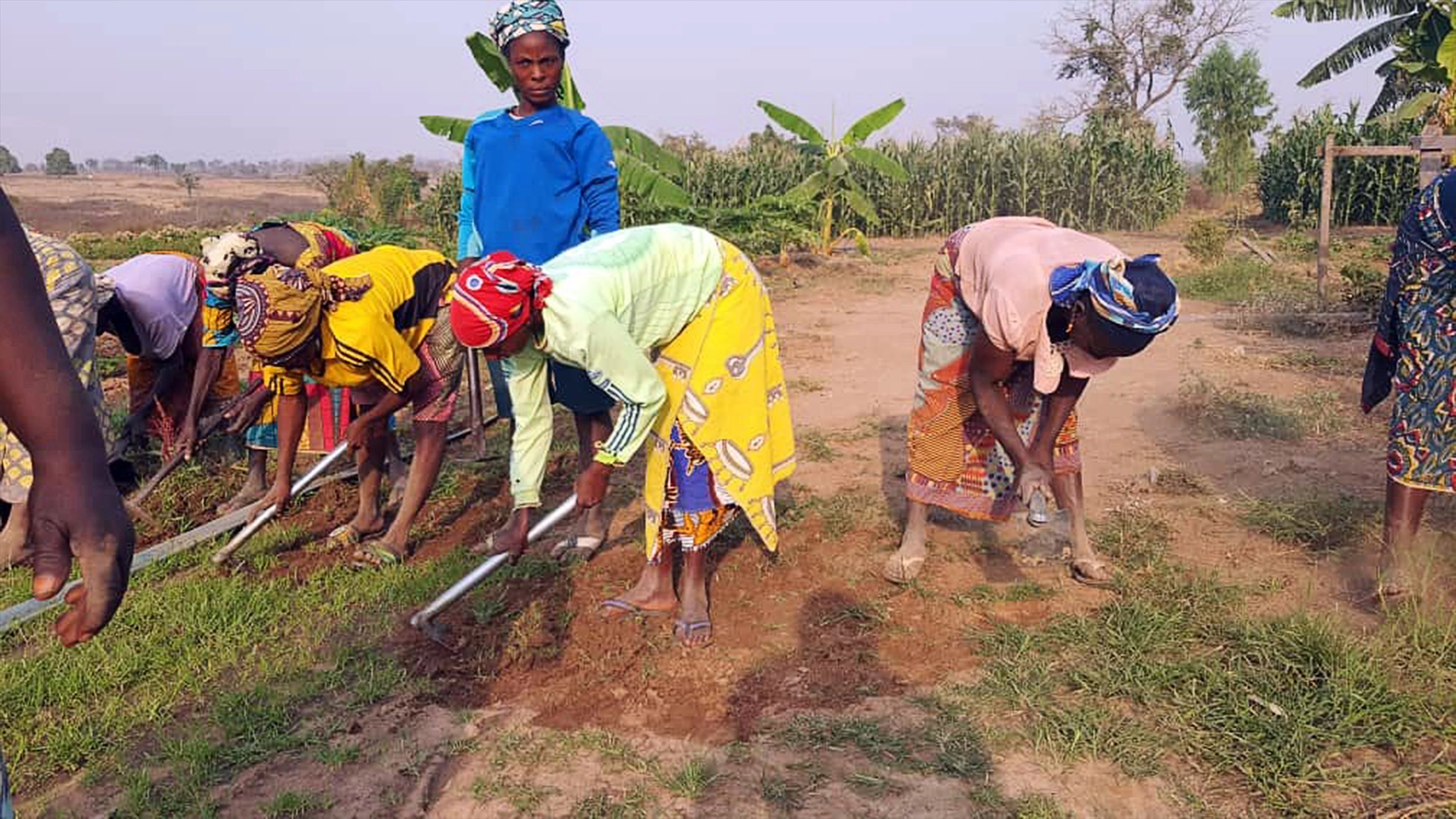
Nigeria has been projected to experience largest increase in food insecurity globally this year with 4.1 million more people to face acute hunger. This is expected to happen between June and August.
The projection contained in the 2026 Global Report on Food Crises noted that even before the stress of the war between United States and Iran, West Africa and the Sahel looked likely to remain under heavy pressure this year from conflict and persistent inflation, particularly in Nigeria, Mali, Niger and Burkina Faso.
But why the national conversation has been dominated, understandably, by what is failing, conflict, inflation, insecurity, governance, and supply chains, there is a quieter story unfolding alongside the headlines – majorly the story of how women are responding to the crisis with the tools they have, and producing real outcomes, measured in income, in food that reaches market, and in households that hold steady.
Over time, women play essential roles across agrifood systems, producing, processing and trading food that sustains families, communities and economies. Yet, their contributions often go unrecognised, and persistent inequalities limit their access to resources, opportunities and decision making.
As the projected lean season starts in June and runs through August, industry players noted that these are the women, and the businesses, that the country will need to be paying attention to over the coming months.
In a market in Ekiti State, a young fish trader who used to lose nearly half her stock to spoilage now keeps her catch frozen on solar power, sells later, and earns twice what she did last year.

In Enugu State, a vegetable farmer who once watched her tomatoes rot in the sun walks her crop into a cold room run by her neighbour, a 28-year-old who built the business from scratch.
Also, in Kaduna State, a young woman who learned milling from her mother runs an electric mill that now serves three villages, paying herself a steady income for the first time.
These women are not waiting for the food crisis to end. They are doing something about it, quietly, business by business, in the parts of Nigeria where the system has long underserved them.Some of these works are now being supported at scale. Programmes like the Energising Women and Youth in Agri-Food Systems (EWAS) are working across the country to put solar-powered cold storage, irrigation pumps, electric mills and processing equipment into the hands of women and young entrepreneurs in agri-food value chains, paired with the financing and training to make them stick.
Considering the role of women in agribusiness, the United Nations declared 2026 the International Year of the Woman Farmer (IYWF 2026).
The year spotlights the essential roles women play across agrifood systems, from production to trade, while often going unrecognised. Women farmers are central to food security, nutrition and economic resilience.
YWF 2026 raises awareness and promotes actions to close the gender gaps and improve women’s livelihoods worldwide.
An Agribusiness expert, Michael George, said considering the impacts of women farmers across the country, the national conversation has been dominated, understandably, by what is failing, conflict, inflation, governance, and supply chains. But there is a quieter story unfolding alongside the headlines, and it matters for three reasons.
“First, it is a story about agency. The women in this story are not waiting for aid, intervention, or election cycles. They are responding to the crisis with the tools they have, and producing real outcomes, measured in income, in food that reaches market, in households that hold steady.
“Secondly, it touches every major issue currently on the Nigerian agenda: food security, the cost of living, youth employment, women’s economic participation, the energy transition, and what economic reform looks like at the household level. Few stories sit at the intersection of so many active conversations.
“Thirdly, this is happening now, on the ground, in identifiable states. It is not a forecast or a policy proposal. It is observable, reportable, and, most importantly, on the brink of mattering far more than it does today, because what these women are doing is the kind of resilience the country will need to lean on through the lean season.”
The target of the IYWF 2026 is to raise awareness on the role of women jn agrifood systems and the challenges they face, including land tenure, financial and technical constraints, and unlimited access to services and education.
The Food and Agriculture Organisation (FAO) noted that empowered women are key agents of change in transforming agrifood systems – closing gender gaps in access to and control over land, finance, technology, education and decision-making enhances the well-being of women and their households, boosts productivity, strengthens resilience to climate change and drives progress towards the Sustainable Development Goals (SDGs).
In an interview with FAO Newsroom, the Gender Team Leader, Tacko Ndiaye, and FAO’s Strategic Coordinator of the International Year of the Woman Farmer, Mariola Acosta, said globally, women account for about 41 per cent of the agrifood workforce, and agrifood systems and are a more important source of livelihood for women than for men in many regions.
Citing the example of sub-Saharan Africa and South Asia, they noted that the majority of working women are engaged in agrifood systems. “Women contribute across production, processing, value addition, distribution and trade, and are essential to household food security, nutrition and rural livelihoods, yet much of their work remains undercounted and undervalued.
“Women farmers face interlinked structural barriers limiting their productivity, income and decision-making power. They often encounter weak legal protection and limited enforcement that restrict women’s access to and control over land and natural resources, including discriminatory land tenure and inheritance systems.
“Economically, women farmers tend to face limited access to credit, inputs, technologies, markets, and financial services. They also face barriers in accessing decent employment as they are more likely to be concentrated in low-paid, informal, part-time, and insecure types of work. Discriminatory social norms restrict women farmers’ decision-making power within households and organisations, limit their participation in training and services, including agricultural extension services, and reduce their opportunities to take on leadership roles.
“The heavy unpaid care and domestic workloads of women farmers, which also stem from discriminatory social norms, reduce the time and energy they can devote to leisure, productive, entrepreneurial, and community engagement activities.”
They warned that as women farmers are key contributors to agrifood systems, from production, markets, value addition to distribution, trade and innovation, excluding them from policies, investments, and leadership will undermine agricultural productivity and food security, which poses significant risks to economic growth and sustainable rural development.
“Simply put, without women’s insights and contributions, agrifood systems would fail to exploit their full potential. Ultimately, their exclusion leads to ineffective policies that don’t address the needs of the entire community and society, diminishing the resilience of agrifood systems overall.”
It was further learnt that despite their essential role in agrifood systems, women farmers face more precarious working conditions, heavier workloads, and unequal access to resources.
Women advocates, claimed that their roles are often marginalised and their working conditions are typically worse than men’s – irregular , informal, part- time, low-waged, labour-intensive and thus vulnerable.
“Securing women’s land rights strengthens agrifood systems and rural development helps communities to thrive.
“Women remain behind in securing access, management, and ownership of land, and face discrimination or inadequate legal protection in these areas. Enhancing women’s land rights boost their empowerment, investment capacity, sustainability, and resilience, while improving access to services, reducing gender-based violence, and strengthening their bargaining power.”

