 Follow Us on Google News
 Follow Us on Google Discover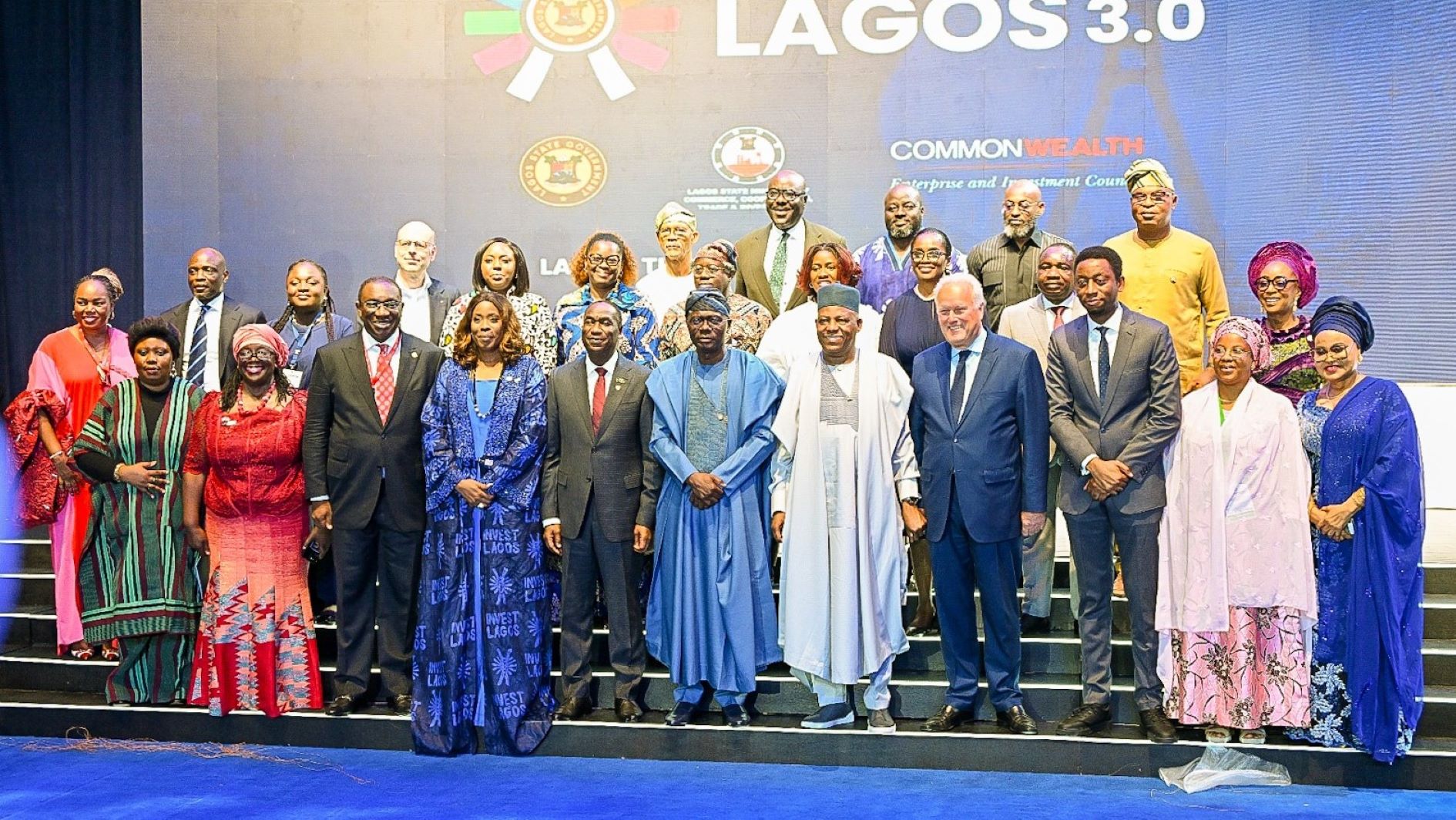
•State can build globally-competitive economy, says Commonwealths Sec-Gen
•FG won’t increase tax burden, Oyedele insists
Lagos State Governor, Babajide Sanwo-Olu, has reiterated the state’s ambition to become Africa’s foremost investment destination, projecting sustained growth through strategic investments in infrastructure, technology, trade and financial services to hit a $300 billion sub-national economy.
Speaking yesterday at the third edition of the Invest Lagos Summit, attended by Vice President Kashim Shettima, other governors, foreign investors, development finance institutions and business leaders, Sanwo-Olu said Lagos was deliberately building a globally competitive economy driven by innovation, infrastructure and private-sector participation.
The summit featured a high-level panel session comprising governors from Lagos, Abia, Imo, Plateau and Nasarawa states, who shared insights on sub-national competitiveness, investment attraction and economic transformation. The governors highlighted reforms aimed at improving the ease of doing business, strengthening infrastructure and creating enabling environments for private-sector growth.
Collectively, the governors stressed the importance of inter-state collaboration, policy consistency and private-sector participation in unlocking Nigeria’s economic potential and attracting greater domestic and foreign investment.
Sanwo-Olu said the state had recorded significant economic progress in recent years through targeted reforms across transportation, digital infrastructure and industrial development.

Highlighting key infrastructure achievements, Sanwo-Olu cited investments in road networks, waterways and rail transportation, describing them as critical enablers of economic growth and investor confidence.
The governor noted that Lagos was increasingly serving as a gateway to African markets and global capital, positioning itself at the centre of continental trade under the African Continental Free Trade Area (AfCFTA).
According to him, Lagos remains one of the continent’s most strategic economic hubs, with a population exceeding 25 million and a gross domestic product steadily approaching the $300 billion mark.
“We are the most attractive destination within the AfCFTA ecosystem and the largest sub-national economy in Africa. Our demographic advantage, market size and connectivity continue to strengthen our competitiveness,” he added.
As part of efforts to deepen access to global capital, the governor disclosed that Lagos was developing the Lagos International Financial Centre (LIFC), envisioned as a world-class financial district that would strengthen the state’s position as a gateway for investment into Africa.
He pointed to growing investor confidence in the state’s economy, citing support from international development finance institutions and multilateral organisations.
The Minister of Finance and Coordinating Minister of the Economy, Taiwo Oyedele, said ongoing macroeconomic reforms had created a more stable environment for investment and shifted attention towards opportunities at the state level.
According to him, Nigeria’s growth story is increasingly being driven by its states, with Lagos and other emerging economic centres becoming critical destinations for domestic and international capital.
Oyedele noted that Nigeria’s external reserves had risen from a net position of less than $4 billion two years ago to more than $30 billion net and nearly $50 billion gross, while the economy recorded a growth rate of 3.89 per cent in the first quarter of 2026.
He added that the economy expanded by 11.2 per cent in dollar terms in 2025 and remains on course for another double-digit growth performance this year.
The minister also pointed to recent sovereign credit rating improvements by S&P Global, Fitch Ratings and Moody’s as indicators of strengthening investor confidence in the country’s economic direction.
On fiscal reforms, Oyedele said the government’s objective was not to increase the tax burden but to expand the tax base and improve efficiency.
He explained that the new tax framework allocates a larger share of value-added tax revenues directly to states, grants states exclusive access to stamp duty proceeds, including electronic money transfer levies, and provides tax exemptions for state government bonds to support infrastructure financing.
Oyedele further disclosed that the Ministry of Finance was establishing a dedicated investment facilitation platform to identify strategic projects, address regulatory bottlenecks and connect investors with bankable opportunities across the country.
In her keynote, the Commonwealth Secretary-General, Shirley Botchwey, said investors were navigating a period of structural change rather than a temporary phase of uncertainty.
She observed that rising trade tensions, supply chain reconfigurations, debt pressures and climate-related disruptions were reshaping global investment decisions and increasing the importance of trust, regulatory certainty and long-term growth prospects.
“The question for investors is no longer simply where the highest returns are. It is also where the trust is, where the talent is, where the market is and where there is regulatory confidence,” she said.
Botchwey described Lagos as a city that has moved beyond promise to performance, citing the success of home-grown fintech companies such as Flutterwave, Paystack and OPay as evidence of Africa’s capacity to build globally competitive businesses.
She also noted that trade among Commonwealth countries costs about 21 per cent less than trade with non-member countries because of shared legal systems, business practices and institutional frameworks, but stressed that such advantages must be translated into practical investment outcomes.
Botchwey further called for more inclusive investment strategies, warning that economic growth that excludes large segments of society would be difficult to sustain over the long term.
The Invest Lagos 3.0 Summit convened policymakers, investors, business executives and development partners to explore investment opportunities across infrastructure, energy, healthcare, logistics, manufacturing and the digital economy, as Lagos seeks to consolidate its position as Africa’s leading commercial and investment hub.

