 Follow Us on Google News


 Follow Us on Google Discover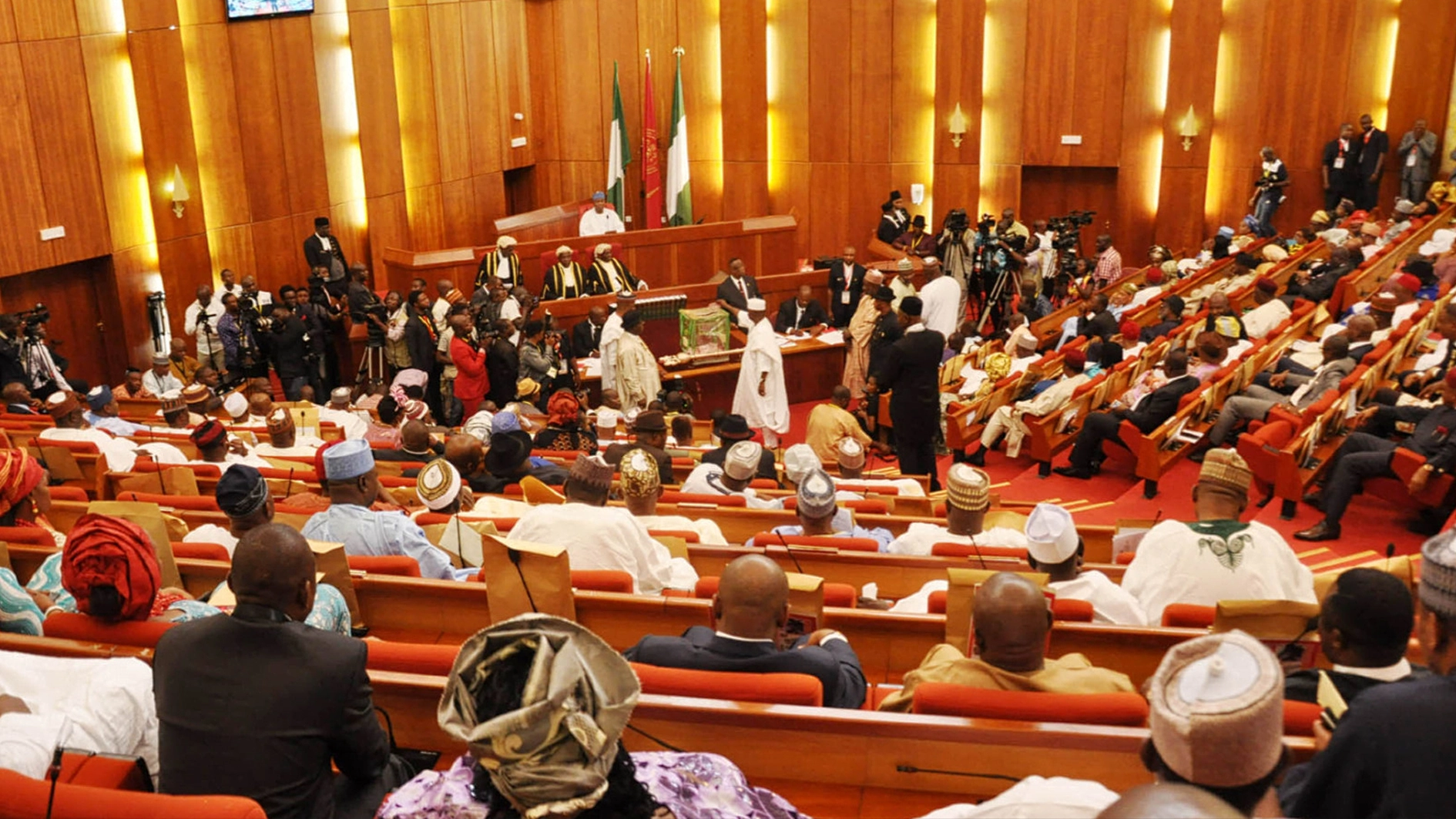
The Senate on Tuesday called for a total ban on the importation of textile materials into Nigeria, declaring that the measure is critical to reviving the country’s once-vibrant textile sector, creating jobs and stimulating economic growth.
Lawmakers also urged the Federal Government, the Federal Ministry of Industry, Trade and Investment, and the Federal Ministry of Agriculture to immediately implement policies aimed at resuscitating textile industries nationwide as part of broader efforts to tackle unemployment, youth restiveness and insecurity.
The resolutions followed the adoption of a motion titled “Urgent Need to Revive the Textile Industries in Nigeria,” sponsored by Senator Katung Marshall and co-sponsored by nine other senators during plenary.
Leading the debate, Katung painted a nostalgic picture of an industry that once stood as one of Nigeria’s strongest economic pillars. He recalled that the country’s first large-scale textile manufacturing mill was established in Kaduna in 1957, a development that later inspired similar investments across the Eastern and Western regions.
According to him, government protection policies in the 1960s and 1970s, particularly restrictions on textile imports, attracted investors and helped the sector flourish.
At its peak, he said, Nigeria’s textile industry accommodated about 167 textile mills and directly employed more than 500,000 people, making it the nation’s second-largest employer after the Federal Government.

Katung noted that Kaduna became widely known as Nigeria’s “Textile City” because of the concentration of major textile firms such as Arewa Textiles Plc, Fantext Nigeria Ltd, Nortex Nigeria Ltd, Supertex Ltd and United Nigerian Textiles Ltd, which collectively generated thousands of jobs and business opportunities.
However, he lamented that the sector began a steady decline in the late 1990s due to obsolete machinery, inadequate capital and persistent power supply challenges.
He recalled that by 2007, major companies including Kaduna Textile Limited, Arewa Textiles and United Nigerian Textiles Limited had shut down operations, leading to the loss of more than 7,000 jobs.
“The industry today is only a shadow of its former self despite its enormous contribution to the nation’s economy in previous decades,” he said.
The senator further disclosed that Nigeria’s textile industry was once ranked the third largest in Africa, generating approximately $2 billion annually and producing a broad range of products, including African prints, wax prints, lace materials, towels, bed sheets, furnishing fabrics and fishing nets.
Katung blamed the worsening fortunes of the industry on the influx of imported textile products, arguing that the removal of restrictions on textile imports in 2010 significantly weakened local manufacturers.
“With the lifting of the ban on textile importation in 2010, Nigeria now has almost 80 per cent of its textiles imported from China, Indonesia, Taiwan and other countries. This trend is definitely not helping the Nigerian economy in terms of employment generation and the conservation of foreign exchange,” he said.
Following deliberations, the Senate resolved to push for policies that would revive the sector, including a ban on textile imports, increased funding for the Bank of Industry to support struggling manufacturers, and expanded cotton cultivation to strengthen the industry’s value chain.
Deputy Senate President, Barau Jibrin, who presided over the session, assured lawmakers that the Senate would closely monitor the implementation of the resolutions.
He said the upper chamber was determined to ensure that the recommendations translate into concrete action, stressing that the revival of the textile industry could generate massive employment opportunities, boost local production and reduce Nigeria’s dependence on imports.

