 Follow Us on Google News
 Follow Us on Google Discover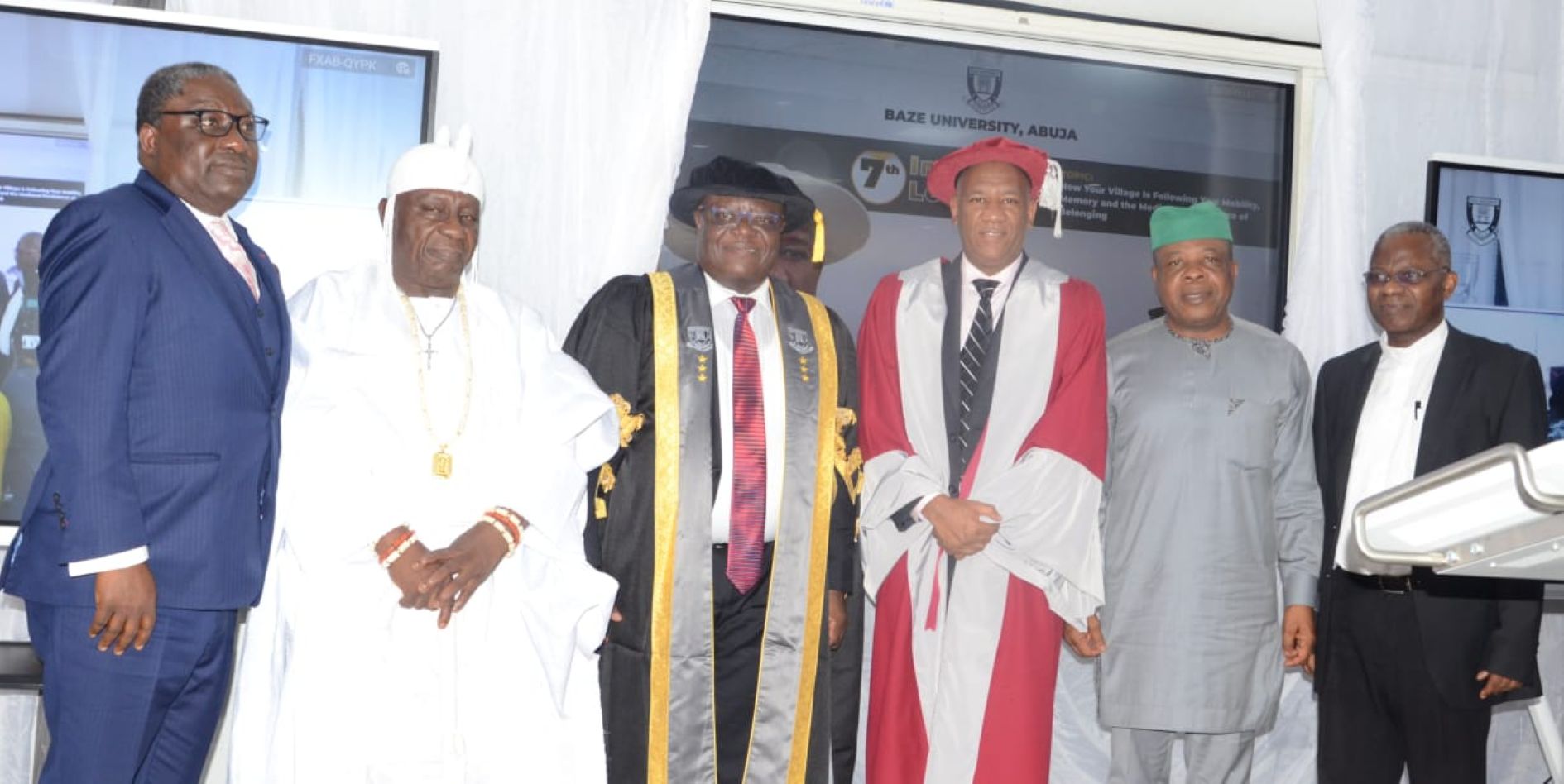
Vice-Chancellor of Baze University, Abuja, Professor Abiodun Adeniyi, on Tuesday challenged conventional notions of migration, declaring that in an age of digital connectivity, people never truly leave home.
Delivering Baze University’s Seventh Inaugural Lecture titled, “How Your Village Is Following You: Mobility, Memory and the Mediated Persistence of Belonging,” Prof. Adeniyi argued that while people may relocate physically, they remain deeply connected to the communities, cultures and identities that shaped them.
Speaking before an audience of academics, policymakers, traditional leaders, students and other guests in Abuja, the professor described the modern era as one marked by unprecedented movement and connectivity. Yet, he said, these developments have not diminished people’s attachment to their roots.
“The village is a moral archive, a symbolic anchor, and a continuing source of identity formation,” he said, stressing that individuals may leave physically “without ever departing existentially.”
Adeniyi, a former staff of The Guardian maintained that belonging remains one of humanity’s strongest impulses, influencing people’s choices and relationships regardless of where they reside.
The Professor of Communication and Media Epistemology, pointed to diaspora communities across the world, many of whom continue to contribute to the development of their hometowns through cultural engagements, financial support and community initiatives.

Adeniyi also examined the growing role of digital technology in shaping identity and preserving memory. He argued that photographs, videos, online interactions and social media activities have created permanent digital footprints that extend the reach of one’s community beyond geographical boundaries.
“The village follows people not only through memory and social expectations but also through data,” he observed.
According to him, migration in the 21st century has evolved beyond mere relocation into a continuous process of connection, circulation and networked existence.
The Don also highlighted the enduring power of belonging, stressing that people rarely abandon the communities and values that shaped them, regardless of where life takes them.
Using diaspora communities as examples, he observed that millions of people across the globe continue to contribute to family responsibilities, community development projects and cultural activities in their places of origin despite living thousands of kilometres away.
Adeniyi further argued that memory has become increasingly digitised, with photographs, videos, messages and social media interactions creating permanent archives of people’s experiences and identities.
He warned, however, that the digital age presents fresh challenges, including misinformation, cybercrime, surveillance and algorithmic manipulation, urging governments and institutions to strengthen frameworks for privacy, security and digital governance.
Rejecting suggestions that technology has weakened traditional identities, Adeniyi maintained that innovation has merely transformed the ways people express and sustain their sense of belonging.
In his intervention, the Chancellor of the University, Senator Datti Baba-Ahmed, expressed surprise and deep interest following a revelation by the Obaro of Kabba and Chairman of the Okun Area Traditional Council in Kogi State, Oba Dr. Solomon Dele Owoniyi, that Kabb has its own indigenous calendar system.
Senator Baba-Ahmed described the disclosure as fascinating and potentially significant for historical and cultural scholarship, noting that it opens a new frontier for academic inquiry into Nigeria’s traditional knowledge systems.
In a bold move to encourage research in the area, he announced a reward of N25 million for any researcher or scholar who can produce a credible and well-documented study on the Nigerian calendar. He said the initiative is aimed at stimulating intellectual curiosity, preserving indigenous knowledge, and promoting national identity through historical documentation.

