 Follow Us on Google News
 Follow Us on Google Discover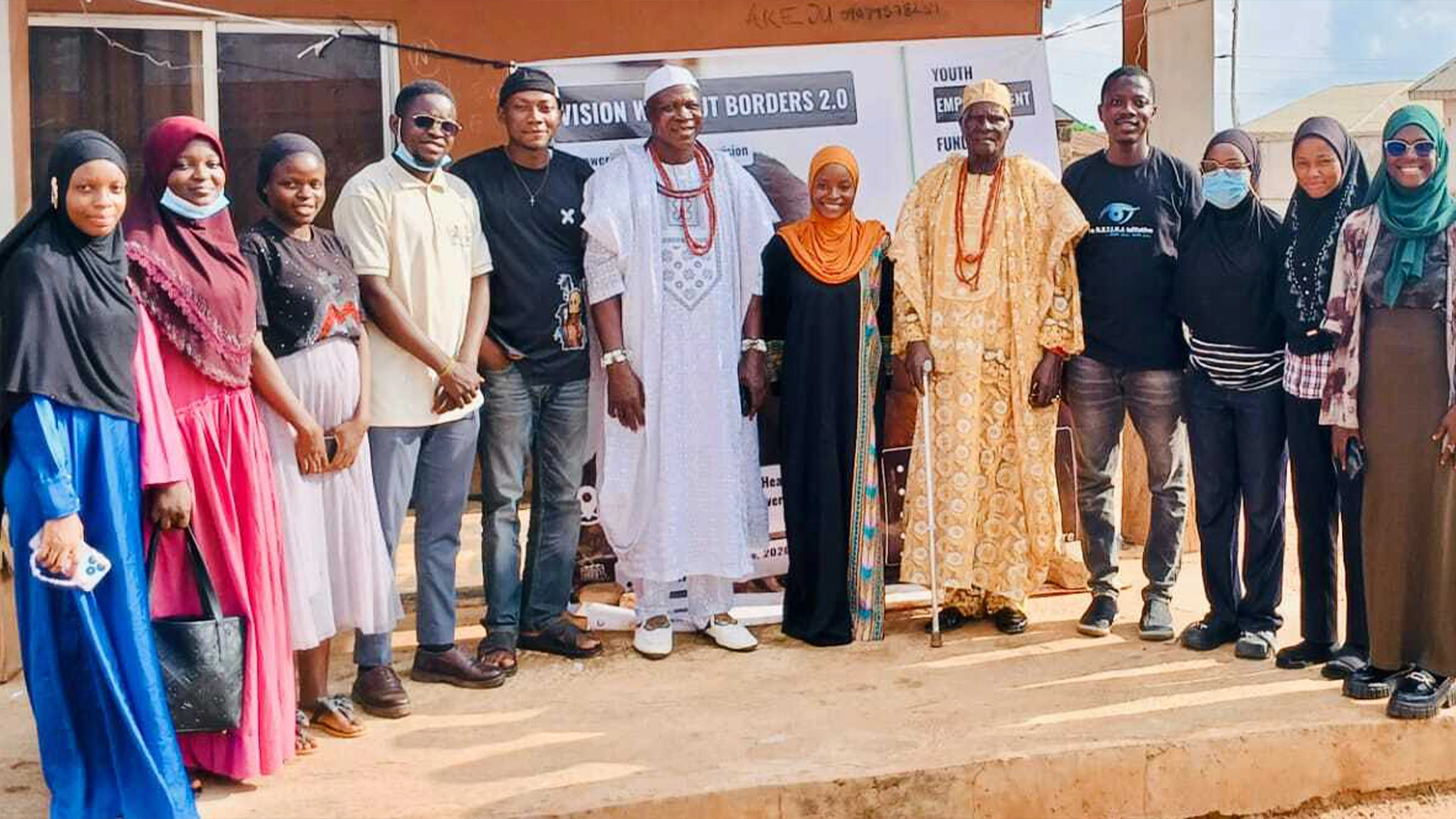
…As 500 residents receive free eye treatment in Osun
An eye health initiative has emphasised the importance of early detection and community-level capacity building in vision care, as over 500 residents of Agbeda and Imadin communities in Ilesha West Local Government Area of Osun State received free eye treatment under a targeted outreach programme.
The intervention, carried out under the Vision Without Borders 2.0 outreach, was organised by the R.E.T.I.N.A Initiative, and combined direct patient care with training for primary healthcare workers to improve basic eye health assessment and referral systems within the communities.
Beneficiaries of the outreach received free eye examinations, with reading glasses, medications, and specialist referrals provided where clinically necessary. The programme also focused on strengthening local health infrastructure, as health workers at Ifesowapo Agbeda Primary Health Centre and Imadin Primary Health Centre were trained on basic visual acuity assessment. In addition, visual acuity charts were donated to both facilities to support routine screening and early identification of vision problems.
Co-founder of the initiative, Dr Babatunde Bale, said the programme was designed to complement existing primary healthcare services rather than replace them.
“Our interest is in complementing what the primary health care system already provides by working with the facilities and health workers already serving these communities. We hope to make eye health a more consistent part of the care that residents receive at the primary level,” he said.
Also speaking, co-founder and optometrist, Dr Amarachi Esonwune, stressed the importance of ensuring that training translates into effective community-level practice.

“Training the community health workers is something we feel strongly about. The visual acuity charts are only useful if there are people who know how to use them and understand when to refer. That capacity now exists in both communities,” she said.
Post-intervention data from the programme showed notable gaps in access and utilisation of eye care services. Findings revealed that 56.41 per cent of beneficiaries had never previously used reading glasses, while 21.61 per cent of those who did not use glasses said they were unaware they needed them, and another 21.61 per cent believed they had no vision problems.
Despite this, 83.35 per cent of respondents were aware that reading glasses improve near vision, indicating that the key challenge lies more in access and screening than awareness. When asked why people in their communities do not use reading glasses, 32.6 per cent cited lack of awareness of the need for glasses.
The Vision Without Borders initiative is now in its second edition, following its inaugural outreach in Makoko, Lagos State in October 2024, where over 400 residents benefited from free eye care services, including referrals for conditions such as cataract and pterygium.
Organisers said the initiative aligns with Sustainable Development Goal 1 (No Poverty) and Sustainable Development Goal 3 (Good Health and Well-being), noting that improved vision health contributes to education, productivity, and economic participation.
The programme is supported by the Global Youth Mobilization Fund, an initiative backed by the Big Six International Youth Organisations, including the World Alliance of Young Men’s Christian Associations (YMCAs), World Young Women’s Christian Association (YWCA), The Scout Movement, World Association of Girl Guides and Girl Scouts, the International Federation of Red Cross and Red Crescent Societies, and The Duke of Edinburgh’s International Award, alongside partners such as the European Union Youth Empowerment Fund, the World Health Organization (WHO), and the United Nations Foundation.
According to the organizers, the Initiative is part of a broader mission to expand access to eye care in underserved Nigerian communities through clinical outreach, education, and primary healthcare strengthening.

