 Follow Us on Google News
 Follow Us on Google Discover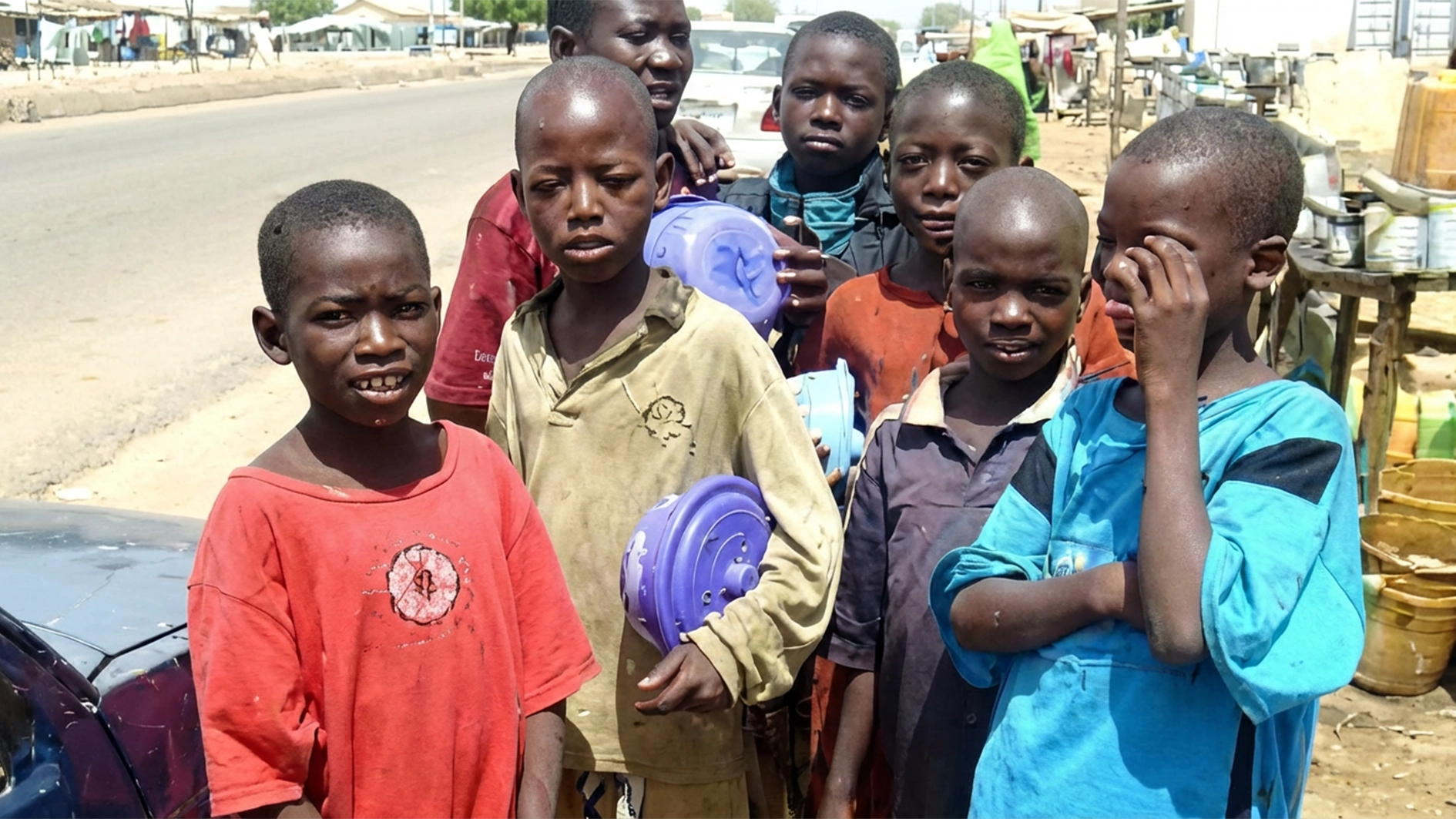
Nigeria today joined the global community to raise a red card against child labour, even as the Federal Government renewed its commitment to eliminating the menace by 2030 amid concerns that about 25 million Nigerian children are still engaged in child labour.
The renewed commitment came as the International Labour Organisation (ILO) disclosed that 138 million children worldwide remain trapped in child labour, including 54 million engaged in hazardous work, despite decades of interventions aimed at ending the practice.
At events today marking the 2026 World Day Against Child Labour and on the sidelines of the ongoing 114th International Labour Conference in Geneva, Switzerland, government officials, labour leaders and employers warned that weak enforcement of laws, poverty, inequality and inadequate social protection continue to fuel child labour in Nigeria and across the world.
Director of the Labour Inspectorate Department in the Federal Ministry of Labour and Employment, Magaji Ademu, said Nigeria remained fully committed to meeting the global target of ending child labour by 2030.
He disclosed that the country’s National Child Labour Policy and National Action Plan, developed with the support of the ILO, would be officially launched in Abuja on June 16.
According to him, the new framework is expected to strengthen the country’s response to child labour and accelerate efforts towards achieving international commitments.

“Our National Child Labour Policy and National Action Plan have been validated with the support of the ILO and will be launched on June 16 in Abuja,” Ademu said.
While reaffirming Nigeria’s commitment, he admitted that weak enforcement mechanisms and limited access to rural communities, where child labour is most prevalent, continue to hinder progress.
“We are strengthening enforcement mechanisms and addressing structural gaps that make implementation difficult,” he added.
The ILO, which adopted the theme, “Red Card to Child Labour: Fair Play for Children, Decent Work for Adults,” said the campaign seeks to mobilise governments, employers and workers to intensify efforts against child labour through quality education, decent work opportunities, social protection and stronger enforcement of labour laws.
ILO Director-General Gilbert Houngbo said the world was at a critical point in the fight against child labour, noting that although progress had been recorded over the years, millions of children were still being denied their rights to education, protection and healthy development.
He said with the 2025 deadline for achieving Sustainable Development Goal (SDG) Target 8.7 now passed, the global community faces a critical juncture in the fight against child labour.
In Nigeria, the scale of the challenge remains alarming.
According to the 2022 Nigeria Child Labour Survey Report released by the National Bureau of Statistics, about 25 million children—representing 39.2 per cent of those aged between five and 17 years—are engaged in child labour.
The situation is more severe in rural areas, where 44.8 per cent of children are affected.
The survey also revealed that children are predominantly exploited in the informal economy, including agricultural supply chains such as cocoa farming, artisanal mining, and domestic work.
According to the report, over 35 per cent of children in Ondo State are engaged in child labour.
Experts note that Nigeria’s minimum-age protections do not fully align with international standards, particularly for children who are self-employed or engaged in informal work. In addition, Kano State does not prohibit the use of children in illicit activities.
The argued that the country also lacks legal provisions criminalising the recruitment of children under 18 by non-state armed groups and does not have enough labour inspectors to adequately monitor compliance.
Furthermore, they said social programmes remain insufficient to prevent and remove children from the worst forms of child labour, including armed conflict and commercial sexual exploitation.
Among the key legal challenges are conflicting minimum-age provisions. While the Labour Act permits employment from age 12 under certain conditions, the Child Rights Act and the Universal Basic Education Act effectively prohibit child labour for anyone under 18.
Other concerns include the absence of a detailed hazardous work list, limited protection for children in the informal sector, and weak penalties that fail to deter offenders.
Labour leaders expressed concern that policy responses have not kept pace with the growing dimensions of the problem.
President of the Nigeria Labour Congress (NLC), Joe Ajaero, said poverty, inequality, weak enforcement of labour laws and underfunded public education continue to push children into work.
According to him, while Nigeria has recorded gains through policy reforms and awareness campaigns, the rate of intervention remains slower than the rate at which child labour challenges are expanding.
“We cannot build a society founded on decent work while children are forced to work under exploitative and unsafe conditions,” Ajaero said.
He urged governments at all levels to fully implement the Child Rights Act, guarantee free and quality education, and expand social protection programmes to protect vulnerable families from economic pressures that drive child labour.
The Trade Union Congress (TUC) also called for stronger enforcement of labour laws and increased investment in education and child welfare, while the Nigeria Employers’ Consultative Association (NECA) reaffirmed its commitment to promoting responsible workplace practices and supporting efforts to eliminate child labour.
Stakeholders, however, warned that achieving the 2030 target would require more than policy declarations, stressing the need for sustained political commitment, stronger institutions, adequate funding and coordinated action across all levels of government.
Beyond its physical and educational consequences, child labour has profound and lasting effects on children’s mental health and psychosocial well-being.
Studies have shown that exposure to hazardous, exploitative, or abusive working conditions increases the risks of chronic stress, anxiety, depression, and psychological trauma, while also hindering children’s emotional, cognitive, and social development.
Despite these realities, mental health considerations remain insufficiently integrated into anti-child labour policies and programmes.

