 Follow Us on Google News
 Follow Us on Google Discover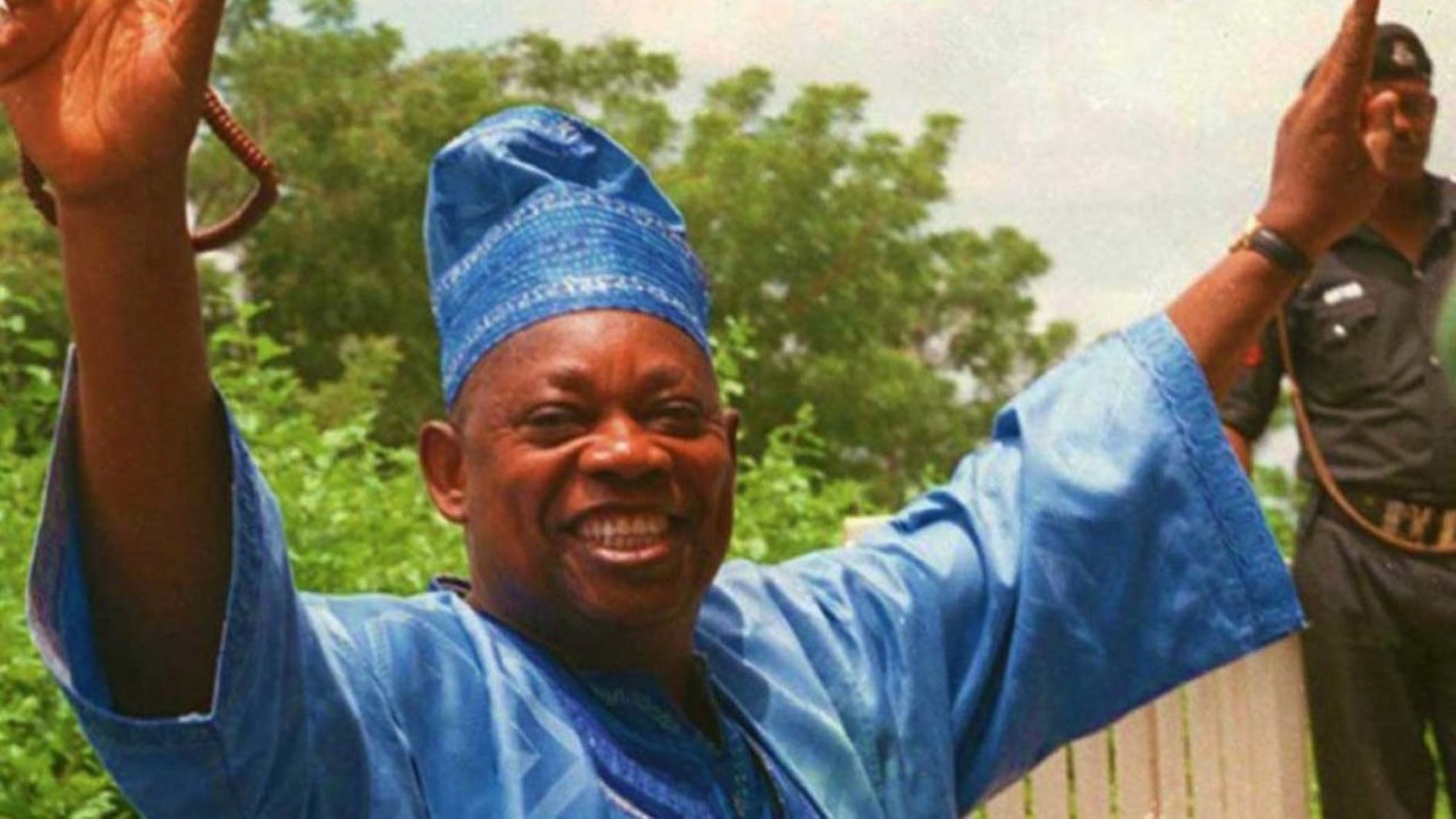
There are many missing links in Nigeria’s presidential democracy, such that after 33 years of civilian rule, the fault lines keep expanding. The checklist of essential ingredients of a real democratic system does not pertain solely to free, fair, and regular elections, the rule of law, the separation of powers, and an independent judiciary. Stakeholders reckon that the essence of democracy is the people element, otherwise called the popular sovereignty, and must be prioritised as the legacy of June 12 commemoration, LAWRENCE NJOKU, ANN GODWIN, LEO SOBECHI, ADAMU ABUH, ROTIMI AGBOLUAJE and ADEWALE MOMOH report.
It is neither a hollow ritual nor mere sloganeering. But on June 12, every year, Nigerians continue to reminisce and bellyache over the trauma of the annulled presidential election 33 years ago and the arguably scant returns from presidential democracy.
Painfully, after the June 12, 1993, exercise, no other presidential poll has achieved high voter turnout or a credible outcome. Why has the country been unable to measure citizen inclusivity not only in leadership recruitment but also in governance?
Amid a myriad of challenges, the consensus is that Nigeria’s democratic institutions are growing stronger, and that courageous personnel to head those crucial bodies are not in short supply.
Deputy Speaker of the House of Representatives, Benjamin Kalu, declared that Nigeria’s democratic institutions have continued to grow stronger despite the economic, security and political challenges that have confronted the country over the last 27 years of uninterrupted democratic rule.
Kalu made the assertion while delivering a message at the 27th Democracy Day Inter-Denominational Church Service held in Abuja, where he also reaffirmed the National Assembly’s commitment to strengthening democratic governance and advancing reforms that improve the lives of Nigerians.

Reflecting on the country’s democratic journey since 1999, the Deputy Speaker said democracy had survived numerous tests and remained the most viable platform for national development, accountability and citizen participation.
“Twenty-seven years ago, our nation embarked on a democratic journey that has not been without challenges. We have experienced moments of triumph and moments of trial. We have faced economic pressures, security concerns, social tensions and political contests. Yet, through it all, democracy has endured. That endurance is itself proof of the resilience of the Nigerian spirit,” Kalu said.
According to him, the true strength of a country is not measured by the absence of difficulties but by the determination of its citizens to overcome challenges collectively.
The Deputy Speaker, however, stressed that democracy should not be judged merely by the conduct of elections, but by its ability to deliver tangible benefits to citizens through improved living standards, expanded opportunities, the protection of rights, and enhanced national unity.
Although Nigeria has enjoyed uninterrupted civilian rule since 1999, concerns over voter apathy, weak institutions, electoral credibility, judicial controversies, political defections, insecurity and the widening disconnect between citizens and government have cast a shadow over the nation’s democratic journey.
Democracy without people-participation
For many observers, June 12 has evolved beyond a symbol of electoral justice into a yearly reminder of the unfinished task of building a people-centred democracy.
Across the country, declining voter turnout has become one of the most visible indicators of citizens’ growing disenchantment with the political process.
While more than 84 million Nigerians were registered to vote in the 2023 general election, less than 30 per cent eventually participated, raising concerns about public confidence in democratic institutions and governance.
Experts argue that the challenge goes beyond elections. They point to poverty, poor governance, institutional weaknesses, perceived lack of electoral independence and the failure of successive administrations to deliver tangible dividends of democracy as factors fuelling public disillusionment.
Speaking on the state of Nigeria’s democracy 33 years after June 12, Professor of Law and Dean of the Faculty of Law, Olusoga Olabode, said many Nigerians have become apathetic because they can no longer see the benefits of democratic governance in their daily lives.
According to him, democracy ought not to be viewed as a transactional process in which citizens vote only to receive personal benefits, but rather as a collective system through which citizens exercise power through elected representatives.
Olabode identified poverty and logistical barriers to voting, particularly in rural communities, as additional factors discouraging political participation.
He also argued that politicians bear greater responsibility for democracy’s shortcomings because citizens do not feel its impact.
While acknowledging imperfections within the judiciary and security agencies, he maintained that the political class remains the biggest obstacle to democratic consolidation because elected officials have largely failed to translate political power into meaningful development for ordinary Nigerians.
On the broader question of Nigeria’s democratic status, Olabode insisted that the country remains a democracy, noting that elected governments still derive their authority from the people, even though significant reforms are needed to improve governance.
His reservations, however, become more pronounced when discussing the electoral process. He questioned the independence of the Independent National Electoral Commission (INEC), arguing that the incumbent president’s appointment of its chairman creates perceptions of political indebtedness and undermines public confidence in electoral outcomes.
To strengthen the commission’s credibility, he advocated a new appointment mechanism that involves respected Nigerians of proven integrity, rather than leaving the process solely in the executive’s hands.
The law professor also joined growing calls for constitutional reforms, arguing that the presidential system has become excessively expensive and has failed to deliver commensurate benefits to the majority of citizens.
He suggested that Nigeria could adopt a parliamentary system or develop a hybrid arrangement combining the strengths of both presidential and parliamentary systems.
Similarly, Professor of History and Diplomatic Studies and Dean of Arts, Management and Social Sciences at Koladaisi University, Ibadan, Sekinat Kola-Aderoju, attributed the decline in political participation to a combination of voter apathy, loss of confidence in government, and limited access to electoral processes.
She observed that while communities continue to expand through new settlements and population growth, electoral infrastructure has not kept pace, leaving many citizens with limited access to registration centres and polling units.
Kola-Aderoju argued that responsibility for Nigeria’s democratic shortcomings cannot be placed on a single institution. According to her, politicians, security agencies, electoral officials and even citizens have all contributed in varying degrees to the challenges confronting elections and governance.
She particularly lamented the persistence of vote-buying, noting that many citizens still exchange their votes for small sums of money despite the long-term consequences for governance and national development.
While acknowledging that Nigeria operates a democratic system, the historian maintained that the country’s democracy remains fragile because citizens are not sufficiently involved in decision-making processes as envisioned under classical democratic principles.
For her, stronger institutions and broader political participation remain essential if the country is to deepen democratic governance and strengthen public trust.
Kola-Aderoju also identified technology as a critical tool for electoral reform. Drawing from her experience in Canada, she argued that greater deployment of technology could reduce human interference, enhance transparency and improve public confidence in election outcomes.
Flawed recruitment process
Echoing concerns about institutional design, the Secretary-General of Afenifere, Sola Ebiseni, argued that the spirit of June 12 continues to be undermined by constitutional and structural defects that have remained largely unresolved since the return to civilian rule.
According to him, one of the greatest weaknesses in Nigeria’s democratic architecture is the process by which INEC members are appointed.
Ebiseni noted that because the president appoints electoral commissioners while simultaneously serving as a candidate through his political party, perceptions of bias are inevitable, regardless of how elections are conducted.
He recalled that nearly every president since 1999 has faced accusations of influencing electoral outcomes, a development he said reflects a deeper structural problem rather than the conduct of individual officeholders.
To address the challenge, he advocated constitutional reforms that would completely insulate electoral appointments from partisan politics while guaranteeing security of tenure and institutional independence for electoral officials.
Beyond electoral reforms, Ebiseni argued that Nigeria’s fundamental challenge lies in the contradiction between its federal character and the highly centralised nature of governance.
The Afenifere leader pointed to the country’s unitary policing structure, concentration of powers at the centre and weak subnational autonomy as evidence that Nigeria has yet to fully embrace genuine federalism.
For him, the growing agitation for state police, devolution of powers and constitutional restructuring reflects broader dissatisfaction with the existing political arrangement
Prominent Southern leaders said that Nigeria has not achieved high voter turnout in the past 33 years because the democratic process lost its innocence after the annulment of the 1993 Presidential election.
For instance, elder statesmen Chekwas Okorie and Goddy Uwazuruike noted that Nigerians were fully mobilised 33 years ago to welcome a democratically elected government after a long, agonising military interregnum, but were disappointed that the outcome of the exercise was not allowed to see the light of day.
Okorie noted that the desire and hunger for a three-tier democratic government at the federal, state, and local governments was so strong that the turnout of the electorate during the elections was unprecedented.
“That electoral commission under Professor Humphrey Nwosu gave the Nigerian public much hope of a free, fair, and credible election. General Ibrahim Babangida’s military government also assured Nigerians that there would be no interference in the election process. The electoral commission lived up to its promise.
“The ruling military government reneged on its part and annulled the presidential election in which Chief M.K.O. Abiola was presumed to have convincingly won the election. It was the annulment of the 1993 presidential election that Nigeria’s democratic process lost its innocence, and things turned for the worse thereafter,” he said
Not perfect, yet admirable
Former Director-General of Voice of Nigeria, Mr Osita Okechukwu, has noted the ups and downs in the country’s march toward democracy, saying that, even when not perfect, there are reasons to cheer.
Okechukwu, therefore, urged Nigerians to focus on democratic gains rather than its shortcomings, insisting that democracy remains a work in progress.
He acknowledged concerns over low voter turnout and declining public participation in elections but argued that the country’s uninterrupted democratic rule since 1999 remains a major achievement worthy of celebration.
According to him, Nigerians should first appreciate God for sustaining democratic governance for more than two decades despite economic, political and security challenges.
He said that while voter apathy remains a concern, the country has witnessed significant democratic milestones, including peaceful transfers of power and increased electoral competitiveness.
Citing the actions of former President Goodluck Jonathan during the 2015 presidential election as a watershed moment in Nigeria’s democratic development, he said that Jonathan’s decision to concede defeat and congratulate the Muhammadu Buhari-led opposition helped deepen democratic culture and set a standard for future political transitions.
“Yes, there is low turnout of voters, but we have a democracy which Jonathan has canonised by his solemn and patriotic acceptance of victory by the opposition,” he stated.
He also pointed to the outcome of the 2023 general elections, in which several serving governors failed in their bids for Senate seats, saying the outcome demonstrated that electoral contests in Nigeria remain competitive and unpredictable.
“Followed suit was the 2023 general elections, where nine governors lost their bid for senatorial seats, ordinarily taken as their retirement home. In all accounts, we have reason to celebrate, for democracy is not revolutionary but evolutionary,” he added.
On the issue of institutions perceived as obstacles to genuine democracy, including political parties, politicians, security agencies, the judiciary and the Independent National Electoral Commission (INEC), Okechukwu declined to identify any single institution as the greatest impediment.
Instead, he described democratic governance as a continuous process of improvement in which institutions evolve through reforms, judicial interventions and civic engagement.
The APC chieftain cited court judgments that overturned certain electoral regulations as evidence that democratic institutions possess the capacity for self-correction.
“Many did not imagine that a judgment would challenge INEC’s unnecessary constriction of political parties’ timelines of submission of membership lists and names of candidates. Therefore, as we navigate the democratic landscape, we are bound to be confronted by political bandits of all hues,” he stated.
Free, fair and credible poll
Former INC National Publicity Secretary, Ezonebi Oyakemeagbegha, said Nigeria has no shortage of courageous and independent-minded individuals capable of conducting free, fair and credible elections.
He noted that the country had witnessed such a process before, citing the June 12, 1993, presidential election, widely believed to have been won by the late MKO Abiola and now celebrated as a symbol of democratic expression.
According to him, the challenge lies in a political system that prevents such individuals from serving as the nation’s electoral body head.
“With the current arrangement, it is difficult to envisage free and fair elections in the near future. Those in power know they lack popular support. If elections were truly free and fair, they would struggle to win. Their only option is to continue installing allies at the helm of the electoral system to manipulate the process in their favour,” he said.
Oyakemeagbegha argued that whether the country adopts a presidential or parliamentary system, little would change if the same political actors remained in control.
“Whatever name you call it, with the same people operating the system, it will make no difference. What Nigeria needs is a complete overhaul of the mindset of the present political class.
“Having said that, I still strongly support the parliamentary system because it will devolve more authority to the regions and promote grassroots development,” he added.
He lamented that many of the country’s current politicians lack democratic values and leadership capacity.
“Sadly, most of the present politicians in our country are not democrats. Many have crowded the political space without the basic knowledge, vision or ideas required for leadership. Some have found their way into the system through connections.
“They are best described as quasi-autocrats who have manipulated the system to bring themselves to power. What we have today is a de facto one-party system, with opposition parties steadily weakened and pushed to the margins. Can this still be called democracy when voters have little or no real choice? It is deeply disheartening,” he said.
Oyakemeagbegha, however, expressed optimism that genuine democracy would eventually prevail.
“One thing is certain: no matter how long it takes, Nigeria will experience another June 12 moment, when ordinary people will freely choose their leaders, when elections will once again be free and fair, and when every vote will truly count,” he said.
Also, Governor of Rivers State, Siminalayi Fubara, has reaffirmed that democracy remains the most effective system of government for Nigeria, given the country’s rich diversity of ethnic, religious and cultural identities.
He maintained that June 12 represents far more than a historic date, noting that it embodies the enduring struggle, sacrifice and collective aspiration of Nigerians for freedom, justice and representative governance.
The governor extended felicitations to Nigerians at home and in the Diaspora, paying tribute to the heroes and heroines of the democratic struggle, particularly the late MKO Abiola, his wife, Kudirat Abiola, and others whose sacrifices helped secure the democratic freedoms enjoyed today.
Fubara noted that 33 years after the historic June 12, 1993, presidential election, Nigeria’s democratic journey has continued to evolve despite challenges and setbacks.
“Our democratic journey has not been without difficulties, but the resilience of our institutions and the determination of our people have kept the nation moving forward. The ability to express differing opinions, engage in constructive debate and peacefully choose leaders through the ballot remains one of our greatest national achievements,” he said.
The governor stressed that democracy provides the best framework for managing Nigeria’s diversity and transforming it into a source of national strength.
“Nigeria’s diversity should never be seen as a weakness. Properly harnessed, it is our greatest asset. Democracy offers us the opportunity to build consensus, promote inclusion, strengthen national unity and create the conditions for sustainable development and shared prosperity,” he added.
The governor further urged Nigerians, irrespective of political affiliation, ethnic background or religious belief, to use the occasion of Democracy Day to renew their commitment to the Nigerian project and the ideals underpinning democratic governance.
“Democracy must not be viewed merely as a periodic electoral exercise. It must be reflected in our daily commitment to accountability, transparency, tolerance, justice, respect for the rule of law and responsible leadership. As citizens and leaders, we all share a collective responsibility to strengthen our democracy and build a nation that future generations will be proud to inherit,” he said.
Blame it on lost purity
Goddy Uwazuruike contends that since Nigeria’s democracy lost its innocence, the INEC, politicians, security agencies, and the judiciary have been colluding in various ways to make subsequent elections unreliable and chaotic.
He said: “INEC is the worst culprit in the charade that passed as democratic elections. Politicians, security agencies, and the judiciary cashed in on INEC officials’ vulnerability and unbridled corruption to turn elections in Nigeria into a bazaar where the highest bidders won either through INEC’s discredited announcement of election results or through court-ordered elections. Deriving from this state of affairs, most Nigerians lost interest in the electoral process, resulting in abysmally low voter turnout during elections,” he added.
The Igbo leader disclosed that a few politicians who won their elections based on popular mandate may be referred to as ‘true democrats’, while the rest who manipulated the process to secure elective positions may be described as “political merchants who turned out to be autocratic and treasury looters once in power”.

