 Follow Us on Google News


 Follow Us on Google Discover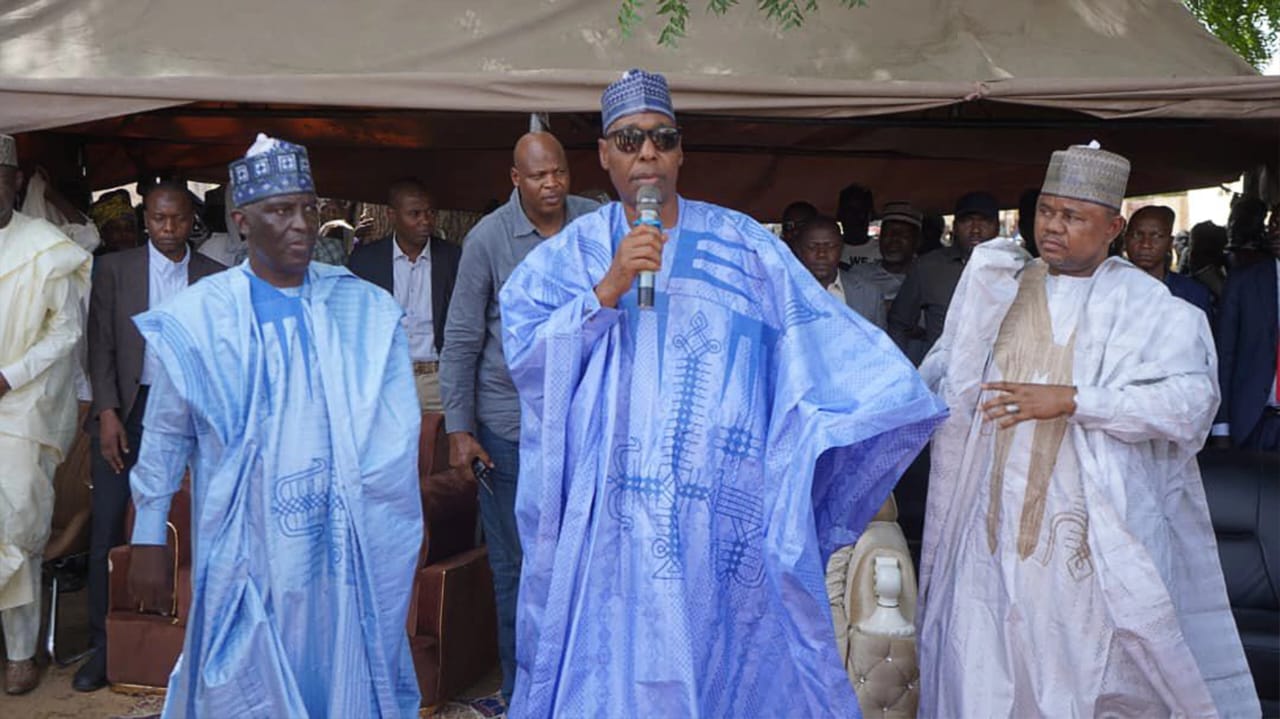
The Borno State Government, under its non-kinetic “Borno Model” approach to tackling insurgency, has reintegrated 720 repentant Boko Haram insurgents alongside 992 spouses and 2,050 children into their various communities across the state.
The repentant insurgents, classified as low-risk and minor clients under Batch 9 of the programme, reportedly underwent deradicalisation, disarmament, rehabilitation, and skills acquisition training for three months at the Hajj Camp in Maiduguri before taking an oath with the Quran ahead of their reintegration.
This was disclosed on Friday in Maiduguri by the Special Adviser to Governor Babagana Zulum on Security, Brigadier-General Abdullahi Ishaq (rtd), who is also a member of the Deradicalisation, Rehabilitation and Reintegration Committee.
According to Ishaq, the event marked another milestone in the implementation of the Borno Model, which he described as one of the most effective non-kinetic approaches to counterterrorism in the North-East and Nigeria as a whole.
“Beyond the repentants taking the oath, it has been a success story since July 5, 2021, when the good people of Borno State, under the stewardship of our dynamic leader, Professor Babagana Umara Zulum, agreed to forgive and accept their sons who were willing to drop arms and embrace peace,” he said.
“Today, the Borno Model is adjudged to be one of the most effective non-kinetic programmes in the history of mankind, with over 350,000 persons willingly exiting the bush and surrendering to the military.”
Ishaq disclosed that the latest batch comprised 720 men, 992 spouses, and 2,050 children who had surrendered to troops of the Nigerian Army and later underwent documentation, profiling, deradicalisation, and rehabilitation.
He explained that many of the insurgents were persuaded to surrender through appeals from former colleagues who had earlier embraced peace and reunited with their families.
According to him, some insurgents attempting to surrender were intercepted and killed before reaching military locations, while those who successfully made contact with troops were transferred to the Hajj Camp for proper rehabilitation.
He added that camp administrators engaged the clients in various activities aimed at preparing them for peaceful civilian life after spending three months in the programme.
The women, he noted, also received vocational training in catering services, knitting, cap-making, tailoring, and soap production, among other skills.
“The State Government has also provided starter packs for the clients and their spouses to support them in their post-camp life,” Ishaq stated.

He further revealed that the Borno Model had previously reintegrated 8,960 clients in Batches 1 to 8, bringing the total number of reintegrated clients to 9,680 with the latest batch.
The beneficiaries, he said, came from several local government areas, including Bama, Konduga, Maiduguri Metropolitan Council (MMC), Jere, Mafa, Dikwa, Gwoza, Damboa, Marte, Monguno, Kukawa, Ngala, Kala-Balge, and Gubio.
According to him, community leaders and members of the Civilian Joint Task Force (CJTF) and hunters groups participated in screening the repentant insurgents before recommending them for reintegration.
He urged the beneficiaries to be law-abiding and actively participate in community development initiatives upon returning home.
Earlier, the Commissioner for Women Affairs and Social Development, Hajiya Zuwaira Gambo, represented by the Permanent Secretary, Babagana Kadai, described the occasion as a celebration of hope, reconciliation, resilience, and peacebuilding.
Kadai praised Governor Zulum’s leadership, noting that his administration had continued to receive national and international recognition for rebuilding communities affected by insurgency.
“Under Governor Zulum’s leadership, thousands of families displaced by conflict have been resettled, communities rebuilt, schools and healthcare facilities restored, and opportunities created for vulnerable populations to regain their dignity and livelihoods,” he said.
He noted that the ministry had played a key role in providing psychosocial support, family tracing and reunification services, child protection interventions, vocational training, women empowerment, and community sensitisation programmes.
Kadai added that the ministry had worked closely with development partners, humanitarian organisations, and community stakeholders to ensure successful reintegration and social stability.
In separate goodwill messages, the Chief Imam of Borno, represented by Sheikh Shettima Jafar, Commissioner for Information and Internal Security, Professor Usman Tar, as well as representatives of the Police, Immigration Service, Customs, and Correctional Service, urged the repentant insurgents to be law-abiding and become good ambassadors of peace in society.

