 Follow Us on Google News
 Follow Us on Google Discover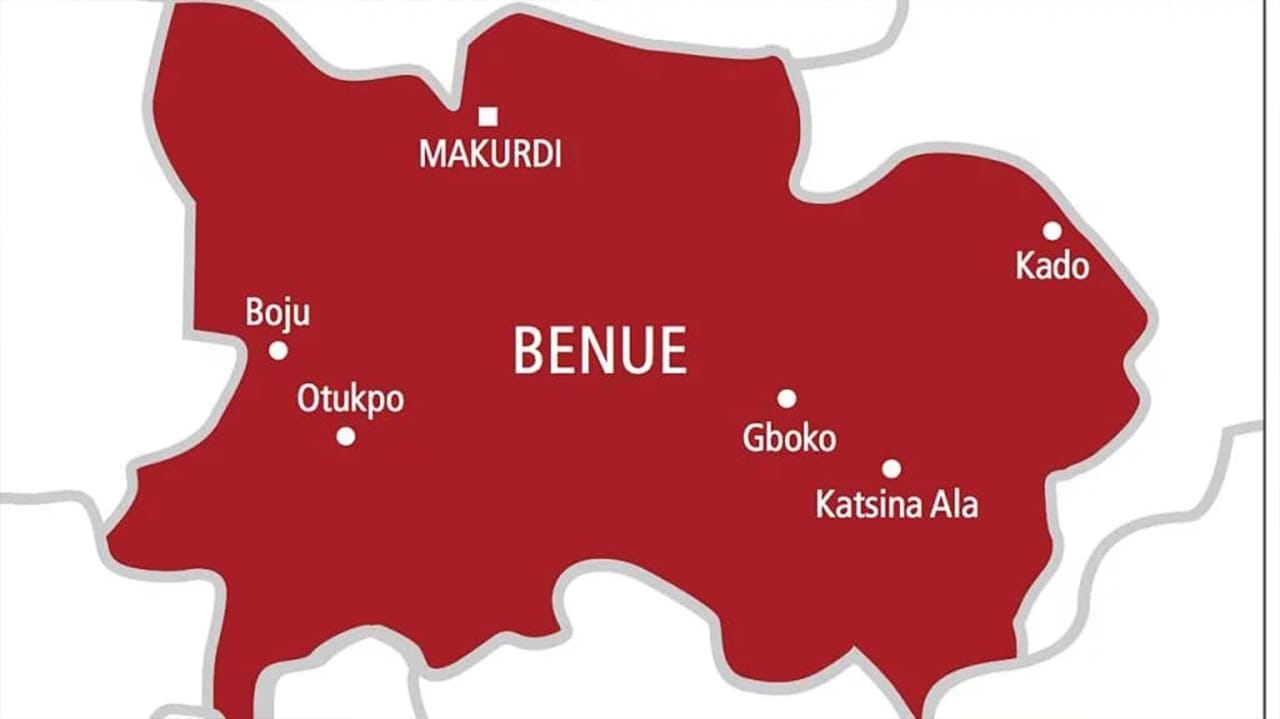
A year after more than 200 people were killed in the Yelewata massacre in Benue State, fresh bloodshed in Kebbi State has reinforced growing concerns over Nigeria’s worsening security crisis, with renewed calls for urgent and decisive action from political leaders, religious figures and international observers.
At least 20 people were killed yesterday when suspected Lakurawa insurgents attacked Fasken Rafi village in Arewa Local Government Area of Kebbi State in what residents described as one of the most coordinated assaults on the area in recent times.
The latest attack comes amid mounting anxiety over persistent killings, kidnappings and banditry across the country, including the recent death of former Director of Defence Information, retired Major General Rabe Abubakar, in bandits’ custody and the abduction of teachers and pupils in Yawota and Esinele communities of Oriire Local Government Area of Oyo State on May 15.
Government officials confirmed the Kebbi attack, prompting the state government to dispatch a delegation led by Deputy Governor Umar Tafida to the affected community.
Speaking during the visit, Tafida pledged immediate reinforcement of security operations in the area.
“This senseless loss of lives deeply saddens us. This administration remains unyielding in its commitment to restoring peace. We are immediately deploying additional security personnel and critical operational resources to this axis to guarantee the safety of lives and property and prevent any recurrence,” he said.
The attack occurred days after the Emir of Argungu, Mohammed Mera, urged communities within his emirate to obtain legal permits for firearms and organise lawful self-defence measures against bandits.
The monarch argued that communities facing repeated attacks should consider pooling resources to acquire legally approved weapons while remaining within the confines of the law.
“If you acquire such weapons legally, make sure the attackers are aware that your community possesses the means to defend itself. This alone can serve as a warning and discourage the invaders from attacking,” he said.
The renewed violence came as residents and leaders in Benue marked the first anniversary of the June 13-14, 2025, massacre in Yelewata, Guma Local Government Area, where armed attackers killed more than 200 people.
Speaking at the unveiling of a memorial monument in honour of the victims, Senate Minority Leader Patrick Abba Moro criticised the Federal Government and the political class for what he described as a failure to fully confront the country’s security challenges.
According to him, the refusal to acknowledge the scale of the crisis has contributed to its persistence.
“Can we in all honesty gallivant around during campaigns and tell the people to vote for us again when the mandate that has already been given to us and which we are still holding has not been effectively applied for the people’s well being? We need to wake up,” Moro said.
Also at the event, the Catholic Bishop of Makurdi Diocese, Wilfred Anagbe, called for a shift in government policy from maintaining displaced persons in camps to resettling them in their ancestral communities.
He argued that prolonged dependence on Internally Displaced Persons (IDP) camps weakens affected communities and erodes human dignity, while also accusing the Benue and Nasarawa state governments of failing to act on intelligence reports warning of the attack before it occurred.
Beyond Nigeria’s borders, the anniversary of the Yelewata killings also drew attention from the United States, where Congressman Riley Moore renewed calls for greater international focus on violence affecting Christian communities in the country.
In a post on his verified X handle, Moore urged the global community not to forget what he described as the killing of Christians in Nigeria.
“One year ago, Fulani Islamic terrorists stormed Yelwata, Nigeria, slaughtering more than 200 Christians. Most were women and children sheltering at a local Catholic mission. Today, we remember the martyrs. The world must not forget the Christian genocide in Nigeria,” he wrote.
CAN declares Black Sunday, urges urgent action on insecurity
FOR its part, the Christian Association of Nigeria (CAN) expressed concern over the country’s security situation, saying Nigeria is bleeding and that the Church cannot remain silent while innocent lives are lost and families live in fear.
The association called on governments at all levels to take urgent, decisive and sustained measures to secure lives and property across the country.
In a message marking the solemn Black Sunday declared by the association, CAN President, Archbishop Daniel Okoh, said democracy is founded on the sanctity and dignity of human life, the rule of law, justice and the protection of citizens.
Okoh noted that the period of mourning coincided with the celebration of Democracy Day on June 12, adding that the occasion offered an opportunity to recommit to building a nation where citizens can live, work, worship and travel safely.
“We are mindful that our period of mourning coincided with the celebration of Democracy Day on June 12. Therefore, there can be no more fitting way to honour the sacrifices that birthed our democracy than by recommitting ourselves to building a nation where every Nigerian can live, work, worship, and travel in safety,” he said.
According to him, the quest for security is inseparable from Nigeria’s democratic journey and remains central to its success and sustainability.
Okoh said Black Sunday was being observed in honour of victims of insecurity, including men, women, children, clergy, farmers, students and communities affected by violence, kidnapping, terrorism, banditry and other forms of bloodshed.
“Today (yesterday), Sunday, June 14, 2026, we observe Black Sunday across Nigeria in honour of the countless victims of insecurity—men, women, children, clergy, farmers, students, and entire communities whose lives have been shattered by violence, kidnapping, terrorism, banditry, and bloodshed. Today, we are not only mourning; we are speaking with one voice,” he said.
The CAN president said Christians believe that every human life is sacred and expressed solidarity with bereaved families, displaced persons, the wounded and those traumatised by violence.
He emphasised that the protection of citizens is a sacred responsibility entrusted to those in authority and should be treated with the utmost seriousness.
Okoh also commended the House of Representatives for passing the bill on Community and State Policing, describing the legislation as an important step towards strengthening grassroots security architecture and enhancing community participation in the protection of lives and property.
He appealed to the Senate to conclude its consideration of the bill to support efforts aimed at improving security across the country.
Kalu advocates local arms production, tighter financial surveillance to tackle insecurity
THIS came as Deputy Speaker of the House of Representatives, Benjamin Okezie Kalu, called for increased local production of arms and ammunition as well as stricter financial monitoring to address insecurity and disrupt criminal and terrorist financing across Nigeria.
Kalu made the call on Saturday at the Nigeria People’s Strategic Conference and Defence Exhibition 2026 in Abuja. The conference was themed, “Building a Modern Security Ecosystem: Integrating Private Sector Capacity into Nigeria’s National Security Architecture.”
He urged stakeholders in the defence sector to reduce the country’s reliance on imported military hardware by investing in domestic manufacturing capabilities, describing local production as vital for national security, economic growth and job creation.
According to him, Nigeria must develop a self-sustaining defence ecosystem capable of meeting its security needs while reducing vulnerabilities associated with dependence on foreign suppliers.
The Deputy Speaker also challenged financial institutions to strengthen due diligence procedures and transaction monitoring systems to curb illicit financial flows that support criminal networks and terrorist activities.
He assured stakeholders that the National Assembly would continue to provide the legal framework required to support security reforms through constitutional amendments, budgetary allocations and effective legislative oversight.
Okechukwu proposes 3% Federation Account allocation for state police
ALSO, former Director-General of the Voice of Nigeria (VON), Osita Okechukwu, called for the allocation of three per cent of the Federation Account to fund the proposed State Police system, warning that the initiative may struggle without a sustainable financing framework.
Okechukwu, who commended the growing national consensus and bipartisan support for the establishment of state police, described the reform as an inevitable response to Nigeria’s worsening security challenges.
In a statement, he said that while reviewing the constitutional amendment bill recently passed by the House of Representatives seeking to establish State Police, he found no provision for a dedicated funding mechanism for the proposed security structure.
According to him, effective policing requires adequate and predictable funding, particularly at a time when modern security operations depend on technology, intelligence gathering and sophisticated equipment to combat crime and insecurity.
He argued that devolving police powers alone would not address the structural weaknesses that have affected the effectiveness of the Nigeria Police Force over the years.
Okechukwu warned that leaving the funding of state police solely to state governments could undermine the objective of the reform, given the varying fiscal capacities of states across the federation.
He therefore proposed that three per cent of the Federation Account be specifically earmarked for State Police operations through an appropriate adjustment of the Federal Government’s share of revenue allocation.
According to him, a dedicated funding framework would help ensure the viability, effectiveness and sustainability of state police when eventually established.
Falana faults negotiations with terrorists, bandits, says practice violates anti-terrorism law
SIMILARLY, human rights lawyer and Senior Advocate of Nigeria, Femi Falana, condemned the practice of government officials negotiating with terrorists and bandits, describing it as illegal and contrary to Nigeria’s anti-terrorism laws.
Falana stated this while delivering an address at the 2026 Annual General Meeting of Amnesty International in Abuja, where he spoke on the theme, “Rising Under Pressure: Human Rights in an Era of Insecurity, Economic Strain and Democratic Uncertainty.”
He said it had become widely known that officials of the Federal Government and some state governments had held meetings with armed groups, leading to the release and rehabilitation of individuals described as repentant terrorists and bandits, some of whom reportedly received financial incentives.
According to him, such actions contravene the provisions of the Terrorism (Prevention and Prohibition) Act, which criminalises any form of association, support or participation in activities linked to proscribed terrorist organisations.
Falana cited Section 12 of the Act, noting that it prescribes a minimum of 20 years imprisonment for anyone who knowingly participates in meetings connected to terrorist groups or provides support, logistics or facilities for such engagements.
“In view of the clear provisions of the law, those who engage in negotiations or meetings with terrorists are acting outside the law,” he said.
He maintained that members of proscribed groups, including Boko Haram, should be prosecuted in accordance with the law rather than pardoned or rewarded.
The senior lawyer further argued that state governors lack the constitutional authority to grant pardon to individuals accused of terrorism, stressing that such powers are vested solely in the President and can only be exercised after conviction.
He explained that suspects arrested for terrorism-related offences must be prosecuted by the Attorney-General of the Federation and, if convicted, sentenced in accordance with the law before any consideration of clemency.
Falana also cautioned against the indiscriminate use of the presidential prerogative of mercy in terrorism cases, warning that granting pardons to individuals involved in serious crimes could undermine national security and erode public confidence in the justice system.
Amotekun intercepts women, youths moving into Ondo forests, arrests 97 suspects
MEANWHILE, the Ondo State Security Network Agency, popularly known as Amotekun Corps, has intercepted several women and young persons carrying household items and personal belongings into forests across the state under what it described as suspicious circumstances.
The Commander of the Amotekun Corps, Adetunji Adeleye, raised concerns over what he termed possible criminal infiltration strategies, disclosing that the interceptions occurred in multiple local government areas over the past two weeks.
According to Adeleye, those intercepted were heading towards the troubled Ose/Owo forest corridor under the guise of farming activities.
He also cited a separate case in which a suspect who reportedly invited two workers into a forest area was found to have received 51 additional persons.
Adeleye disclosed this while parading 97 suspected criminals at the corps headquarters in Akure, the Ondo State capital.
He said the operation led to the dismantling of several criminal syndicates linked to insecurity in parts of the state.
The suspects were arrested for offences including kidnapping, armed robbery, burglary, vehicle hijacking, theft and violations of the state’s anti-open grazing law.
According to him, some of those arrested confessed to serving as informants and suppliers for kidnappers operating in forests across the state, while others were identified as active members of kidnapping gangs.
“Upon interrogation, some claimed they were fleeing security challenges in the North. However, investigations revealed that some had been invited into the forests by individuals already residing there,” Adeleye said.
He added that the corps would continue to intensify surveillance and security operations across forest areas and other vulnerable locations in the state to prevent criminal activities.
Bauchi gov visits Makinde, seeks security overhaul after Oyo school abduction
RELATEDLY, Bauchi State Governor, Bala Mohammed, yesterday paid a sympathy visit to Oyo State Governor, Seyi Makinde, at his private residence in Ibadan following the abduction of teachers and pupils in Yawota and Esinele communities in Oriire Local Government Area of the state.
Mohammed, accompanied by leaders of the Allied People’s Movement (APM), including the party’s National Chairman, Yusuf Mamman Dantalle, and its Bauchi governorship candidate, Yakubu Adamu, commiserated with the government and people of Oyo State over the incident.
The governor called for a comprehensive overhaul of Nigeria’s security architecture, stressing the need for stronger coordination among security agencies and improved collaboration between security operatives and citizens to address the country’s security challenges.
He commended Makinde’s efforts towards securing the release of the abducted teachers and pupils and expressed optimism that the victims would soon regain their freedom.
Speaking with journalists after the visit, Mohammed said the delegation came to share in the grief of Oyo State over what he described as a disturbing and recurring security challenge affecting schoolchildren and communities.
He added that the visit was also intended to encourage Makinde, whose efforts to secure the victims’ release had received widespread recognition.
On the broader security situation in the country, Mohammed said Nigeria’s security structure required urgent review to enhance synergy among agencies and strengthen trust between security operatives and the public.
He attributed insecurity partly to governance challenges, poverty and socio-economic pressures, while urging citizens to play a more active role in safeguarding their communities.

