 Follow Us on Google News


 Follow Us on Google Discover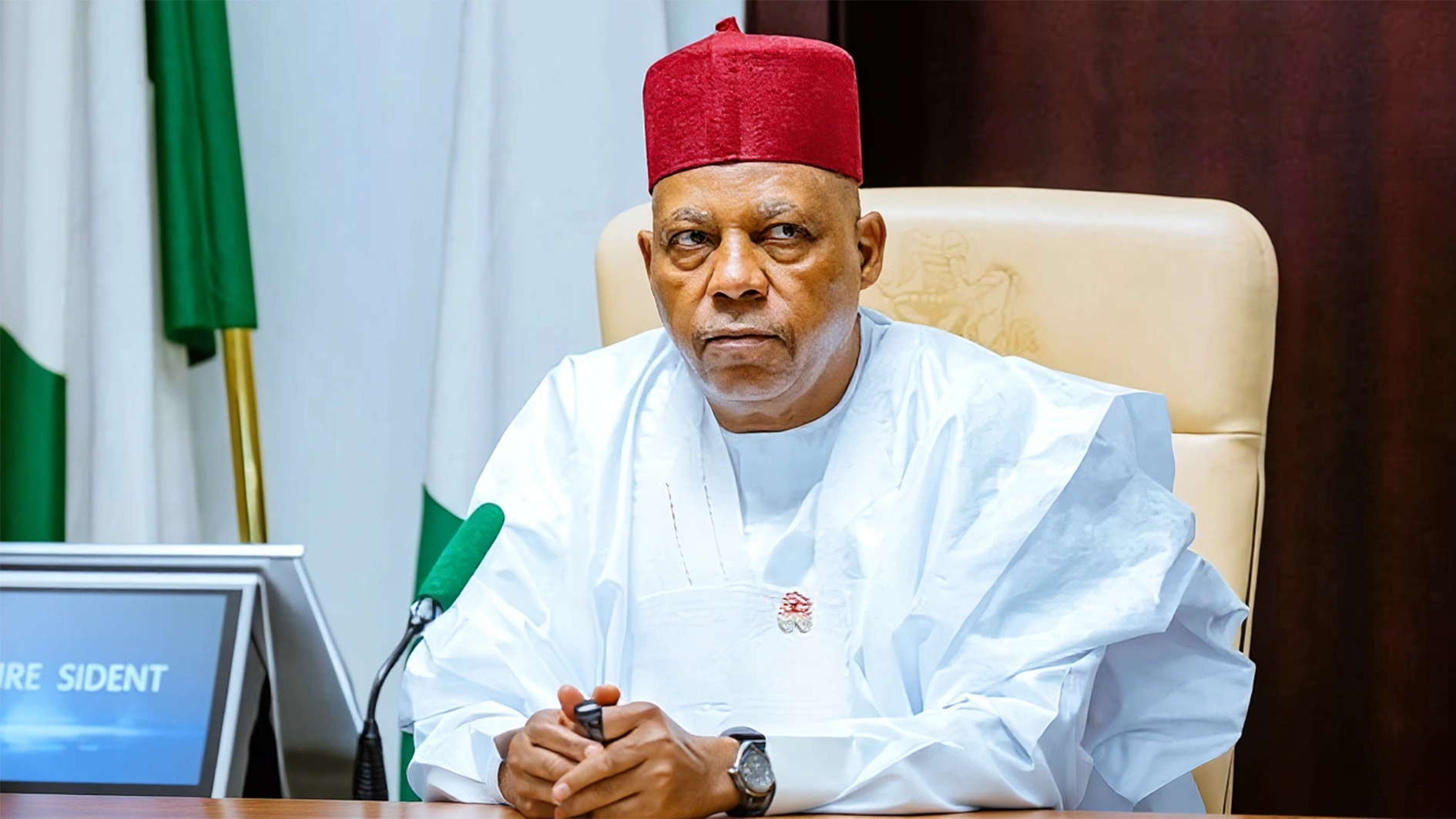
**Shettima directs 26 states to inaugurate nutrition councils
**Says Tinubu places human capital development at heart of national growth
Nigeria’s flagship nutrition programme, the Nutrition 774 Initiative (N-774), has moved to reduce dependence on foreign donor support by adopting a domestic financing framework aimed at closing an estimated N500 billion nutrition funding gap and ensuring sustainable investments in child and maternal nutrition across the country.
The decision was taken on Wednesday at the second High-Level Strategic Board meeting of the Nutrition 774 Initiative, chaired by Vice President Kashim Shettima at the Presidential Villa, Abuja.
As part of the new financing strategy, the board directed the Federal Ministry of Finance and other key stakeholders to immediately commence broad stakeholder engagements to activate existing funding instruments, including the Presidential Nutrition Intervention Fund (PNIF) and the ring-fenced Sugar-Sweetened Beverage (SSB) levy, as dedicated financing streams for nutrition interventions nationwide.
The board also intensified efforts to deepen nutrition governance at the sub-national level, with Vice President Shettima urging the remaining 26 states yet to establish their State Councils on Nutrition to do so without delay.

He further called on the Nigeria Governors’ Forum (NGF) and the Association of Local Governments of Nigeria (ALGON) to facilitate the establishment of Local Government Committees on Food and Nutrition in the remaining 304 local government areas where such structures are yet to be inaugurated.
The Vice President said the era of relying indefinitely on foreign aid to fund critical nutrition programmes was coming to an end, warning that Nigeria must urgently build a sustainable domestic financing architecture to protect vulnerable children and families.
“The domestic financing architecture must be activated now, in this administration, within this governance cycle, and under the accountability of this Board,” he said.
According to him, nutrition interventions cannot afford bureaucratic delays, particularly during the critical first 1,000 days of a child’s life.
“While we deliberate, children across this country are within a window of growth that cannot be recovered once lost,” he noted.
Shettima stressed that nutrition is not solely a health-sector responsibility, saying ministries responsible for agriculture, finance, education, water resources, women affairs, humanitarian services and social protection all have crucial roles to play in combating malnutrition.
He noted that appropriated funds that are not released ultimately fail to achieve their purpose, emphasising the need for efficient budget implementation and accountability mechanisms.
The Vice President also urged accelerated consultations on the proposed National Nutrition Bill, directing the initiative’s secretariat to engage lawmakers, state governments and development partners before forwarding the legislation to the National Assembly.
He said the bill would provide the legal framework required to institutionalise nutrition governance and strengthen accountability mechanisms across the federation.
Insisting that the current financing deficit must be addressed urgently, Shettima said the board had reached a point where commitments must translate into measurable action.
“The N500 billion financing gap before us must move from a figure in a presentation to a funded programme on the ground.
The National Nutrition Bill must move from a zero draft to the National Assembly. The remaining State Councils and Local Government Committees must be activated,” he declared.
The Vice President described the Nutrition 774 Initiative as the federal government’s primary platform for delivering nutrition outcomes across all 774 local government areas, noting that the programme aligns with President Bola Tinubu’s human capital development agenda.
According to him, the administration recognises nutrition as a strategic investment in Nigeria’s future workforce and economic prosperity.
“The Renewed Hope Agenda places human capital development at the centre of Nigeria’s development trajectory, and nutrition is the foundation of that human capital.
“A malnourished child cannot become the engineer who builds our roads, the teacher who shapes our classrooms, the scientist who expands our frontiers, or the leader who carries our national burden,” he said.
Shettima added that President Tinubu views nutrition as a critical governance priority, describing his commitment to the sector as a directive that must be translated into concrete outcomes.
The board, while reviewing progress made in operationalising the initiative, reaffirmed the importance of the N-774 framework as the central governance mechanism for scaling nutrition interventions across Nigeria’s 774 local government areas.
Among those at the meeting were Chairman of the Nigeria Governors’ Forum and Governor of Kwara State, AbdulRahman AbdulRazaq; Chairman of the House of Representatives Committee on Nutrition and Food Security, Hon Chike Okafor; Coordinating Minister of Health and Social Welfare, Prof. Muhammad Ali Pate; Minister of Agriculture and Food Security, Senator Abubakar Kyari; Minister of Women Affairs, Hajiya Imaan Suleiman-Ibrahim; and Minister of State for Budget and Economic Planning, Dr Doris Uzoka-Anite.
Also in attendance were permanent secretaries from relevant ministries, while the Ministers of Education, Dr Tunji Alausa, and Water Resources, Prof. Joseph Utsev, participated virtually.

