 Follow Us on Google News


 Follow Us on Google Discover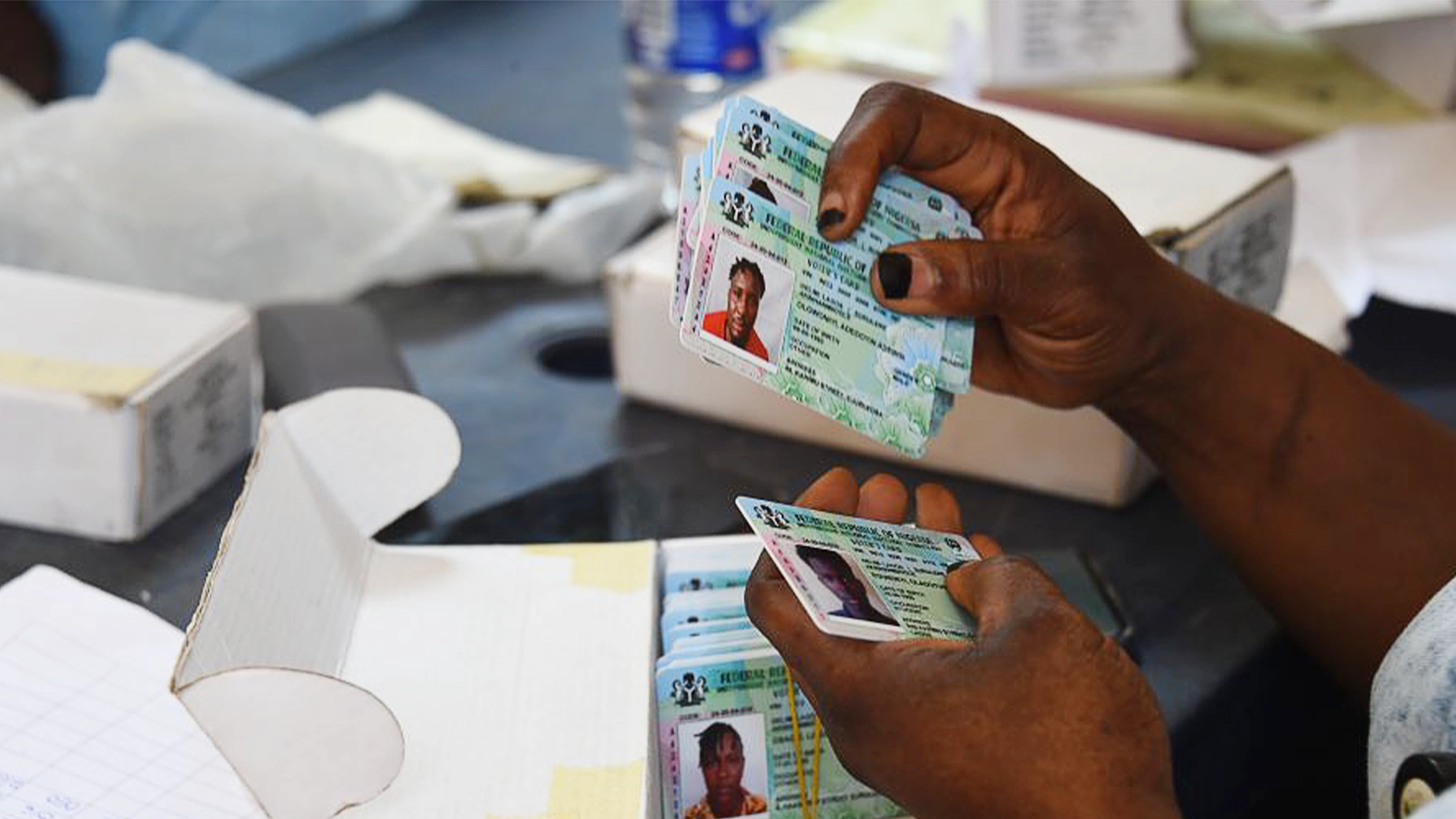
• Police Restrict Movement, Deploy DIG, AIG, Anti-Terror Squad For Security
• Observers Raise Concerns Over Vote-buying, Disinformation
• SDP Cries Foul Over Inability To Upload Polling Agents’ Credentials To INEC Portal
• Media Bodies Task Journalists On Professionalism, Safety Consciousness
For a state whose governorship elections were once synonymous with intense political rivalry, violence and heightened security concerns, the atmosphere ahead of June 20, 2026’s governorship poll in Ekiti has remained remarkably peaceful.
Perhaps for the first time since the return to democratic rule in 1999, many residents and voters across the state expressed confidence in the electoral process, noting that all indications point to a peaceful contest, unlike previous elections characterised by tension, clashes among political actors and widespread security fears.
As 1,059,360 registered voters head to the polls on Saturday to elect one of the 15 governorship candidates, The Guardian gathered that relative peace prevailed across the state’s three senatorial districts, with political parties and stakeholders maintaining calm as electoral activities progressed smoothly up to yesterday.
This contrasts sharply with previous governorship contests when fears of violence and insecurity often forced residents indoors.
However, a major political storm erupted on the eve of the Ekiti State governorship election on Friday as the Social Democratic Party (SDP) accused the Independent National Electoral Commission (INEC) of actions it says amount to an attempt to cripple opposition participation in the crucial poll.
The party strongly dismissed as “fraudulent and politically motivated” reports claiming it had withdrawn from the race, insisting that its governorship candidate, Ambassador Isaac Adebayo Alade, remains validly nominated and fully recognised by INEC.

In a strongly worded statement issued by its National Publicity Secretary, Araba Rufus Aiyenigba, the SDP alleged that while INEC officially issued the party with access credentials for the uploading of polling agents, the electoral body subsequently failed to activate the portal required to complete the process.
The development has triggered outrage within the party, which is now demanding answers from the Commission over what it describes as a disturbing contradiction capable of undermining the credibility of the election.
“Why issue access codes if there was never any intention to permit their use?” the party queried.
The SDP further asked why a legally recognised political party would allegedly be denied the opportunity to deploy agents across polling units, warning that such actions create a perception that the electoral process may have been tilted in favour of powerful political interests.
The 15 candidates contesting the election include the incumbent governor, Biodun Oyebanji of the All Progressives Congress (APC); former Ambassador to Canada, Oluwadare Patrick Bejide of the African Democratic Congress (ADC); and the candidate of the Peoples Democratic Party (PDP).
Other candidates cleared by INEC are Opeyemi Falegan David of the Accord Party; Akande Oluwaseun Samuel of the African Action Congress (AAC); Ayodeji Ojo of the Action Democratic Party (ADP); Joseph Anifowose Olarenwaju of the Allied Peoples Movement (APM); Oyebanji Olajuyin of the Labour Party (LP); Blessing Abegunde Ayobami of the New Nigeria Peoples Party (NNPP); Olaniyi Ayodele Praise of the Peoples Redemption Party (PRP); Owoola Daramola Osinkolu Ayodele of the Young Progressives Party (YPP); Victor Adetunji Damilola of the Zenith Labour Party (ZLP); Bidemi Olaiya Awogbemi of the Action People’s Party (APP); Ambassador Isaac Adebayo Alade of the Social Democratic Party (SDP); and Olu Omotoso of the Action Alliance (AA).
Meanwhile, the Nigeria Police Force has imposed restrictions on both inter-state and intra-state vehicular movement to ensure a hitch-free election.
In a statement, the spokesman of the Ekiti State Police Command, SP Sunday Abutu, said the restriction would take effect from 12:00 a.m. to 6:00 p.m. today, covering all roads and highways within the state.
He advised travellers intending to pass through Ekiti to make use of alternative routes during the period.
According to him, candidates sitting for national examinations and assessments are exempted from the movement restriction.
“This vehicular restriction is aimed at preventing the movement of political thugs and other criminal elements that may attempt to disrupt the electoral process.
“The restriction applies to all forms of motorised transportation, including private cars, commercial vehicles, trucks, tricycles and motorcycles. Travellers passing through Ekiti are advised to use alternative routes.
“However, designated INEC staff and ad hoc personnel, accredited journalists, local and foreign observers, medical personnel, emergency responders and essential service providers are exempted. Such persons must carry valid identification and clearance tags.
“Medical emergency movements are also permitted. The movement of VIPs with armed escorts to polling units and collation centres is prohibited. Quasi-security groups, vigilantes and volunteer groups are barred from providing security at polling units and collation centres.”
The police also directed construction companies to suspend ongoing road works during the election period.
“Only officers and personnel of agencies that are members of the Inter-Agency Consultative Committee on Election Security (ICCES) are authorised to provide security around election facilities.
“Residents are urged to comply with these measures to ensure a peaceful atmosphere for voters to exercise their rights. The police, in collaboration with other security agencies, will deal decisively with anyone attempting to undermine the peace of the state.”
The Commissioner of Police in charge of the Ekiti governorship election, CP Abayomi Shogunle, called on residents to remain law-abiding and cooperate with security personnel deployed across the state.
“The police remain committed to safeguarding lives and property before, during and after the election,” he assured.
The Inspector-General of Police has also deployed Deputy Inspector-General of Police Fayoade Adegoke Mustapha, assisted by Assistant Inspector-General of Police Olarenwaju Ogunlowo, to coordinate security operations for the election.
Abutu said the senior officers had been mandated to ensure a peaceful, credible and violence-free process.
According to him, the DIG emphasised the need for synergy and cooperation among security agencies and urged personnel to exhibit professionalism, discipline and respect for the rule of law.
He also appealed to political actors and residents to cooperate with security agencies to ensure a peaceful environment.
“The Nigeria Police Force, in collaboration with other security agencies, has put in place robust security arrangements, including adequate deployment of personnel and logistics to guarantee the safety of voters, electoral officials and election materials,” he said.
Also briefing journalists, Shogunle disclosed that heavily armed policemen, counter-terrorism operatives and members of the Special Intervention Squad had been deployed to the boundaries between Ekiti and Kogi, Kwara and Ondo states to forestall any security threat.
He said the security arrangement was based on a multi-layered framework designed to detect and neutralise threats.
“Our deployment started with the outer ring covering the boundaries between Ekiti and neighbouring states. Through coordinated operations in the forests and border areas, identified threats have been removed.
“As we speak, personnel from the Counter-Terrorism Unit and the Special Intervention Squad are on the ground. These officers are specially trained to confront terrorists and bandits, which informed our decision to deploy them.
“We can monitor all roads leading into and out of Ekiti. We have equally established camps in forest areas to prevent infiltration by criminal elements.”
Shogunle, however, allayed fears over the heavy deployment of security personnel, assuring residents that there would be no show of force.
Meanwhile, the European Union Support to Democratic Governance in Nigeria (EU-SDGN) Election Observation Hub has expressed concern over reports of vote-buying, voter inducement, political intimidation and the spread of disinformation, warning that such practices could undermine the credibility of the election.
The observation mission, comprising The Kukah Centre, TAF Africa, Nigerian Women Trust Fund (NWTF), Yiaga Africa, International Press Centre (IPC), Centre for Media and Society (CEMESO) and ElectHER, however, noted that the security atmosphere remained largely peaceful and calmer than in previous governorship elections.
In a pre-election statement issued in Ado-Ekiti, the group described today’s election as a major test of Nigeria’s new electoral framework, being the first major governorship poll conducted under the Electoral Act 2026 and the revised INEC regulations and guidelines.
The observers disclosed that they had deployed teams across the state to monitor the poll through field observations, stakeholder engagements and reviews of information in the public domain.
According to the mission, 13 political parties are participating in the election across 2,445 polling units in the state’s 16 local government areas, with 1,059,360 registered voters and 1,028,929 collected Permanent Voter Cards (PVCs).
The group commended political parties and candidates for largely adhering to the Peace Accord brokered by the National Peace Committee, noting that campaigns were generally peaceful despite heightened political competition arising from recent political realignments.
“Most political actors have conducted their campaigns in an orderly manner and exercised restraint over their supporters, with only isolated cases of misconduct,” the statement said.
However, the observers warned that reports from the field indicated increasing incidents of voter inducement and organised vote-buying schemes.
According to the report, there were allegations of the distribution of money, food items and other materials to influence voters, as well as attempts to harvest voters’ PVC and National Identification Number (NIN) details through pre-funded bank accounts in exchange for electoral support.
The alleged activities were reported in Irepodun/Ifelodun, Ikole, Ikere, Ekiti East and Ekiti West local government areas.
“The menace of voter inducement remains a significant threat to the credibility of elections,” the observers noted.
The group also raised concerns over incidents of political intimidation and disruption of campaigns in Ado-Ekiti, Ikole and Oye local government areas.
In addition, it cited reports of the alleged detention of political opponents by the police through the use of Form K without judicial processes, warning that such actions could erode public confidence in the electoral process.
The observers further expressed concern over the increasing spread of misinformation, disinformation and inflammatory content on social media platforms, including Facebook, WhatsApp, TikTok and X.
According to the report, unverified claims that a political party planned to deploy cloned PVCs had gained traction online, creating confusion among voters and heightening political tension. On INEC’s preparedness, the group acknowledged that the commission had completed eight of its nine pre-election activities and appeared operationally ready for the poll.
It noted that sensitive and non-sensitive materials had been distributed, BVAS machines configured, ad hoc staff trained, and arrangements made for transportation and accessibility for vulnerable voters.
The commission also conducted a mock accreditation exercise to test the functionality of the BVAS.
However, the observers expressed concern that the exercise did not include testing the transmission of results to the INEC Result Viewing Portal (IReV), describing such a test as critical to transparency and public confidence in the electoral process.
They also lamented the low voter turnout recorded during the mock exercise.
“While these efforts are commendable, the commission must maintain neutrality and ensure the timely deployment of personnel and materials, transparent collation and announcement of results, as well as the prompt electronic transmission of polling unit results,” the statement added.
On security, the group acknowledged assurances by the police and other agencies regarding comprehensive arrangements before, during and after the election.
Nevertheless, it identified Ado-Ekiti as vulnerable to urban electoral violence, while Ikole, Moba and Ilejemeje local government areas remain exposed to cross-border criminal activities, particularly kidnapping.
The mission urged security agencies to remain neutral, professional and intelligence-driven, especially in tackling vote-buying and other electoral offences.
It also expressed concern over inadequate attention to the participation of women and persons with disabilities in the electoral process.
According to the observers, women in rural and low-income communities remain particularly vulnerable to voter inducement arising from economic hardship and coercion.
The group called on INEC, security agencies, political parties and civil society organisations to guarantee the full, safe and unhindered participation of women and persons with disabilities throughout the election.
While urging voters to come out early and vote according to their conscience, the observers advised political parties and candidates to reject vote-buying, violence and misinformation, and to pursue any grievances through lawful and democratic channels.
“The Ekiti governorship election is an important milestone and a dress rehearsal for the 2027 general election.
“The people of Ekiti deserve a free, fair, credible and inclusive election that transparently reflects their sovereign will,” the statement concluded.

