 Follow Us on Google News


 Follow Us on Google Discover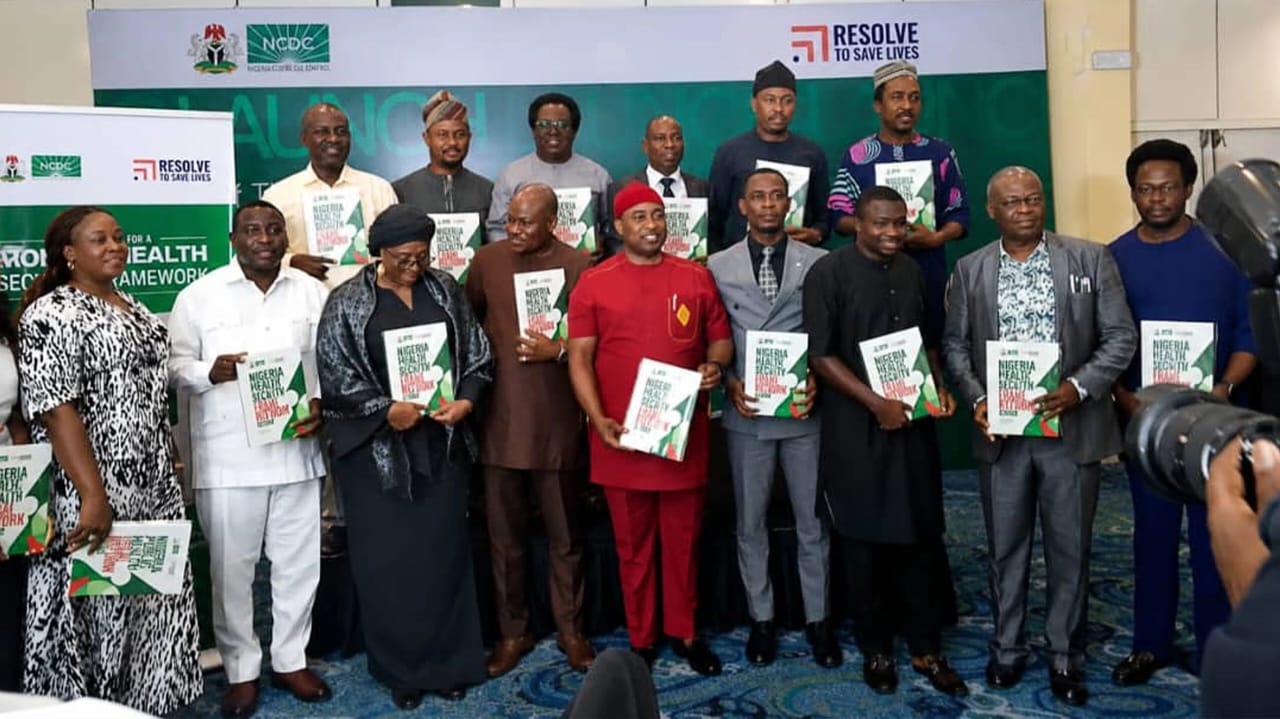
The Nigeria Centre for Disease Control and Prevention (NCDC), in collaboration with Resolve to Save Lives and other stakeholders, on Wednesday, launched the Nigeria Subnational Public Health Legal Reform Guide to strengthen the legal and institutional foundations of health security across the country.
The guide is designed to support states in reviewing and modernising their public health laws, clarify institutional mandates and responsibilities, and improve preparedness and response to public health emergencies.
Speaking at the launch, the NCDC Director-General, Dr Jide Idris, represented by the Deputy Director and Head, Subnational Readiness Strengthening Division, Dr Everistus Aniaku, said the initiative marked a significant step towards strengthening health security at the subnational level.
He said recent public health emergencies had demonstrated that effective response depended not only on strong institutions, skilled personnel and adequate resources, but also on clear, modern and enabling laws.
Idris who was represented by the Deputy Director and Head, Subnational Readiness Strengthening Division, Dr Everistus Aniaku, said where mandates, powers and coordination mechanisms were unclear, decision-making could be delayed, with serious consequences for lives, livelihoods and national security.
According to him, states have significant constitutional, legislative and operational responsibilities for protecting public health, making the strength of the national health security system dependent on preparedness at the subnational level.

He said: “The Nigeria Subnational Public Health Legal Reform Guide provides a framework to support states in reviewing and modernising their public health legal structures.
“It seeks to ensure that legislation keeps pace with emerging and re-emerging public health threats, institutional developments, technological advances and Nigeria’s obligations under the International Health Regulations (2005).”
Aniaku explained that legal reform was not simply about enacting new legislation, but about creating an enabling environment for effective public health practice.
He said the guide would help clarify institutional mandates, strengthen surveillance and reporting, facilitate emergency response, promote multisectoral collaboration and coordination, safeguard citizens’ rights, establish accountability and support sustainable financing mechanisms.
He identified the absence of sustainable financing mechanisms as one of the major challenges to health security at the state level, expressing hope that the reform process would help address the problem.
The NCDC boos urged state governments, Houses of Assembly, ministries of health and justice, public health institutions and development partners to take ownership of the guide and translate its recommendations into practical, context-specific reforms.
He said the ultimate objective was to ensure that every state had the legal authority, institutional capacity and operational readiness to prevent, detect, respond to and recover effectively from public health threats.
Also speaking, the Interim Country Director of Resolve to Save Lives, overseeing public health programmes in Nigeria, Jenom Sunday Danjuma, said Nigeria’s legal preparedness was essential to strengthening its ability to prevent, detect and respond to disease outbreaks.
Danjuma recalled that the journey towards the development of the guide began in 2019 with a national legal assessment, which identified gaps and highlighted the need for a deeper assessment at the state level because of Nigeria’s federal structure and shared responsibilities across the federal, state and local government levels.
He said the initiative reinforced the principle that “strong public health institutions require strong legal foundations.”
According to him, public health legal reform was also a pathway to sustainability because systems built on strong legal foundations could continue functioning even when external interventions were withdrawn.
Danjuma said outbreaks did not recognise jurisdictional boundaries and that weaknesses in preparedness in one jurisdiction could have consequences for another.
He stressed the need for strong legal and institutional frameworks that would enable federal and state authorities to work together effectively while respecting their respective constitutional mandates.
He said the guide was developed from experiences and lessons gathered from states that had undertaken legal reform, providing governments with a clearer pathway from legal assessment to reform and from reform to implementation.
The Resolve to Save Lives country director emphasised that public health legal reform was not the responsibility of lawyers alone, but required the involvement of public health professionals, policymakers, legislators, regulators, communities and other stakeholders.
He said the guide was not a one-size-fits-all document but an adaptable framework that states could modify according to their specific contexts and levels of health security preparedness.
Danjuma said Resolve to Save Lives would continue working with the Federal Government, NCDC, state governments and other partners to strengthen legal preparedness, promote institutional accountability and improve the response to public health threats.
In his remarks, the Deputy Chairman of the House of Representatives Committee on Healthcare Services, Hon. Bassey Akiba, said the National Assembly was prepared to support efforts aimed at strengthening Nigeria’s public health legal framework.
Akiba said the reform guide was particularly important because existing laws were often complex and difficult for ordinary citizens and practitioners to interpret.
He said the guide would help translate existing laws into practical responsibilities, making it easier for stakeholders to understand what they were required to do and how they should coordinate during public health interventions.
The lawmaker stressed that making laws was not the exclusive responsibility of parliamentarians, urging medical practitioners and other stakeholders who encountered challenges in the field to propose amendments to existing laws or new legislation where necessary.
He said that practitioners should engage their representatives and relevant parliamentary committees when legislative intervention was required, saying that, “There is no strong service delivery system without a strong legal foundation.”
Akiba described the National Assembly as the people’s institution, saying parliamentarians had a responsibility to represent citizens and address issues affecting their welfare.
He assured stakeholders that the House Committee on Healthcare Services was available to consider legislative measures capable of strengthening public health and guaranteeing health security.
During the review, the NCDC legal representative, Barrister Safiya Musa, described the guide as a “living resource” based on tools tested and lessons learned from previous legal reform processes.
Musa said the guide captured some of the mistakes and bottlenecks encountered in earlier interventions and provided a clearer pathway for states seeking to strengthen their public health laws.
She said when the next public health emergency occurred, institutions should not be uncertain about their legal authority to act.
She said: “Our mandates should be clear. Our coordination arrangements should be clear. The rights and protections of citizens should be clear. And the institutions responsible for protecting public health should have the legal foundation they need to carry out their responsibilities.”
Musa said states seeking to strengthen their public health laws did not need to start from scratch because the guide provided practical tools, experience and a pathway for undertaking reforms.
Representing the Attorney-General of the Federation and Minister of Justice, Lateef Fagbemi, Dr Piribonimibo Harry described the guide as a “gift to the Nigerian state.”
Harry said the guide provided a framework for harmonising international legal standards with Nigeria’s domestic laws and would strengthen the country’s existing health security system.
He said the initiative would facilitate the implementation of health policies and benefit Nigerians beyond the federal level by providing a clearer pathway for translating legal provisions into practical action.
According to him, the guide would also assist stakeholders in understanding and implementing existing legal provisions while identifying areas requiring further reform.
The stakeholders expressed optimism that effective implementation of the guide would strengthen public health institutions, improve coordination among government agencies and enhance Nigeria’s capacity to prepare for and respond to future health emergencies.

