 Follow Us on Google News
 Follow Us on Google Discover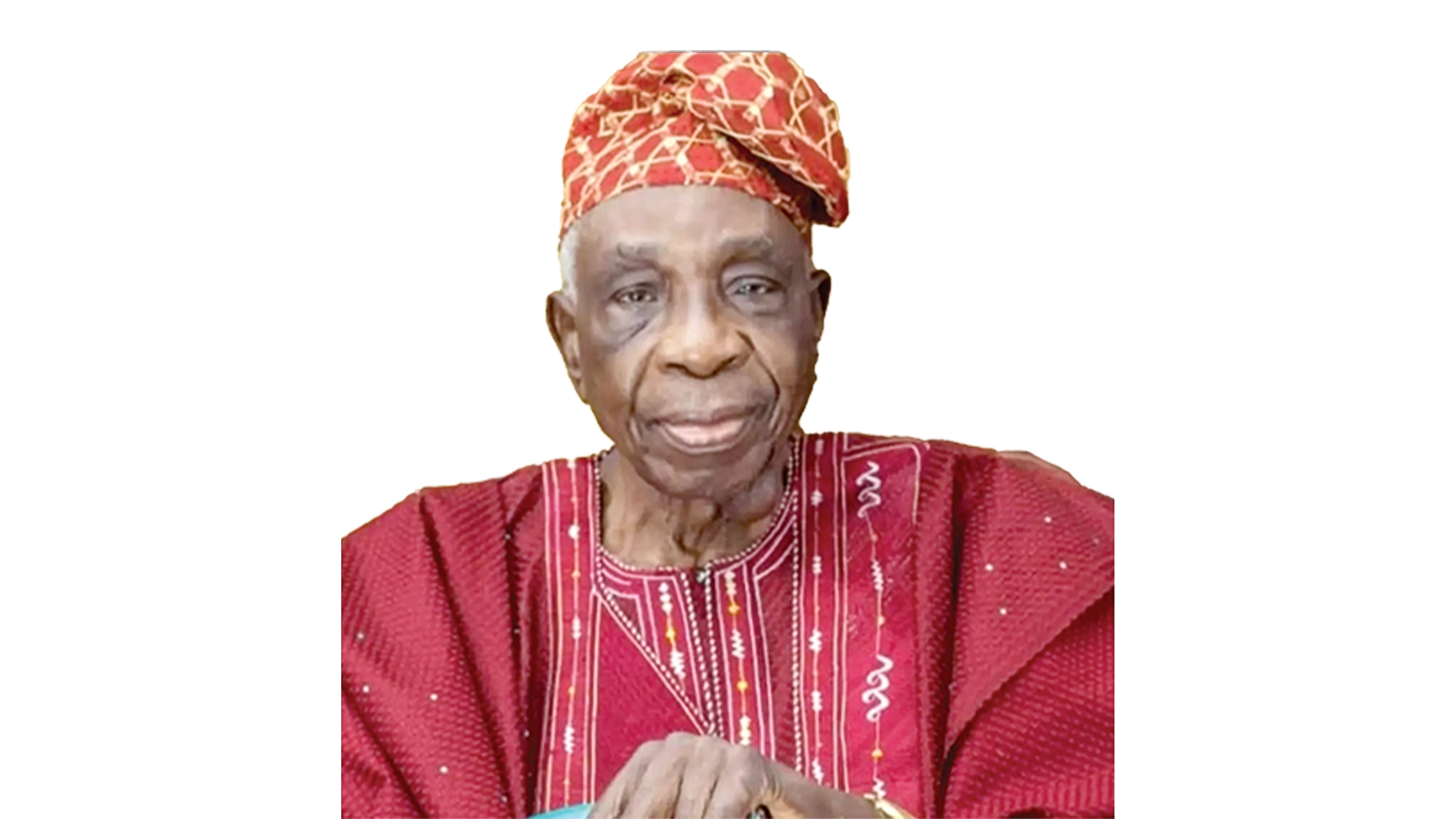
At just 16, he made a bold decision of relocating to Lagos in search of opportunity. There, he found temporary refuge with Gafar Igbalaye, a relative connected to Chief Rasheed Adejare Igbalaye. But the emotional toll of his sudden departure on his family led to his eventual return home, under an agreement that he would be free to pursue a trade of his choosing.
If there was an opportunity to write an epitaph on the grave of Alhaji Prince Adeleke Oduola, who died last month at 93, it would be that the foundations of progress are often laid not just by institutions, but by individuals whose lives quietly shape the course of communities and generations.
A man whose journey mirrors the resilience, transformation and aspirations of a generation that bridged colonial Nigeria and modern statehood, Oduola’s life stands as a compelling testament to perseverance, adaptability and enduring legacy, which many Nigerians must learn from.
Born on November 25, 1932, into the Layiokun Compound of the Lajomo Ruling House in Ososgbo, Oduola’s early life was shaped by both privilege and vulnerability. His father, Ibiloye Aremu Adebola, was a cotton farmer and one of the three Baba Isales serving under then Oba Alabi Kolawole, the Ataoja of Osogbo. The family resided within the palace, a symbol of status and cultural significance, until the monarch’s death in 1933, just months after Oduola’s birth.
Yet, his arrival was marked by circumstances that would shape his formative years in unexpected ways. His mother, Oyenihun Apeke, became intensely protective of him, a disposition that would significantly delay his exposure to formal education and the wider world.
It was not until 1943, at the age of 10, that Oduola began his formal education at Methodist Primary School, Isale Aro. Even then, his schooling was anything but conventional. His mother’s unwavering vigilance saw her waiting outside the school premises throughout the day, a practice that soon proved unsustainable. After just three years, his father made the difficult decision to withdraw him from school, redirecting him instead towards farming and practical life.

Though his formal education was truncated, Oduola’s intellectual development did not end. Through adult education programmes and the influence of friends such as Babalola Oladejo, a teacher at a training college, he continued to learn, cultivating a mindset that would later define his adaptability and success.
His teenage years came against the backdrop of global economic hardship. The Great Depression had dealt a heavy blow to his father’s fortunes, dismantling what had once been a thriving cotton trade linked to the British Cotton Growing Association. With farmhands gone and resources dwindling, young Oduola faced a future that demanded initiative and courage.
At just 16, he made a bold decision of relocating to Lagos in search of opportunity. There, he found temporary refuge with Gafar Igbalaye, a relative connected to Chief Rasheed Adejare Igbalaye. But the emotional toll of his sudden departure on his family led to his eventual return home, under an agreement that he would be free to pursue a trade of his choosing.
That decision marked the beginning of a lifelong journey through enterprise and reinvention. He apprenticed as a tailor under his brother, Gbadamosi Adebiyi, but tragedy struck when his brother died in 1950. Undeterred, he completed his training under Alimi Ajani and practised tailoring for several years.
From tailoring, he ventured into petty trading. It was during this period that his entrepreneurial instincts began to sharpen. A partnership with his friend led him into the transport business, but inexperience resulted in financial losses. Even after acquiring another bus under the name “Felele Transport,” the venture faltered, plunging him into debt.
For many, such setbacks would have been definitive. For Oduola, they were instructive.
He pivoted once more, this time into trading music records at Dugbe Market in Osogbo. It was here that chance and character intervened. A customer, R.A. Ajibade of Obadeyi Construction Company, recognised his potential and introduced him to the world of construction.
Between 1962 and 1964, Oduola trained under Ajibade, gaining hands-on experience that would redefine his career trajectory. In 1964, he established Odus and Sons Building and General Contractors, marking his formal entry into the construction industry.
His first major project at the Osogbo Farm Settlement proved transformative, earning him recognition in both government and private circles. Over time, he built a reputation for reliability and competence, securing contracts from notable figures including Chief Mrs. Faderera Akintola.
By 1980, his business interests had expanded into automobile sales with the establishment of Oduola Motors at Oke-Fia, dealing in brands such as Peugeot, Toyota, Datsun and Volkswagen. Yet, as the demands of construction grew, he eventually refocused his energies on contracting the field where he had found his greatest impact.
Parallel to his business pursuits was a deep and enduring engagement with politics. Oduola’s political journey began in 1953 when he joined the Action Group alongside a circle of like-minded friends. Driven by a shared vision of development for Osogbo, they became active participants in the turbulent politics of the Western Region. Their involvement brought them into direct contact with Chief Obafemi Awolowo during the crises of the 1960s. Aligning with Awolowo came at a cost, as members of the rival Nigerian National Democratic Party targeted them, forcing Oduola and his associates to operate discreetly under the guise of the Oroki Social Club.
His political philosophy remained rooted in progressive ideals. Though he stepped back during the Second Republic to focus on family and business, he later re-emerged during the military era, playing key roles in political transitions. Notably, he contributed to the emergence of Isiaka Adeleke as the first civilian governor of Osun State in 1992 and later supported the rise of Olagunsoye Oyinlola.
Yet, beyond business and politics, Oduola’s most enduring contribution may lie in the preservation and structuring of Osogbo’s traditional leadership system. Beginning in 1958, he became deeply involved in efforts to formalise the ruling houses entitled to the Ataoja throne. Over nearly two decades, he worked tirelessly with members of the Layiokun Compound to secure recognition for the Lajomo Ruling House.
Their persistence paid off, as the structure evolved first into four, and later five recognised ruling houses; a development that has since shaped the succession process in Osogbo.
His life, encapsulated in the phrase “Oju Pon Koko Ma Fo,” a Yoruba expression evoking vigilance and resilience, is a testament to the power of perseverance in the face of adversity.
From a sheltered child in a palace courtyard to a self-made contractor, political strategist and custodian of tradition, Alhaji Prince Adeleke Oduola’s story is not merely a tribute. It is a chronicle of survival, adaptation and legacy, which many Nigerians must emulate.

