 Follow Us on Google News


 Follow Us on Google Discover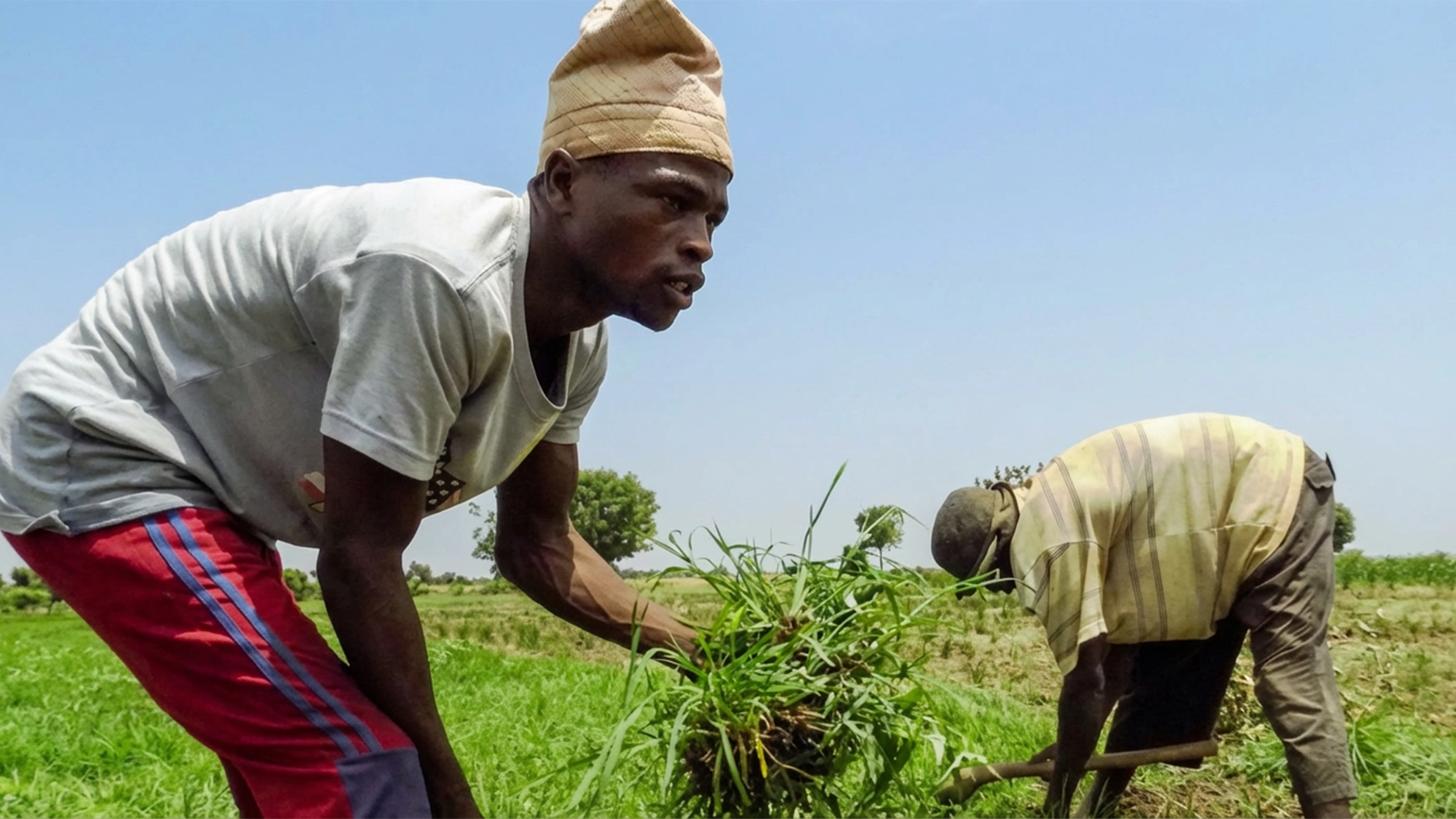
Officials of the African Agricultural Technology Foundation (AATF) have acknowledged the improved condition of Agricultural productivity in Nigeria, following the adaptation of improved seed varieties, and biotechnology, as they urged African countries to step up action in funding innovations in the sector.
They also warned that the countries in Africa must move from donor dependence and take deliberate and sustained action in funding agricultural innovations or risk prolonging food insecurity, low productivity, and continued dependence on external support.
Speaking during a training session in Kaduna, the Senior Manager, Programme Development at AATF, Dr. Roy Mugiira highlighted that “while Africa has built strong scientific capacity and proven technologies, the continent continues to lag in adoption and scale due to weak investment in innovation systems.
“Africa is not short of solutions,” he said, adding that “the real gap is in awareness, enabling policies, and most importantly, consistent domestic funding to move innovations from research to farmers’ fields.
”Across the continent, modern agricultural technologies including improved seed varieties and biotechnology are already demonstrating transformative results. In Nigeria, insect-resistant and drought-tolerant maize varieties have pushed yields from an average of 2.2 tons per hectare to as high as 10 tons per hectare,” he stated.
“Similarly, pod borer-resistant cowpea has significantly reduced pesticide use while boosting farmer incomes. Yet, despite these gains, adoption remains uneven and slow,” he noted.

He however, attributed this to a combination of low public awareness, widespread misinformation about biotechnology, and restrictive regulatory environments that discourage private investment.
“These barriers are compounded by insufficient government funding to support extension services and scale innovations,” he explained.
According to him, while African governments have invested considerably in upstream research through universities and national agricultural institutes, the downstream segment where innovations are commercialised and delivered to farmers remains underfunded.
Dr. Mugiira pointed to the complex partnerships required to deliver innovations like TELA maize as evidence of this gap.
The technology, he said, “involves collaboration between multinational companies such as Bayer, international research institutions, national agricultural systems, and donors like the Bill & Melinda Gates Foundation.”
“This model works, but it is not sustainable if African governments do not step in more decisively,” he said.
“We cannot rely indefinitely on donor-driven systems to feed our populations. African leaders have repeatedly committed to increasing agricultural investment through frameworks such as the Maputo and Malabo Declarations, which recommend allocating at least 10 per cent of national budgets to agriculture.
“However, implementation has fallen short in many countries. Without adequate funding, critical components such as farmer education, seed systems, and regulatory efficiency remain weak, limiting the impact of innovations already available,” he added.
He called for a shift from policy rhetoric to tangible financial commitment. That includes increased budgetary allocation to agriculture and innovation systems, strengthening extension services to improve farmer awareness and trust, creating enabling regulatory environments that attract private sector investment, and supporting public-private partnerships to accelerate technology deployment. There is no single solution to Africa’s agricultural challenges,” Dr. Mugiira noted.
“But innovation is a powerful tool if we invest in it deliberately.”Encouragingly, where technologies have been deployed effectively, farmers have shown willingness to adopt even at higher upfront costs due to clear productivity and income gains. This suggests that demand is not the primary constraint; rather, it is the system’s ability to deliver innovations at scale. The future of Africa’s food systems depends on decisions made today,” Dr. Mugiira said.
“Innovation is not optional it is essential. But it must be funded, owned, and driven by Africa,” he added.

