 Follow Us on Google News
 Follow Us on Google Discover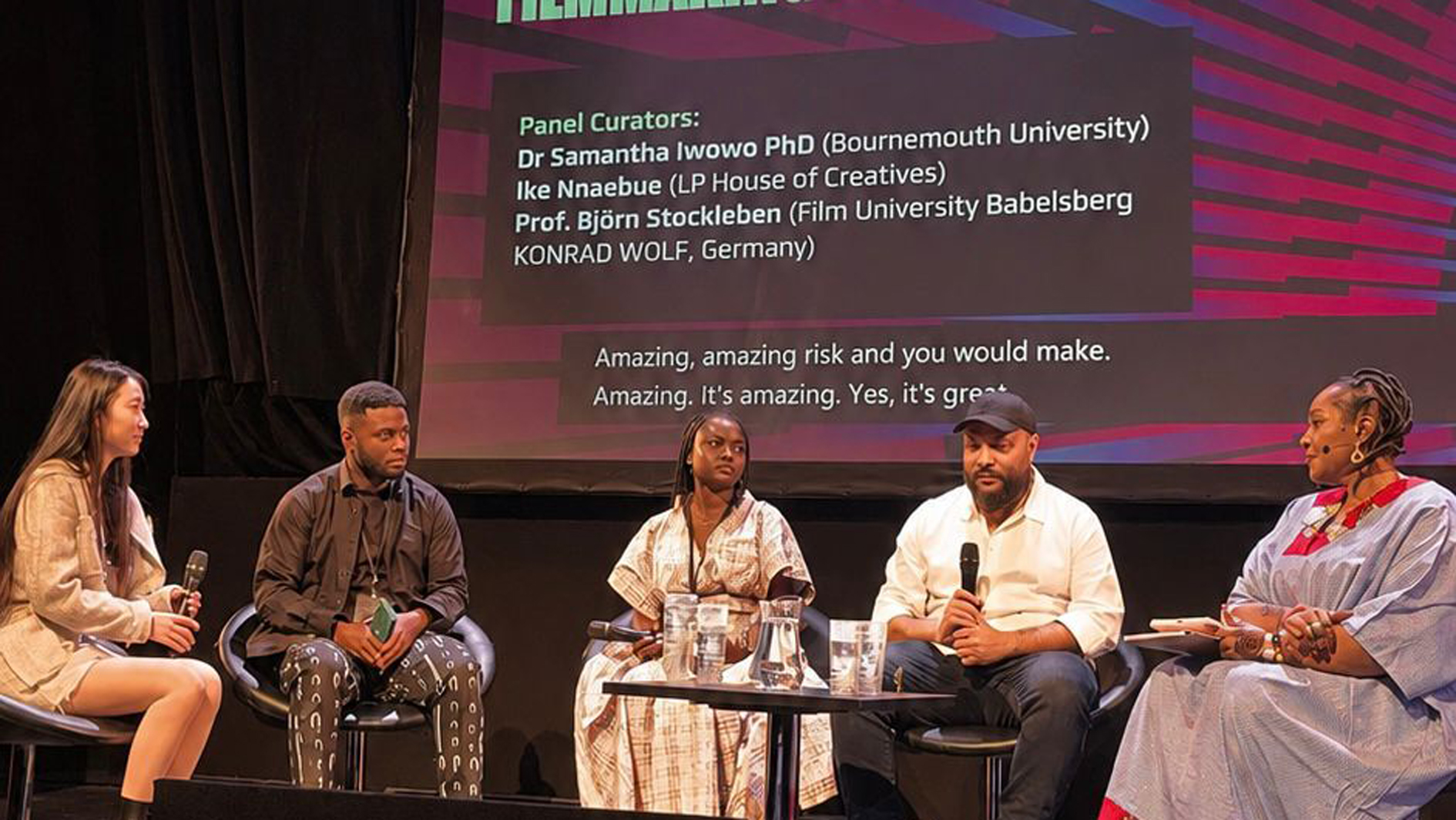
Sometimes the most significant measure of success is not the films you make or the stages you stand on. It is the doors you open for others.
That philosophy was on full display at Sheffield DocFest 2026, where Nigerian filmmaker Ike Nnaebue led a delegation of emerging filmmakers through LP House of Creatives’ Transnational Cinema Week programme, providing them with a rare opportunity to engage with one of the world’s leading documentary festivals and participate in global conversations shaping the future of filmmaking.
Supported by the British Council, the Nigerian delegation joined educators, filmmakers, and students from the United Kingdom and Germany to celebrate Letter Across the Channel: Five Years of Transnational Filmmaking and Education, a pioneering initiative that has become a model for international collaboration, creative exchange, and democratised learning through film.
For LP House of Creatives, however, the story extends far beyond a festival panel.
At the centre of the initiative is a commitment to creating pathways for emerging Nigerian filmmakers through the Centre for Nollywood Indigenous Filmmaking Studies, a platform dedicated to developing storytellers whose work is rooted in local realities while engaging global audiences.
This year’s Sheffield delegation included three emerging filmmakers from the programme — Rebecca Isi Imafidon, Nnaji Cornelius, and Femi Ore-Ewi — whose experiences demonstrate the transformative potential of access, mentorship, and international exposure.
Now in its fifth year, Transnational Cinema Week was co-created during the COVID-19 lockdowns in 2020 by Dr. Samantha Iwowo of Bournemouth University, United Kingdom, and Ike Nnaebue of LP House of Creatives, Nigeria.
What began as an experiment in virtual collaboration during a period of global isolation has evolved into a sustained partnership connecting Bournemouth University, LP House of Creatives, and Film University Babelsberg KONRAD WOLF in Germany.

Through filmmaking, participants critically explore culture, authorship, identity, and knowledge-making across multiple national and cinematic contexts. More importantly, the programme challenges traditional educational models by placing collaboration, co-creation, and shared ownership at the centre of the learning process.
At Sheffield DocFest, the five-year journey culminated in a panel discussion bringing together educators and practitioners from the three institutions to reflect on the impact of transnational filmmaking education.
The panel was curated by Ike Nnaebue, Dr. Samantha Iwowo, Professor Björn Stockleben, Dr. Brad Gyori, and Dr. Jose Blazquez. It featured participants from LP House of Creatives, Bournemouth University, and Film University Babelsberg KONRAD WOLF.
Yet perhaps the most powerful testimony to the programme’s success came not from the academics and industry leaders on stage, but from the young filmmakers whose lives have been changed by the experience.
For Rebecca Isi Imafidon, Sheffield DocFest reinforced the value of community and collaboration.
“The biggest lesson I learned is that collaboration begins long before you enter a festival room,” she said. “Before arriving in the United Kingdom, relationships built through the film community had already opened doors for me.”
Being invited to speak on a panel at an international festival was a pivotal moment.
“Seeing work I had filmed in Nigeria become part of an international conversation helped me realize that meaningful filmmaking is already happening at home,” she explained. “It gave me confidence that my future in filmmaking does not depend on leaving home behind. Instead, it can be built by telling local stories that resonate globally.”
Her experience also highlighted the role LP House of Creatives has played in her journey.
“They helped me see filmmaking not as a hobby or side interest, but as a legitimate professional path. Most importantly, they helped me believe that my voice matters.”
For Nnaji Cornelius, the experience dismantled long-held assumptions about what it takes to succeed as a filmmaker.
“Before participating in the programme, I believed becoming a filmmaker required expensive equipment, extensive networks, and resources that were beyond my reach,” he said.
The Transnational Cinema Week programme challenged that belief.
“It taught me that powerful stories can be created with simple tools such as a mobile phone or a laptop, and that creativity matters more than expensive equipment.”
Attending Sheffield DocFest expanded his vision even further.
“I met filmmakers from around the world who share the same passion for storytelling and are genuinely open to collaboration. I left Sheffield convinced that the world is ready to listen to stories like mine.”
He credits LP House of Creatives and the Centre for Nollywood Indigenous Filmmaking Studies with fundamentally altering the trajectory of his career.
“They gave structure to my creativity, amplified my confidence, and opened doors that have completely changed my filmmaking journey.”
For Femi Ore-Ewi, the experience opened an entirely new perspective on storytelling.
Prior to the programme, his primary focus had been fiction filmmaking. Sheffield DocFest introduced him to the possibilities of documentary storytelling.
“I was exposed to documentaries and saw how they shape storytelling,” he said. “Now, I see that it is possible to tell stories that resonate without having to script everything.”
He also discovered the immense potential of documentary filmmaking as a tool for social impact.
“Documentaries have the power to connect people, create impact, and contribute to humanity.”
Looking back on his growth over the past six months, Ore-Ewi is unequivocal about the role LP House of Creatives has played.
“In six months, I have learned more than I did in an entire year. Navigating a filmmaking career on my own has not been easy, but LP House of Creatives and the Centre for Nollywood Indigenous Filmmaking Studies have made it easier to learn and achieve a great deal within a short period.”
For Ike Nnaebue, these outcomes represent the true purpose of the initiative.
While Sheffield DocFest provided a platform to reflect on five years of collaboration between Nigeria, the United Kingdom, and Germany, the deeper objective has always been creating opportunities for emerging creatives to access global networks while remaining grounded in their own stories and identities.
In an industry where access often determines opportunity, LP House of Creatives is demonstrating what becomes possible when young filmmakers are intentionally connected to mentorship, international partnerships, and creative communities that believe in their potential.
Ujuaku Akukwe, co-founder of LP House of Creatives and one of the chairs of the Sheffield DocFest panel, believes the programme’s greatest achievement lies in expanding possibilities for young creatives.
“What excites me most is seeing young filmmakers begin to recognize that they belong in these spaces. Too often, talented creatives underestimate the value of their voices because they have not had access to the right opportunities or networks. Through Transnational Cinema Week, we are helping them see that their stories matter, their perspectives are valuable, and they can participate confidently in global creative conversations without losing their cultural identity. When access meets talent, remarkable things happen.”
As applications prepare to open for the next Transnational Cinema Week cohort in September 2026, the programme stands as evidence that meaningful creative exchange can transform careers, expand horizons, and create new possibilities for African storytellers.
The films may have brought everyone to Sheffield.
But for these young Nigerian filmmakers, the most lasting impact may be the belief that their stories belong on the world’s stage.

