 Follow Us on Google News
 Follow Us on Google Discover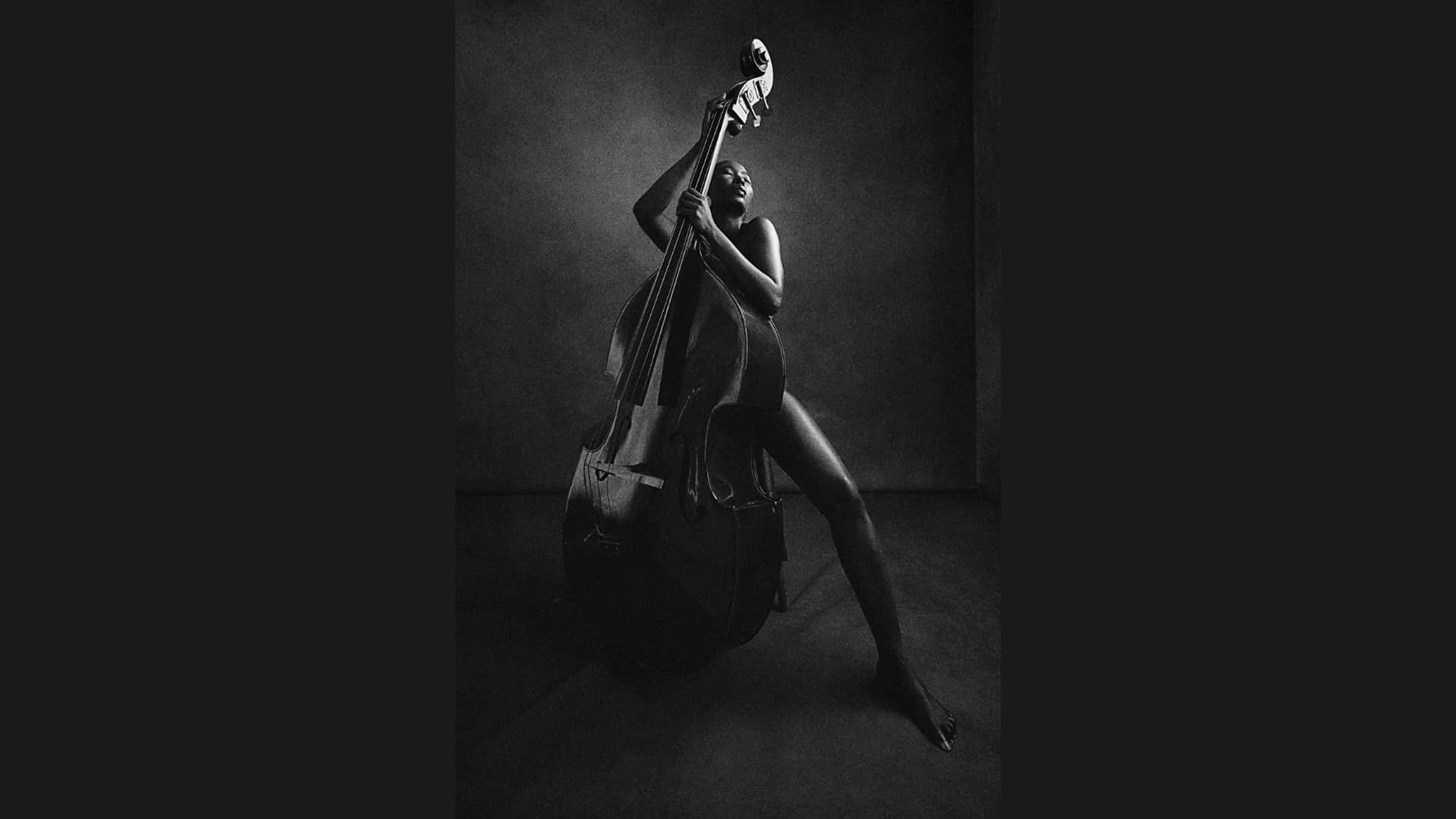
Photography sits at the intersection of documentation and artistic mediation, a visual narrative, which shapes memory. Each image becomes an act of remembrance.
The clicked shutter mediates the living archive of memory and social experiences, which the artist distorts or transforms. While his artistic expressions are varied, portraiture holds a special place in Tosin Junaid’s practice.
His images do not mourn. They insist. They allow him to uncover personal stories and universal truths, creating a mirror for audiences to explore emotional landscapes.
His creative process is rooted in deep human connection and the art of storytelling — he immerses himself in the lived experiences and narratives he seeks to convey, often drawing from the intimacy of his own cultural background.
Each project is allowed to breathe and evolve organically, guided by intuition and emotional truth rather than rigid structure.
His aim is to translate the complexity of African cultural identity into a visual language that speaks beyond borders — bridging ancestral memory with contemporary existence, and creating space for stories of resilience, cultural consciousness, and quiet resistance to be witnessed, honored, and preserved.
In his photographic interrogation, he explores intersection of ancestral memory, spiritual regality and Afrocentric symbolism by inviting viewers into a quiet, contemplative space where the lens becomes: a language, a celebration of heritage, an assertion of beauty, and a gesture toward the divine.
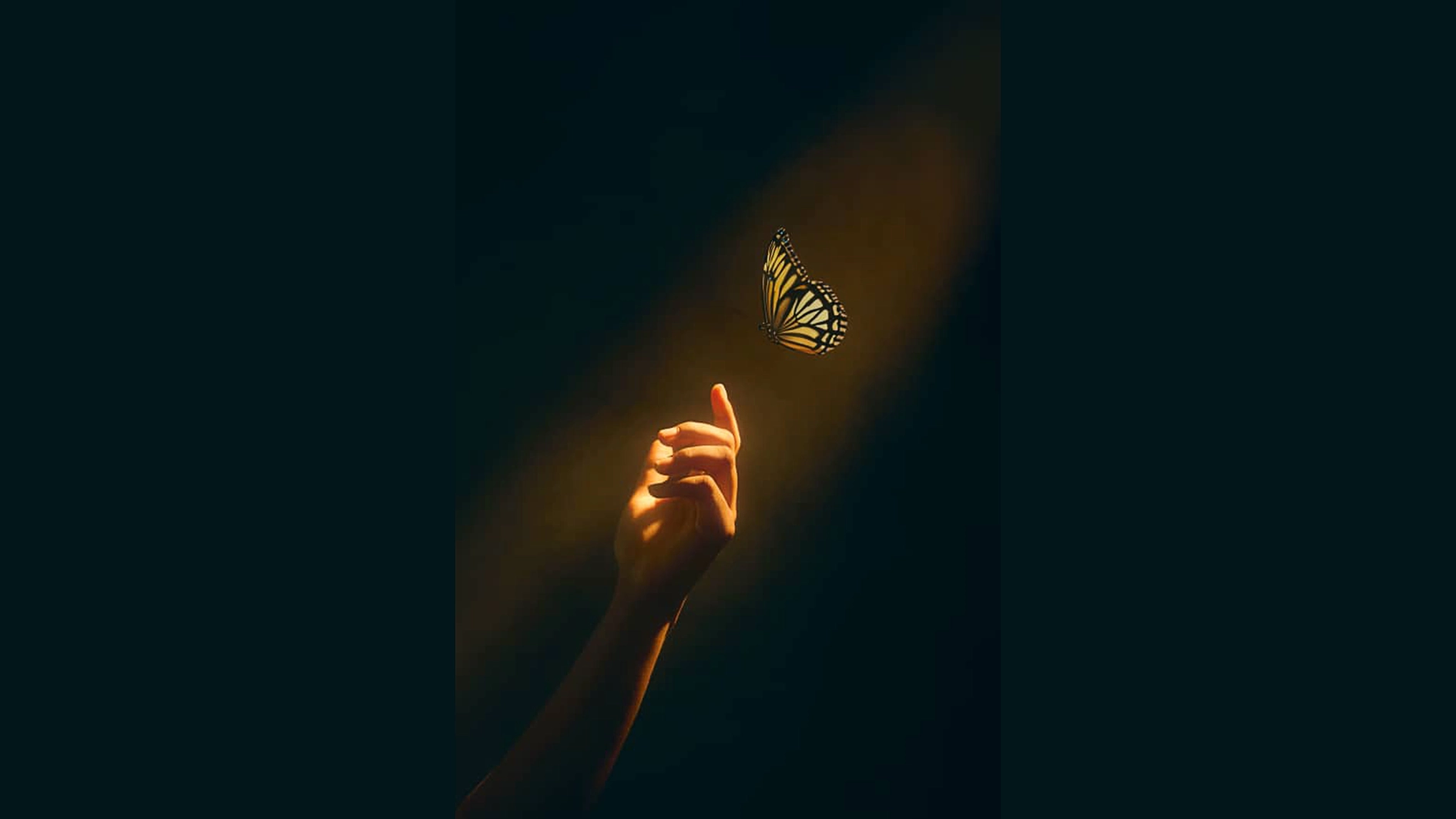
InTales of Tranquility and hope, from The Hands That Remember series, he challenges the viewer to look at the human mind, perhaps, their own mind, to be self-aware of the balance between reason and emotion.
A butterfly landing on the hand can be interpreted as a sign of personal transformation or a message from the spirit world, encouraging you to embrace change.
However, the butterfly doesn’t perch in this case but having its own form by fluttering. He explores the depth and complexity of delicate intersection between reality and imagination, showing how the lens becomes a tool not just to document, but to provoke, question, and inspire.
In eda, his lens invites viewers to a transformative journey of self-discovery, encouraging introspection within deep, serene honesty.
Cowrie shells, darkness and shadow appear in this work not as aesthetics but as cultural declarations. This description points to a deeply symbolic traditional or modern African hairstyle known as Brazilian wool threading (or ikpa), adorned with cowrie shells.
His portrait of the woman in white transforms traditional motifs into powerful, future-facing statements, challenging prevailing aesthetic hierarchies while preserving cultural integrity. The woman possibly an Osun worshipper.
In many traditional African socities—particularly in West Africa and among the Yoruba people—the head (Ori) is considered the spiritual centre of a person’s destiny, consciousness, and power. Adorning it with cowries acts as a protective shield and a mark of honour.
Cowries are also highly sacred elements in traditional African spirituality, often used in divination and as a symbol of the goddess of the ocean or the patron of commerce (Ajé).
Through a synthesis of symbolic narrativesand composition, he expands the language of contemporary African portraiture, placing it firmly within a global context.
Through carefully constructed image, symbolism, light, and texture, he retains the aesthetic sensibilities and perspectives, that unlocks new perspectives.
The work represents fragments of identity that risk disappearing with time. Each one, a small act of preservation in a world that moves quickly toward forgetting.

It is rooted in a commitment to storytelling — stories that spark introspection and conversations, stories that remind the viewer of interconnectedness of nature and its being.
Steeped in Afrocentric symbolism yet executed with a precision and restraint reminiscent of classical portraiture, the work operates in the charged space between memory and reinvention.
The work expresses creative originality and distinctiveness of his visual style and ideas, as each portrait is a visual meditation on identity and resilience.
The cowrie veil, symmetrically arranged, functions as both a shield and a relic part ritual armor, part ornamentation.
The work challenges the conventional perceptions of beauty, reshaping ideas of the ideal face and form.
It explores the power of true self-awareness, stripping away superficial layers to reveal a more authentic, inner vibration.
The work examines the gradual erosion of African identity through westernisation, questioning how inherited traditions, aesthetics, and ways of being are reshaped or forgotten in the pursuit of modernity.
In Instrument and Flesh, Junaid’s photographs do not politely request the viewer’s attention — they command it. Through its bold composition, it urges the viewer to confront their own self-image and question societal norms, guiding them toward a deeper understanding of themselves.
The work becomes a mirror, reflecting not just the surface but the essence of being, celebrating the raw, unfiltered self that often lies beneath our projected identities.
Shadows and soft directional light sculpt the subject’s features. The lens echo the sacred stillness of humanity that is alive with breath and intention.
He demonstrates both artistic innovation and critical contribution to the discourse on identity, heritage, and visual sovereignty while trying to reclaim beauty, dignity, and cultural consciousness within a rapidly westernised world.
He weaves together digital and traditional photographic techniques to create a lens through which African heritage is not merely observed, but felt and remembered.
Beyond the lens, Junaid is committed to nurturing the next generation of visual storytellers.
In partnership with Nikon Middle East & Africa, he has led a creative arts workshop dedicated to educating and mentoring.
His work has gained recognition across international and local platforms. Eda and Instrument & Flesh have been exhibited across Europe, including in the United Kingdom at Circular Art Space and the Royal Birmingham Society of Artists.
Closer to home, Hands That Remember was exhibited in Nigeria at Atirira Gallery, Lagos, a presentation deeply rooted in the cultural conversations.

