 Follow Us on Google News


 Follow Us on Google Discover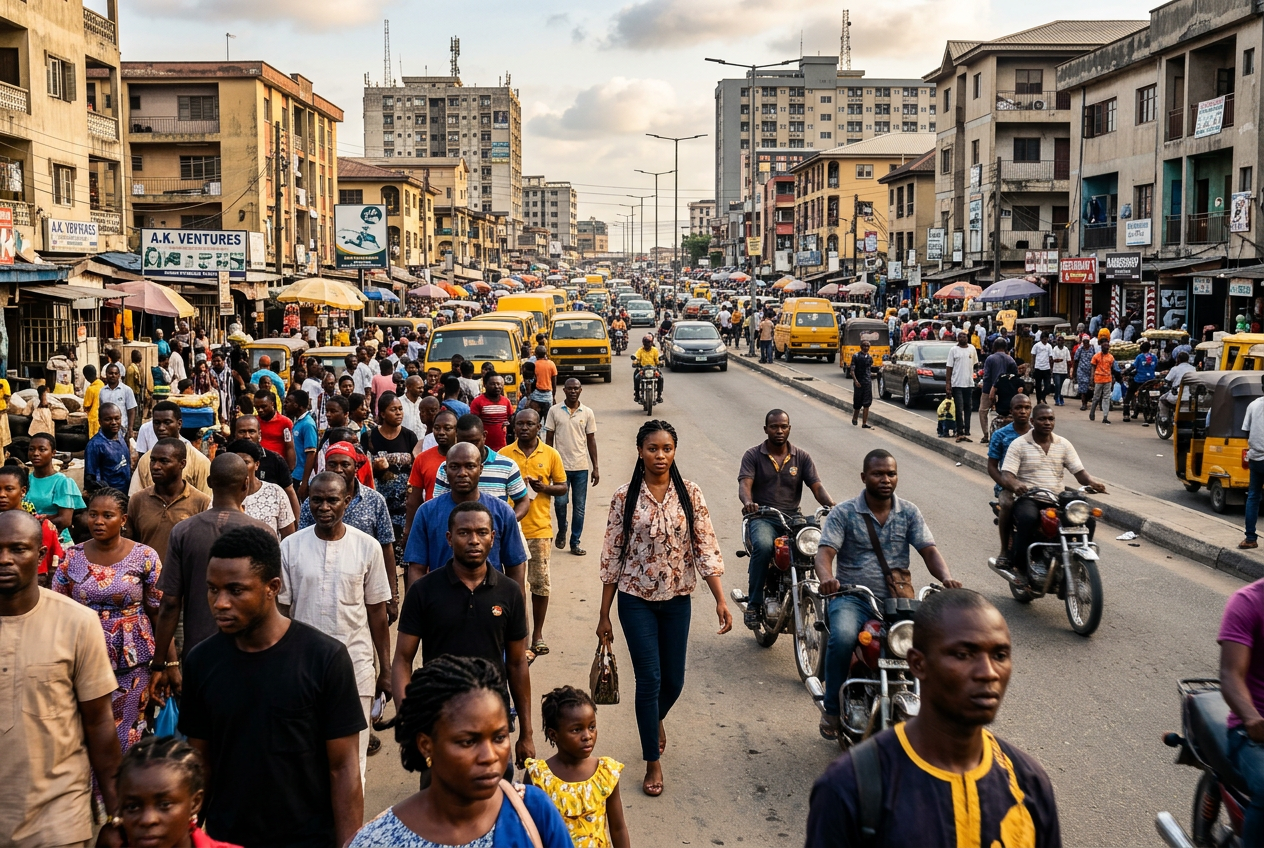
Welcome, and thank you for stopping by. If you have ever looked out at a Lagos go-slow at rush hour and thought, “surely the entire country is crammed into this one city,” you are not alone in that feeling. After months of deep research into Nigeria’s population geography and years of experience writing about the social forces that shape this country, I can tell you that the answer to where do most people live in Nigeria is both simpler and far more fascinating than most people realise. Wherever you come from in this nation, the story of where Nigerians choose, or are forced, to live says everything about us as a people.
The demographics of Nigeria have always been a source of national fascination, political controversy, and genuine human drama. We are a country of well over 230 million souls, and those souls are not distributed equally across our 36 states and 774 local government areas. Some places are bursting at the seams. Others feel almost empty by comparison. Understanding where the people are, and why they are there, matters enormously for planning, governance, and your own personal decisions about where to put down roots.
Which Part of Nigeria Is the Most Populated?
Let us begin by talking about the biggest population story in Nigeria, because it is one that surprises a lot of people.
If you go strictly by official numbers, the North-West geopolitical zone holds Nigeria’s largest share of the population. The National Population Commission’s projections, building on the 2006 census, have consistently placed Kano State at or near the top of state-level population rankings. According to National Bureau of Statistics state population forecasts, Kano State alone was estimated to carry over 13 million residents by the early 2010s, a figure that has only grown since. The entire North-West zone, which covers Kano, Katsina, Kaduna, Sokoto, Kebbi, Zamfara, and Jigawa states, is estimated to hold somewhere between 48 and 55 million people at the time of writing.
That said, the South-West zone, and Lagos in particular, tells a very different story when you look at density rather than raw headcount.
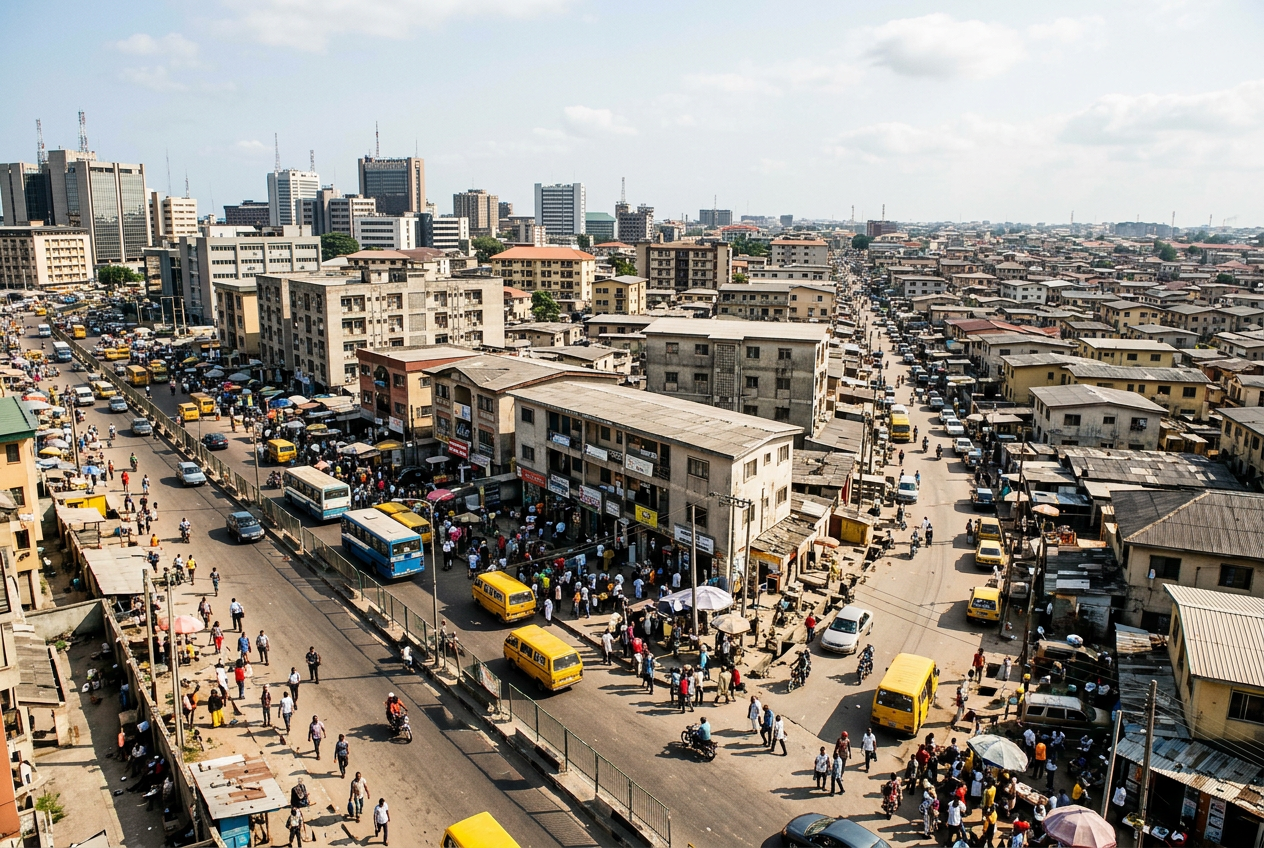
The South-West is the most densely packed part of Nigeria. Lagos State alone, with a land area of roughly 3,577 square kilometres, squeezes in a population that most credible independent estimates place between 20 and 24 million people. When you consider that Lagos is geographically one of Nigeria’s smallest states but arguably its most economically consequential, the density figures become almost mind-bending. The NBS Demographic Statistics Bulletin projected Nigeria’s total population at over 216 million in 2022, and Lagos accounts for a disproportionate share of urban residence relative to its physical size.

The Guardian Nigeria’s editorial board noted in a landmark piece on urban pressure that by 2050, Nigerian cities will collectively absorb an additional 140 million people, driven by rural-urban migration patterns and a population growth rate that outpaces planning capacity. That is a staggering number, and it starts with understanding where concentration already exists today.
So to be direct: most Nigerians live in the North-West by total count, but the South-West, especially Lagos and its surroundings, represents the most densely populated and economically active corridor in the country.
A helpful way to think about it is rather like looking at a jar of marbles. The North might have more marbles overall, but the South-West’s jar is smaller and therefore far more tightly packed, with the marbles constantly pressing against one another.
Population Density and Urban Distribution Across Nigeria’s Six Geopolitical Zones
| Geopolitical Zone | Estimated Population (millions) | Approximate Urban Rate | Key States | Population Density (per km2) | Primary Economic Activity |
|---|---|---|---|---|---|
| North-West | 48 to 55 | 35% | Kano, Kaduna, Katsina, Sokoto | 200 to 260 | Agriculture, trade, textiles |
| South-West | 40 to 48 | 75% | Lagos, Oyo, Ogun, Osun | 520 to 600 | Commerce, services, manufacturing |
| North-East | 28 to 33 | 30% | Borno, Bauchi, Gombe, Adamawa | 170 to 200 | Agriculture, pastoralism |
| North-Central | 26 to 31 | 45% | FCT-Abuja, Kwara, Plateau, Kogi | 185 to 210 | Administration, agriculture, mining |
| South-East | 22 to 27 | 52% | Anambra, Imo, Enugu, Abia | 400 to 450 | Commerce, small-scale manufacturing |
| South-South | 26 to 31 | 55% | Rivers, Delta, Edo, Akwa Ibom | 320 to 370 | Oil and gas, fishing, agriculture |
What this table makes clear is that raw population size and density tell two very different stories. The North-West leads in headcount, but the South-West’s density is in a category of its own. The South-East, despite being Nigeria’s geographically smallest zone, packs in people at a rate that reflects its long-standing tradition of dense commercial settlement and strong community ties.
What Are the Top 5 Most Populated Cities in Nigeria?
Right. If population zones give us the big picture, individual cities give us the human detail, and this is where things get genuinely interesting.
Nigeria’s five most populated cities, based on the best available 2024 estimates, are:
- Lagos with approximately 15 to 22 million people depending on how you define the metropolitan boundary, making it the largest city in sub-Saharan Africa
- Kano with approximately 4.9 to 5.2 million people, the undisputed commercial and cultural capital of northern Nigeria
- Ibadan with approximately 3.6 to 4.3 million people, historically one of the largest cities in Africa by geographical area
- Abuja (Federal Capital Territory) with approximately 2.7 to 3.5 million people in the city proper, though the wider FCT population is considerably higher
- Port Harcourt with approximately 2.1 to 3.9 million people, the economic engine of the Niger Delta oil economy
A quick word on those ranges. Nigeria’s last official census was conducted in 2006, and a fresh national headcount has been repeatedly delayed since. This means figures from different credible sources vary considerably, and you will find wildly different numbers depending on who you ask. The Guardian Nigeria covered this controversy extensively in a piece on Nigeria’s contested population estimates, pointing out that political interests have historically inflated figures in some regions while others went undercounted.
Lagos is the one that always sparks a proper argument. Official NBS projections for Lagos State hover around 12 to 14 million, but the state government and most independent urban researchers put the true population much higher, accounting for the vast informal settlements and unregistered residents that official counts miss. Makoko, the famous waterside community balancing on stilts over the Lagos Lagoon, has an estimated population that exceeds the official population of some Nigerian states’ local government areas. And Makoko barely shows up in any census data at all.
Ibadan deserves a special mention here. Many Nigerians know it as a dusty, sprawling city with an endless stretch of brown rooftops visible from the highway. But Ibadan was once the largest city in sub-Saharan Africa by geographical area, and it remains home to Nigeria’s oldest university, the University of Ibadan, established in 1948. The city’s population has grown far beyond its historic core, spreading outward into communities that blur the line between Ibadan city and rural Oyo State.
Abuja, meanwhile, is the city that was literally drawn on a map and built from scratch. Planned in the 1970s and designated as the national capital in 1991, Abuja replaced Lagos as Nigeria’s seat of government after decades of concern that Lagos was too Yoruba-identified to serve as a neutral national capital. The FCT’s planned districts, Maitama, Garki, Wuse, Asokoro, and the newer suburban areas, have absorbed enormous population growth as federal government workers, contractors, and entrepreneurs poured into the city over three decades.
How do you approach understanding where you or your family might fit into this urban picture? Here is a practical seven-step guide.
How to Assess Which Nigerian City Best Suits Your Life and Goals
- Define your primary reason for relocation. Employment, education, family proximity, business, and retirement all point to different cities. Lagos suits commerce and media; Abuja suits government and consulting; Kano suits northern trade; Port Harcourt suits oil and gas.
- Research the cost of living in your target city. Lagos and Abuja are by far the most expensive places to rent or buy property in Nigeria. A decent three-bedroom flat in Lekki, Lagos, can command between N2.5 million and N6 million annually, whereas the same quality of accommodation in Enugu or Ilorin runs considerably less.
- Factor in infrastructure realities. Every Nigerian city struggles with power, water, and road congestion, but to different degrees. Abuja has better road planning than Lagos, but Lagos has more commercial variety. Know what trade-offs you are willing to make before you move.
- Investigate employment prospects in your field. Lagos dominates finance, media, technology, fashion, entertainment, and manufacturing. Abuja dominates government, law, diplomacy, and NGO work. Kano leads in northern trade, agriculture, and textiles. Port Harcourt leads in oil and gas engineering.
- Consider the security situation in your area of interest. The North-East, particularly areas of Borno and Adamawa, has faced prolonged insecurity. The North-West has experienced significant banditry in rural areas. Lagos and Abuja have their own urban crime dynamics that require street awareness and neighbourhood research.
- Talk to people already living there. No article, including this one, replaces ground-level intelligence from someone who navigates your target city daily. Seek out connections in the city before you commit.
- Plan your finances for at least six months ahead. Settling into any Nigerian city comes with upfront costs that catch people off guard. Agency fees, caution deposits often running to six months’ rent in Lagos, generator costs, and transport all add up quickly.
The National Bureau of Statistics publishes regular reports that can help you understand economic conditions in different states, and consulting them before any major relocation decision is genuinely worth your time.
Where Do Most Nigerians Move To?
This question has a fascinating answer that most people get partially wrong.
Within Nigeria, the overwhelming internal migration trend points to Lagos. It has been this way since the 1950s, when the commercialisation of the colonial economy made Lagos the default destination for ambitious Nigerians from every ethnic group and every corner of the federation. The Igbo trader who built his empire in Lagos Market, the Hausa butcher with his stall in Mile 12, the Ijaw fisherman who pivoted to construction work in Agege, the Tiv student who came for university and never left, they are all Lagos.
But something significant has been happening over the past decade. Abuja has become the second great magnet for internal migration, particularly for educated professionals, political operatives, contractors, and the growing middle class seeking a less chaotic alternative to Lagos. Urbanisation experts writing for Guardian Nigeria have observed that the housing crisis in Lagos, driven by a combination of population pressure and inadequate planning, has pushed many would-be Lagosians to consider Abuja, Ibadan, Enugu, and even Port Harcourt as more liveable alternatives.
There is also a pattern that gets less attention: reverse rural migration. A growing number of Nigerians, particularly retirees, are returning to their states of origin after spending their working years in Lagos or Abuja. I have met several such people in my own reporting, including a retired civil servant from Ondo State who spent 28 years in Lagos, bought land in his hometown during those years, and quietly built a house that was ready when he finally left the city. “Lagos is for earning,” he told me over groundnut soup in his sitting room. “But home is for living.” That quiet wisdom turns out to be a fairly widespread philosophy among Nigerians of a certain generation.
For international migration, the United Kingdom, the United States, and Canada remain the top destinations for Nigerians leaving the country entirely. The diaspora question is a separate conversation, but it connects directly to the domestic population picture: every Nigerian who relocates abroad is one fewer person adding to the pressure on Lagos, Abuja, and Kano.
Where Do Most Rich People Live in Nigeria?
If you want to understand where wealth concentrates in Nigeria, two cities tell essentially the whole story: Lagos and Abuja. Every other city has its wealthy enclaves, but neither comes close to the density of high-net-worth living you find in those two.
In Lagos, the answer is Ikoyi, Victoria Island, Banana Island, and Lekki Phase 1, in roughly that order of exclusivity. Ikoyi is the acknowledged crown jewel of Nigerian real estate. A 500-square-metre plot in Ikoyi can cost upwards of N575 million, and land values in Banana Island, the sand-filled artificial island within Ikoyi, are even higher. Banana Island is home to virtually every billionaire who calls Lagos home, including members of Nigeria’s most prominent business families. Entry-level apartments in Ikoyi typically start at around N500 million. That is not a typo.
Victoria Island sits just beside Ikoyi and functions as a mix of residential prestige and commercial muscle. The headquarters of major banks, oil companies, and multinational corporations share space with luxury apartments and high-end restaurants. Victoria Island is essentially where Lagos’s business elite live, work, and entertain, all within a few square kilometres.
Lekki Phase 1 has emerged as the aspirational address for young professionals, tech entrepreneurs, and the growing upper-middle class. It is newer, less starchy than Ikoyi, and has a vibrant social scene that draws Lagos’s creative economy.
In Abuja, the prestige addresses are Maitama, Asokoro, and Wuse 2. Maitama houses most of the foreign embassies and high commissions, and property there can reach N600 million for premium homes. Asokoro is where senior government officials and top political figures live, with the Presidential Villa (Aso Rock) in the same district. Land in Asokoro runs from approximately N180,000 to N1 million per square metre depending on location within the district.
Port Harcourt has its own wealth geography, centred on the GRA (Government Reserved Areas) phases and Peter Odili Road, where oil company executives and expatriates live in properties valued between N1.5 billion and N2 billion for fully detached duplexes. Kano’s wealthy enclaves, including Nassarawa GRA and Gwale GRA, reflect the city’s long mercantile tradition. Enugu’s Independence Layout and GRA attract politicians, lawyers, and the Southeast’s commercial class.
The common thread is that Nigerian wealth is overwhelmingly urban, and largely concentrated in two cities. This creates real implications for development, because economic opportunity and the infrastructure that supports it remain stubbornly clustered in places that are already under enormous population pressure.
Understanding Where Most People Live in Nigeria: The Full Picture
So, where do most people live in Nigeria?
The honest, complete answer covers three layers. By raw population headcount, the North-West is Nigeria’s most populous zone, with Kano State leading individual state rankings in official data. By density and economic concentration, the South-West, and Lagos specifically, represents the most intensely inhabited corner of the country. And by aspiration and internal migration trends, Lagos continues to act as the national gravitational centre, pulling people from every state and every ethnic group toward its chaotic, electric, irresistible streets.
The key population hotspots in Nigeria by any meaningful measure are:
- Lagos State (South-West): highest density, greatest economic activity, largest informal population
- Kano State (North-West): highest official headcount, major northern commercial centre
- Abuja-FCT (North-Central): fastest-growing planned city, seat of federal government
- Oyo State including Ibadan (South-West): third-largest urban agglomeration
- Rivers State including Port Harcourt (South-South): primary oil economy hub
What drives this distribution? Economics, history, and infrastructure, in that order. Nigerians, like people everywhere, move toward opportunity. Where the jobs are, where the schools are, where the hospitals and the roads and the commerce are, that is where the people follow. The housing crisis that has accompanied this concentration is real and deepening, but it has not yet slowed the flow of people toward urban centres.
Understanding where Nigerians live is understanding Nigeria. The geography of our population is the geography of our ambitions, our frustrations, and our future.
Related Articles
If this piece on Nigeria’s population geography sparked your curiosity about the economic realities behind the numbers, you might find it worthwhile to explore my look at how much it takes to be considered rich in Nigeria, which examines the income thresholds and lifestyle markers that define wealth in different parts of the country. For a closer look at the physical reality of Nigerian urban living, my article on what kind of house most Nigerians live in unpacks the gap between housing aspiration and housing reality across different income groups and regions.
Where Do Most People Live in Nigeria? Key Takeaways
- By official population data, the North-West zone, led by Kano State, holds Nigeria’s highest headcount, but the South-West, particularly Lagos, represents the most densely populated and economically concentrated part of the country.
- Nigeria’s five most populated cities are Lagos, Kano, Ibadan, Abuja, and Port Harcourt, with Lagos serving as the primary destination for internal migrants seeking economic opportunity.
- Wealth is heavily concentrated in Lagos (Ikoyi, Banana Island, Victoria Island, Lekki) and Abuja (Maitama, Asokoro, Wuse 2), with property values in these enclaves among the highest on the African continent.
Frequently Asked Questions: Where Do Most People Live in Nigeria?
Where do most people live in Nigeria today?
Most Nigerians live in either the North-West or South-West geopolitical zones, depending on how you measure. The North-West holds the highest total headcount, while the South-West, anchored by Lagos, is the most densely populated and economically dominant region.
Is Lagos the most populated city in Nigeria?
Lagos is widely considered the most populated city in Nigeria and the largest city in sub-Saharan Africa, with estimates ranging from 15 to 22 million people depending on the boundaries used. Official NBS figures tend to be more conservative, while independent urban researchers typically arrive at higher numbers.
Which state in Nigeria has the highest population?
Kano State officially leads Nigeria’s state-level population rankings based on the 2006 census and subsequent NBS projections. Lagos State disputes this ranking, with the state government and many independent analysts arguing that Lagos’s true population far exceeds Kano’s official count.
Why do so many Nigerians move to Lagos?
Lagos has historically concentrated the largest share of Nigeria’s formal and informal economic activity, making it the default destination for internal migrants seeking employment, business opportunities, education, and social mobility. The city’s role as Nigeria’s commercial capital and media hub creates a gravitational pull that shows no sign of weakening.
What are the top five most populated cities in Nigeria?
Nigeria’s five most populated cities, by best available 2024 estimates, are Lagos, Kano, Ibadan, Abuja, and Port Harcourt. Each city serves a distinct economic and cultural function within the federation.
Is Abuja growing faster than Lagos?
By percentage growth rate, Abuja is actually growing faster than Lagos, having been a planned city that has expanded at an extraordinary pace since becoming the federal capital in 1991. Lagos is growing in absolute numbers, but Abuja’s proportional growth rate is one of the highest of any capital city in Africa.
Where do wealthy Nigerians tend to live?
Wealthy Nigerians are concentrated primarily in Ikoyi, Banana Island, Victoria Island, and Lekki Phase 1 in Lagos, and in Maitama, Asokoro, and Wuse 2 in Abuja. Property in Banana Island starts at several hundred million naira, reflecting how far elite residential enclaves sit from ordinary Nigerian housing realities.
What percentage of Nigerians live in rural areas?
Estimates suggest that roughly 46 to 48 per cent of Nigerians still live in rural areas, down dramatically from 85 per cent in 1960. Urbanisation has been rapid and sustained, though a significant rural population remains, particularly in the North-East and North-West zones.
Which region of Nigeria is the least populated?
The North-East geopolitical zone, covering Borno, Yobe, Adamawa, Taraba, Bauchi, and Gombe states, is among Nigeria’s least densely populated regions. This reflects both the zone’s large land area and the population displacement caused by years of insurgency in parts of Borno and Adamawa.
Do Nigerians prefer living in cities or rural areas?
Migration patterns strongly suggest a preference for urban living, with internal migration flowing consistently from rural areas to cities, particularly Lagos, Abuja, and Kano. This preference is driven by economic necessity more than lifestyle choice, as cities offer employment, education, and healthcare that rural areas frequently do not.
How does population distribution affect resource allocation in Nigeria?
Population figures determine how federal government allocations are distributed to states under Nigeria’s revenue-sharing formula, making census data intensely political. States with higher officially recognised populations receive larger shares of federal revenue, which is why population counts have historically been contested and sometimes inflated.
Is Port Harcourt growing in population?
Port Harcourt is growing steadily, driven by the oil and gas economy that continues to attract skilled workers, engineers, and entrepreneurs to Rivers State. Population forecasts suggest Port Harcourt could reach significantly higher numbers by 2050, particularly if oil production remains a central feature of Nigeria’s economy.

