 Follow Us on Google News
 Follow Us on Google Discover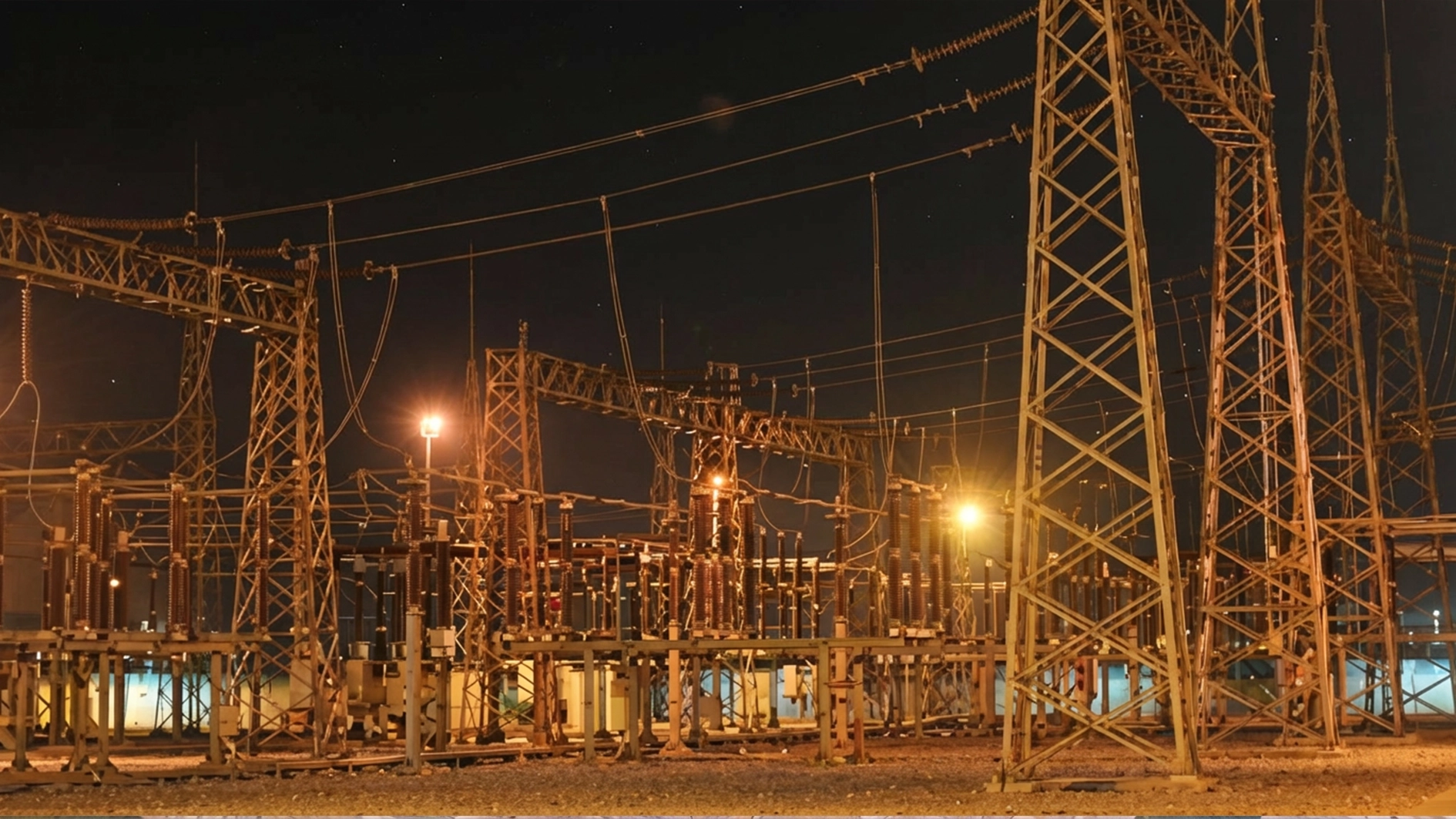
By Victor Ariole
“That we may have light” is the title of the Inaugural lecture delivered by Professor Peter Olabisi Oluseyi, Professor of Electrical Power and Energy Systems, at the Ade Ajayi Auditorium of University of Lagos, chaired by The Vice Chancellor, Professor Folasade Ogunsola. For Oluseyi, the 21st century human dignity could best be measured by the power supply made available to every human being so as to allow them optimise their capacity and in turn “upload” into the GDP grid of the world their best for greater GDP.

For now it is appalling that the average light available to a Nigerian is 17 Watts just to light a bulb whereas in USA it is 1,480 watts, China 740 watts, close to Nigeria, Cote d’Ivoire it is 39 Watts. In effect 40 per cent of Nigerians do not have access to electricity, and even, of the 30,000+ MW installed capacity in Nigeria, only 4,500MW reach end-users. A proof that the Nigerian manpower capacity is running below 15 per cent of its enormous potentials. With such electricity infrastructure layout the expected $1 trillion GDP come 2030 could only be a chimeric intent.
Electricity supply could be made ‘organic’ at worst, and still make Nigerians unleash their economic potentials, relative to their industrial and geographic positioning if well planned. It could also be systemically developed with great investment attraction beyond organic reach to give Nigeria an optimal GDP that transcend far above its current GDP of about $350 billion; as the 20th most industrialised nation among the G-20 is currently Netherlands with $1.15 trillions and a population of about 18.5 million people.
In effect, what will make a small country both in population and space be more prosperous than Nigeria of 220 million people if not power supply and effective planning and organisation.
Hence Oluseyi in his research efforts work on “Building Resilient Electricity systems” driven by the “Bus system” planning; and, at best, emulating the Egyptian “Smart Grids” model. For the bus system that moved from 31-bus system to 50-bus system, Gombe, Maiduguri, Yola, Kano and Makurdi are identified as the weakest buses where no generator or local power injection source intervene to feed the grid. They are also “located at the far ends of long radial transmission lines, with high impedance; resulting in poor voltage support, increased transmission losses, and reduced network stability”. It is like managing the transmission process on what is currently known as Bands A, B, C, E. The question is how to operate a circuit breaker that could work out such supply based on relative industrial capacity of such zones -application of “Thermal Mechanism” to trigger power cut when too much current is flowing into such zones, or “Magnetic Mechanism” that instantly snaps the switch open when power surge occurs.
There are so many such intervention systems that could be made available to the Nigerian worst-case scenario electricity supply system wrestling with deep-rooted structural challenges including grid instability, multiple system collapses, gas supply shortages and vandalism, which makes the transmission segment incapable of transporting generated power efficiently and often losing 60 per cent of peak generation as wheeling constraints interference.
To the Chinese Engineers who make such equipments and Chinese Government concern for their people who make it possible for a Chinese to enjoy up to 740 Watts in average compared to Nigeria’s 17, it is all about investment in electricity infrastructure.
Both smart grid which relates to best scenario electricity supply and the omnibus Nigeria’s type that is unreliable, must source from Chinese experience of equipment maintenance or replacement. Nigeria must see good in the smart grid process.
To the Chinese, it is installing along the chain High Voltage switch gears and Low Voltage switch gears, Power Transformer, Rectifier Transformers, Arc Furnace Transformers and lower KV Distribution Transformer. They could be Dry-type or Oil-immersed type depending on how Engineers evaluate it. According to them, Dry-type works with low voltage flow while Oil-immersed works with high voltage flow.
This is where the government must listen to the Engineers and do the needful so that we may have light. It is all about planning and organising well what is available to you. Even as stochastic in behavior the current electricity supply seems, good organisation could help in making it work.
You do not expand without providing what it takes to expand; in effect it is the bane of Nigeria’s economy in all spheres like installing over 300 universities without infrastructure backing them.
The same way, according to Oluseyi, electricity supply was first made available to Nigeria in 1896 almost 15 years after it was made available in England, and innovation and maintenance have made it possible for sustainability in England whereas lack of them has made it impossible for Nigeria to enjoy sustainability. Nigeria kept on supplying to other cities without planning and innovation, and it has reached now a ruinous point; national grid with clogging conduction traces.
Almost $3 trillion is available for investment on grid and clean energy investment from Brookfield and Macquarie Groups as reported, and they are investments that are often non-dependent on a country’s annual budget vagaries, and it seems Nigeria is not finding a way to hook into them.
Ivoirien government, for example had been enjoying such investment with a mixed-grid supply of Thermal Power at 74 per cent, hydropower at 35 per cent and 1 per cent from solar. And electricity is adequately priced and made available for the end-users and the investors recoup their money without contention unlike Senegalese experience, and that means great trust in the governance process.
“Power without control is useless” and it seems to be the Nigerian experience, and smart grid system could be explored to give Nigerians chance to rest their case of: “That we may have light”.
Ariole, Ph.D is Professor of French and Francophone Studies, University of Lagos.

