 Follow Us on Google News
 Follow Us on Google Discover
Regular reports of the hardship commuters face daily in Abuja are a sad testimony that the planners, or perhaps the developers of the Federal Capital Territory (FCT), are in serious deficit of the ideals of its master plan as a ‘world-class city,’ as President Bola Tinubu had once observed. For a capital city that had Lagos and its chaotic vehicular traffic experiences as a backdrop, much more is expected of the country’s new capital. The absence of an efficient public transportation system in Abuja is a pointer that it is one sector that the administration has failed to develop, which is soiling its reputation and massively impacting most of the residents of the capital city.
Tinubu, while commending Wike for keying into his vision of developing Abuja into a world-class capital city as he inaugurated the first phase of Arterial Road N5 (Obafemi Awolowo Way), from Life Camp Junction to Ring Road III, in celebration of his second year in office, in June last year, said that the initiative “reflects on our commitment to deliver a modern infrastructure that improves the daily lives of our people.”
But while the poor and the not-so-rich scramble for spaces to lay their heads in far-flung settlements where they can afford accommodation, safe and affordable transportation to and from their places of business has gradually crept into their list of worries. With an estimated population of 4.3 million, the city’s rapid expansion has outpaced its transport infrastructure, worsening congestion, increasing the cost of mobility for workers and businesses, and making life unbearable for the commuting public.
It is a classic case of wishful thinking for a city to claim world-class status when it is grossly inefficient in attending to the transport needs of its residents. Indeed, a city whose working class must fight for available seats in an uncoordinated transportation system or trek long distances to their offices cannot even be addressed as a functional city.
The FCT administration needs to understand that constructing dual carriageways or flashy road infrastructure, carrying out demolition of illegal structures and painting public buildings in brilliant colours are nothing when those that make the city function continually struggle to move.
Reports of chaotic transportation situations in Abuja being rolled out week in, week out simply show that there is no adequate provision made for that sector of the economy, despite the billions that go into administering the city yearly. The absence of organised queues waiting to board high-capacity municipal buses at major transport hubs, including Kubwa, Gwagwalada, Utako, Kugbo, Mabushi, and Wuse or the lack of high-capacity buses or trains for designated routes in the FCT, like Abuja-Gwagwalada, Abuja-Mararaba, Abuja-Suleja, etc., leaves the city with scenes of surging commuters squeezing themselves into unbranded sedans and buses that do not meet safety standards.
In privileged neighbourhoods like Maitama and Asokoro, where formal public transport is practically non-existent, residents and workers are constrained to resort to taxi drops or ride-hailing services such as InDrive, Bolt, and Uber, which come at a premium. Beyond the working class, especially the low-income earners, whose meagre earnings are spent largely on moving from Point A to Point B, hundreds of thousands of informal sector operators are also left to the whims of highway criminals and ritualists, who disguise themselves as transporters in a self-acclaimed modern metropolis.
The Wike-led administration needs to be people-focused and concerned not only with building flyovers and laying fresh layers of asphalt on roads in Maitama, Asokoro, Ministers Hill and sundry highbrow settlements, but also with constant killings and robbery of commoners forced out of the city centre into hamlets in the fringes, who are murdered by criminal gangs as they commute daily to and from home in search of daily bread.
The administration’s policies should not only be to the benefit of the high and the mighty that cruise about in multi-billion-naira worth of automobiles, the poor, who are regular victims of “one-chance” phenomenon are also Nigerians and taxpayers who deserve to go out and return safely to their loved ones at the end of the day’s toil, rather than end in morgues or ditches on the roadsides.
Indeed, residents of satellite towns like Nyanya, Karu, Mararaba, Kubwa, and Lugbe should not endure several hours of agonising road trips during peak hours if the FCT administration is sensitive to their plight and cognizance of soaring pump price of petrol that has forced owners of private vehicles to abandon their vehicles and join the burgeoning category of middle-class commuters to pour into an already overwhelmed and broken public transport market.
When the former Minister of the FCT, Nasir el-Rufai, was in office, Abuja had in operation a highly efficient Abuja Urban Mass Transport Company (AUMTCO), which ferried the people across the territory with decorum and dignity, unlike the case now, where commuting public scrambles to fit into rickety buses and a battery of privately-owned vehicles better known as “Kabu-kabu.”
Sadly, subsequent administrations succeeded in turning AUMTCO into the largest automobile cemetery in the FCT as proof of the territory’s pathetic maintenance culture, as reflected in the grounding of more than half of the over 400-strong fleet of high-capacity buses.
If Abuja was truly built on a master plan that should mirror modern world capitals, then continually treating transportation as an afterthought will further delay its attainment of the status of a well-planned capital city that it is lusting for.
As the FCT is still unravelling as a capital city, FCTA should, as a matter of urgency, do away with mundane bottlenecks and operationalise the bus terminals located in Kugbo, Mabushi, and the Central Business District. It would also be an intelligent decision for the authority to rapidly deploy Compressed Natural Gas (CNG) Fleet across most affected high-traffic corridors where they would provide affordable, reliable and regulated services that would alleviate the sufferings of low-income earners.
With a compelling need for the establishment of a functional multi-modal transport system, the FCTA must go beyond the tokenistic commission of the light rail to expand its tracks and indeed services to reach satellite towns, thereby turning trains into the major backbone of the FCT transport infrastructure.
Also, rather than leave commuters stranded by banning service providers that have been filling the gap while the FCTA fumbles with the transport sector, profiling and digitally tracking all commercial drivers would ensure that they are safely integrated into a robust and broad transit ecosystem.
Older capitals across the world are revolutionising their transportation systems to deliver optimally in line with increasing population and contemporary realities; the Wike-led administration should think in that direction, rather than be complacent with the shambolic arrangement that is in place. The speed of the reform in the transport sector that it is carrying out should also be increased because taxpayers are not just losing the hard-earned money, they are also losing their sanity and, in extreme cases, their lives.
Abuja can also afford to borrow a leaf from structured public transport systems, including Bus Rapid Transit (BRT) services in cities on and off the continent, which have, over the years, reduced both travel time and congestion, as well as cost for their city residents.
Abuja residents, workers can do without chaotic public transportation
Date: 23 June 2026 4:45am WAT
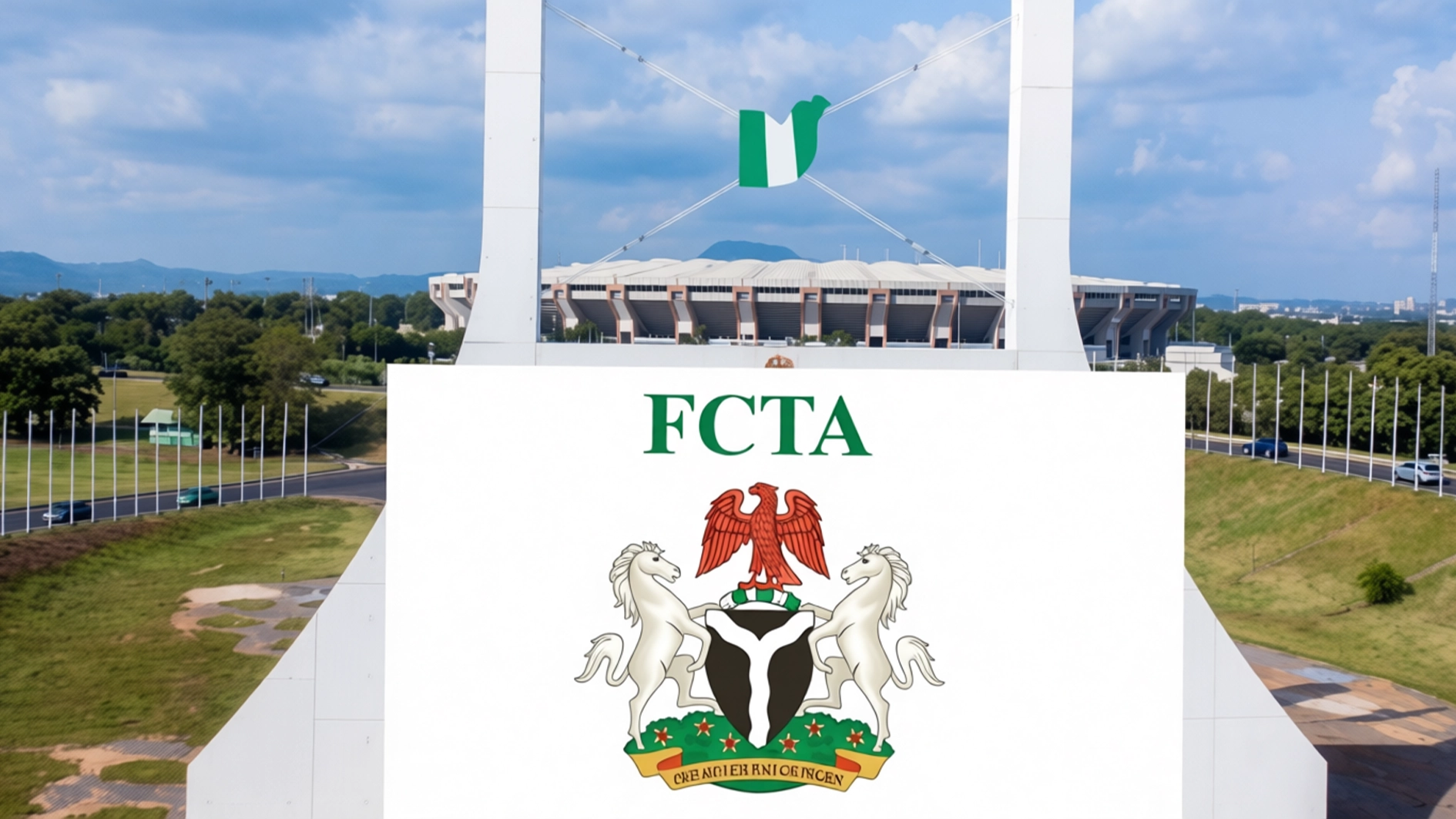
The Federal Capital Territory Administration (FCTA)
The Federal Capital Territory Administration (FCTA)

