 Follow Us on Google News
 Follow Us on Google Discover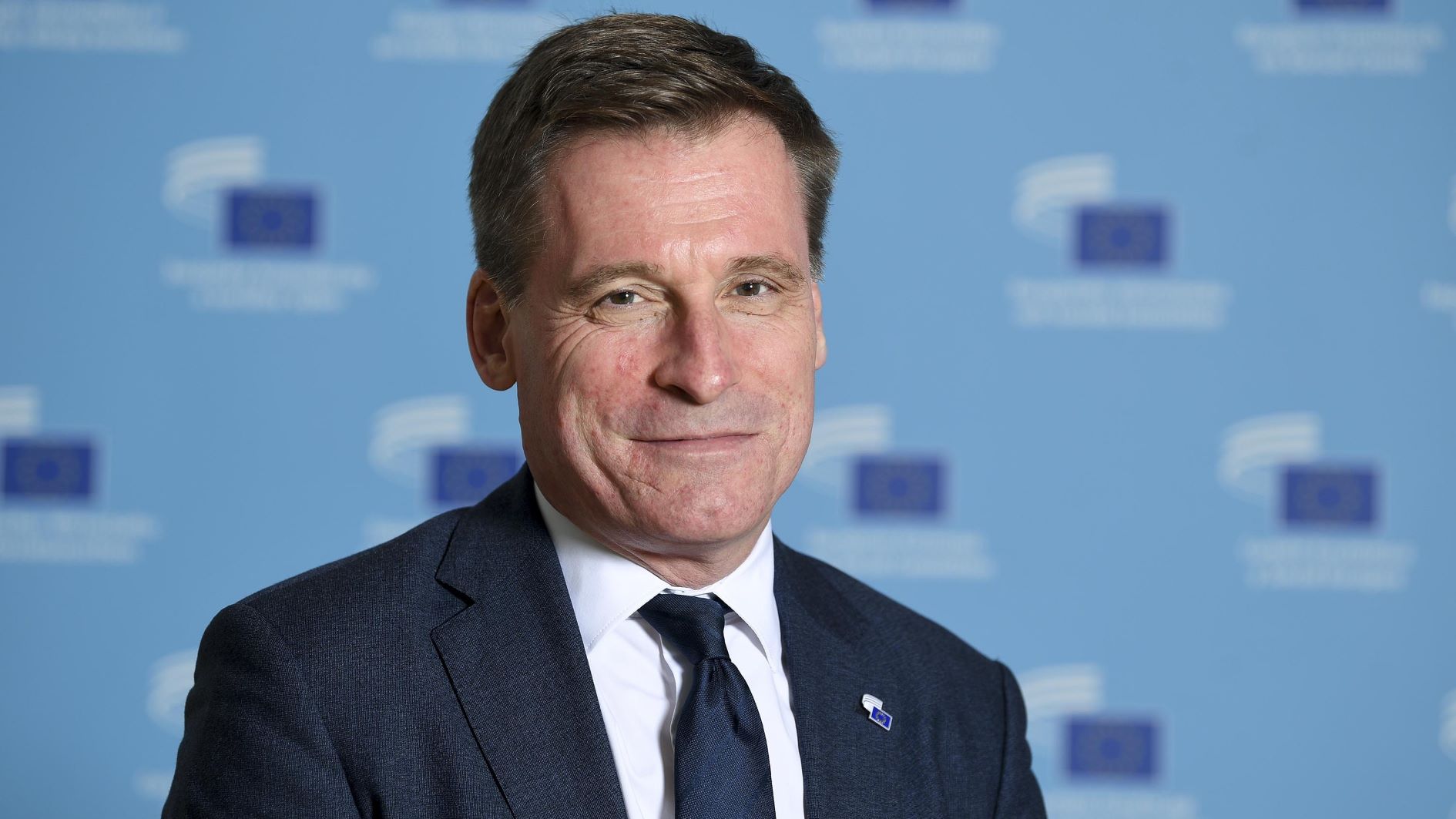
Director of the International Labour Organisation (ILO) Bureau for Workers’ Activities, Oliver Röpke, has charged trade unions to strengthen their capacity to anticipate change, defend workers’ rights, and influence the future of work in a world marked by technological disruption, climate shocks, informality and democratic pressures.
Speaking on ‘Trade Unions in Transformation: Navigating Disruption and Shaping the Future of Work,’ he said trade unions are operating in a world where heightened complexity, uncertainty and disruption are no longer isolated shocks but defining features of the world of work.
For workers and their organisations, he noted, the question was not only how to react to change but how to anticipate and shape it.
According to him, if disruption has become the new normal, then the capacity to navigate disruption must also become the new normal.
He stressed how the bureau supports unions in navigating change effectively, acting with foresight, innovating, and strengthening their role as powerful actors advocating for workers’ rights and social justice.
Röpke emphasised that this was crucial and timely, particularly given this year’s International Labour Conference (ILC), where global workers, employers’ organisations, and governments are engaging in social dialogue to manage change.
He revealed that the conference would consider standard-setting on platform work, one of the major transformations in labour markets.
He said it would also discuss the transformative agenda for gender equality, peace and resilience, and AI.
“These are not separate debates. They are part of one larger question: how can workers and their organisations navigate major transformations in the world of work, shape the future of work, protect labour rights and ensure decent work for all workers, today and tomorrow? he said.
Stating that social dialogue is one of the main vehicles for navigating transformation, Röpke, however, holds that it must be meaningful, inclusive and supported by strong, representative organisations.
“Its foundations are clear: freedom of association and the right to collective bargaining.
These are fundamental rights. They are also enabling rights. Without them, trade unions cannot organise, represent workers or engage effectively in social dialogue.
“Yet these rights are under pressure in many countries. Too many workers, often those in the most vulnerable situations, still lack real access to them. If social dialogue is to remain relevant, freedom of association and the right to collective bargaining must become a reality for workers in emerging sectors, in the informal economy, in supply chains or for migrant workers,” he said.
According to him, social dialogue helps societies manage turbulent times.
“It brings different interests together, especially in polarised environments. It helps workers, enterprises, and governments manage transitions with foresight.
We already see collective bargaining addressing technological change and climate transition, but the full potential of social dialogue is still far from being realised,” he said.
Noting that social dialogue is also a building block of democracy and directly connected with democracy at work, he said that workers having a voice in the decisions that shape their working lives is the foundation of just and inclusive societies.
“We also see new spaces for social dialogue emerging: sustainable development chapters in trade agreements, supply chain due diligence laws, forced labour and child labour initiatives, international framework agreements, responsible public procurement and sectoral approaches. Most of these are grounded in ILO standards.

