 Follow Us on Google News
 Follow Us on Google Discover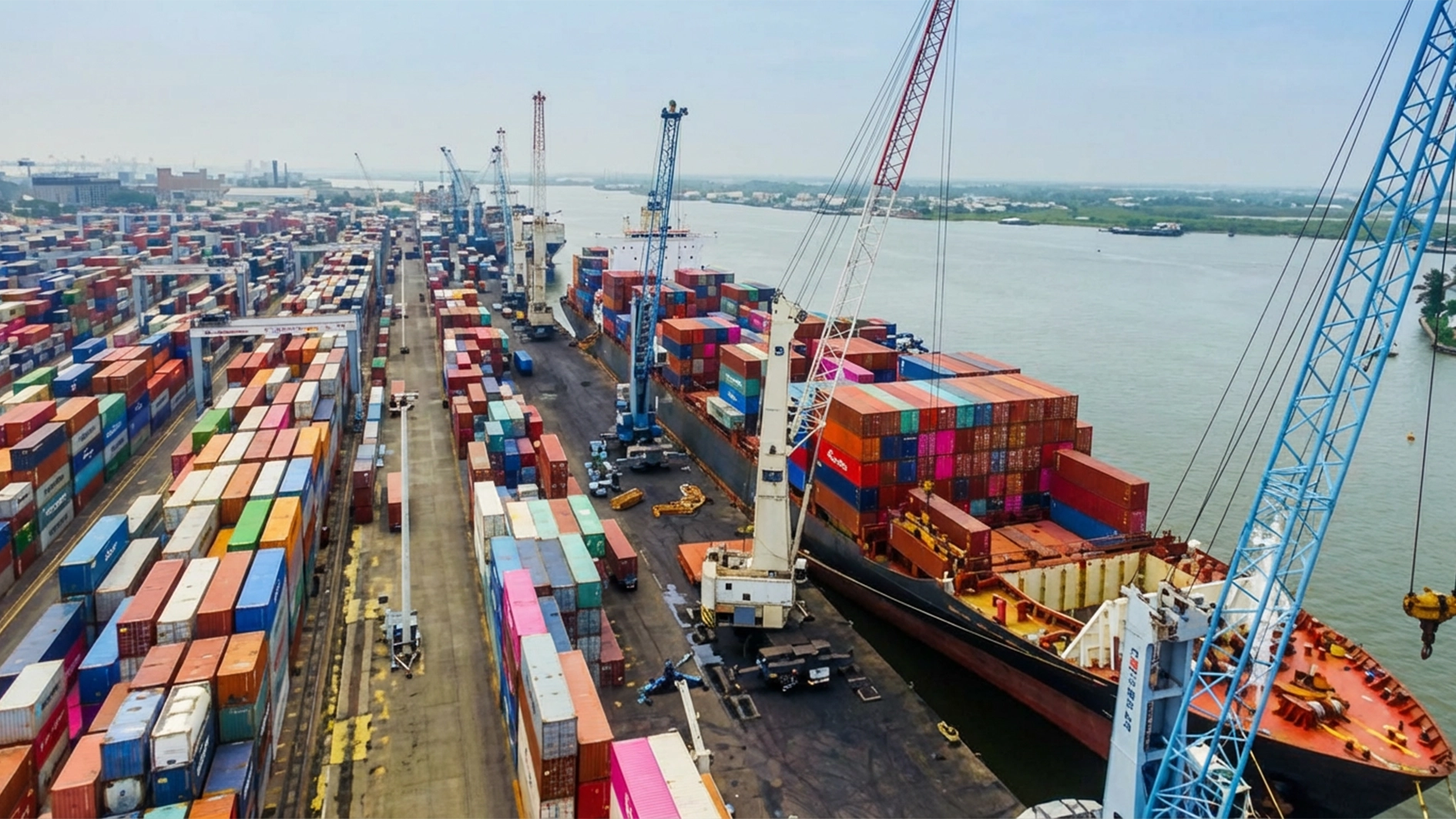
The increasing transfer of substantial volumes of import-laden containers from designated ports of discharge to selected off-dock facilities by shipping companies is imposing additional financial obligations.
Industry sources alleged that the practice is part of operational arrangements that fall short of transparency, describing it as commercial arrangements between shipping lines and off-dock terminal operators.

The Sea Empowerment and Research Centre (SEREC) said the concerns have necessitated a broader examination of the potential implications for competition, contractual integrity, supply chain efficiency and overall economic sustainability.
An intelligence finding signed by the Head of Research of SEREC, Eugene Nweke, stated that engagements with importers, freight forwarders, manufacturers and cargo owners revealed growing concerns over the substantial financial burden associated with the issue.
Given the financial impact on cargo owners, the research centre noted that preliminary stakeholder estimates indicate that the cumulative additional costs arising from terminal transfers, repositioning and relocation charges, handling and lifting fees, administrative charges, extended trucking and last-mile delivery expenses, storage and demurrage liabilities, cargo tracking expenses and associated logistics requirements may range between N2.5 million and N3.5 million per 40-foot container.
The group said this depends on the cargo characteristics, terminal location, cargo dwell time and final delivery destination.
SEREC said based on the field estimates, 10 containers may attract additional costs ranging from N25 million to N35 million, 20 containers attract N50 million to N70 million, 30 containers may attract between N75 million and N105 million, while 50 containers attract between N125 million and N175 million and 100 containers range from N250 million to N350 million.
For manufacturers, agro-allied industries, pharmaceutical companies and industrial operators relying on imported inputs, the group noted that such unplanned expenses significantly increase the total landed cost of imported goods and raw materials, directly impact business profitability, capital availability, cash flow, production costs, pricing strategies, supply chain efficiency and predictability, business expansion, investment decisions, operational planning and overall market competitiveness.
SEREC explained that under a typical Contract of Affreightment, cargo owners negotiate freight rates and shipping terms based on a specifically named Port of Discharge, noting that such contractual arrangements ordinarily form the basis upon which importers calculate logistics costs, market pricing and investment decisions.
The research body noted that where containers are subsequently redirected to alternative terminals without prior negotiation, consultation, or informed consent of the cargo owner, the economic assumptions underpinning the original contract may be materially altered.
According to SEREC, such situations may potentially raise concerns relating to contractual certainty and predictability, fair allocation of logistics risks and costs, transparency in commercial decision-making, protection of cargo owners’ commercial interests and compliance with internationally accepted shipping and trade practices.
SEREC stressed that of particular concern is that many affected businesses already operate within a difficult economic environment characterised by exchange rate volatility, rising energy costs, elevated financing costs, inflationary pressures and weakened consumer purchasing power.
The research body noted that these realities further underscore the urgent need for independent regulatory scrutiny of cargo transfer practices, terminal allocation procedures and the associated charges imposed on cargo interests, with a view to ensuring transparency, accountability and fairness within Nigeria’s port and logistics ecosystem.

