 Follow Us on Google News
 Follow Us on Google Discover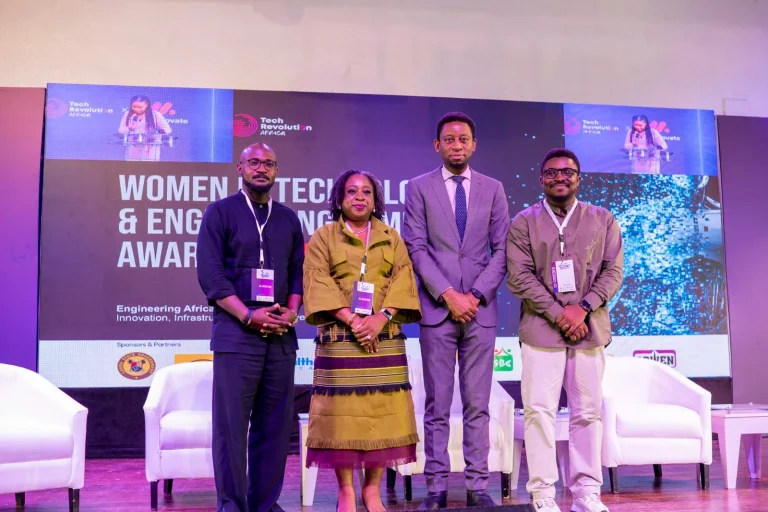
Stakeholders in Nigeria’s technology ecosystem have urged greater investment in locally relevant artificial intelligence models, digital infrastructure and talent development, saying the country must build technology solutions around local realities to compete in the emerging digital economy.
Speaking at the fifth edition of the Women in Technology and Engineering Summit and Awards (WITESA) in Lagos, the Commissioner for Innovation, Science and Technology, Olatunbosun Alake, said Africa must invest in human capital, digital infrastructure, research, innovation ecosystems and inclusive policies to actively shape its future.
”The question before us is not whether Africa will participate in the future, but whether we will actively design and engineer that future ourselves,” he said.
Alake said Lagos State had continued to strengthen its innovation ecosystem through support for startups, researchers and technology entrepreneurs, noting that the state currently supports almost 90 research and development initiatives across four universities.
According to him, government investments in digital governance, broadband expansion, energy initiatives and smart city projects are laying the foundation for a modern economy capable of supporting innovation and attracting investment.
He disclosed that more than 3,000 kilometres of fibre-optic cable had been laid across Lagos between 2019 and 2025, connecting over one million additional residents to digital services.
Speaking on the future of artificial intelligence in Nigeria, Alake said discussions within the ecosystem currently revolve around talent development, computing infrastructure, power and the creation of local large language models that reflect Nigeria’s realities.
”There are an abundance of large language models globally, but do those really serve our local context?” he asked.
He said localising AI models would require significant investment in power and computing infrastructure, adding that Lagos recently witnessed the launch of a 40-megawatt data centre with graphics processing unit (GPU) capacity capable of supporting AI model development within the country.
”People looking to build AI models can actually utilise a local GPU cluster right here in Lagos, and more are coming,” he said.
The commissioner also identified funding, access to tools and skills development as major challenges facing women innovators and engineers, noting that the state was pursuing partnerships to support more women-led projects, technology solutions and training programmes.
On the state’s long-term technology strategy, Alake said Lagos aims to become a global talent hub capable of supplying software developers, AI engineers and other technology professionals to the world.
”The idea is that Lagos needs to be the talent bedrock for the world. So if you need a hundred software developers, if you need a thousand AI engineers, if you need DevOps engineers, think of Lagos,” he said.
The summit, themed “Engineering Africa’s Future: Innovation, Infrastructure and Inclusive Technology,” brought together government officials, technology leaders, innovators and policymakers to discuss the future of technology, infrastructure and inclusion across Africa.
Earlier, co-convener of the summit and Director of Tech Revolution Africa, David Ogebe, said women remained significantly underrepresented in engineering and technology despite gradual progress over the years.
According to him, women account for about 26 per cent of the global engineering workforce and 15 per cent of the technology workforce.
”There’s still a lot of work to be done. There’s still a lot of grounds to cover. There is still a lot of opportunity for women here present here today,” he said.
Founder and Chief Executive Officer of Womenovate, Motunrayo Opayinka, said the summit was established to celebrate excellence, amplify women’s voices, foster collaboration and accelerate opportunities for women in technology, engineering and STEM fields across Africa.
She said innovation reaches its full potential when women are not merely participants but leaders, creators, entrepreneurs, problem-solvers and decision-makers.
”Our mission is rooted in empowering African women in STEM through leadership development, entrepreneurship, business incubation, innovation support, mentorship and access to global opportunities,” she said.
During a panel session on AI, innovation and inclusion, speakers stressed the need to develop technology solutions around local realities rather than simply replicating models developed elsewhere.
Co-founder of AI in Nigeria, Dotun Adeoye, said AI products must be adapted to Nigeria’s peculiar challenges and operating environment.
”You can have AI imported, copied and pasted, and it’s not going to work,” he said. adding that developers must understand local data, culture, language and customer needs when building AI products for Nigerian users.
Adeoye identified governance, talent, data and computing infrastructure as key pillars of Nigeria’s AI development roadmap, arguing that responsible governance must accompany the deployment of emerging technologies.
Also speaking, Managing Partner of Verraki Partners and Chairman of the Nigeria Economic Summit Group, Olaniyi Yusuf, urged organisations to focus on solving business problems rather than adopting AI because of industry trend.
”I think the important thing is to do it right,” he said. “Doing it right means starting from the business pain that you’re trying to solve or the business opportunity that you’re trying to solve.”
However, he maintained that technology investments would only succeed when solutions are adapted to local realities and designed to address clearly defined challenges.
Sales leader and facilitator, Hannahtu Adegboyega, identified leadership trust deficits, poor data readiness and talent retention challenges as major barriers to AI adoption, saying many organisations seek to deploy AI without first establishing reliable data systems or securing leadership buy-in.
Energy and IT Business Innovator at Chevron International Exploration and Production, Ibiyemi Lawani, said improved energy and digital infrastructure would expand participation in innovation by enabling entrepreneurs to build more solutions, helping students access digital learning and allowing small businesses to leverage AI tools.
She added that stronger infrastructure would encourage greater participation by women and young people in technology-driven innovation.

