 Follow Us on Google News


 Follow Us on Google Discover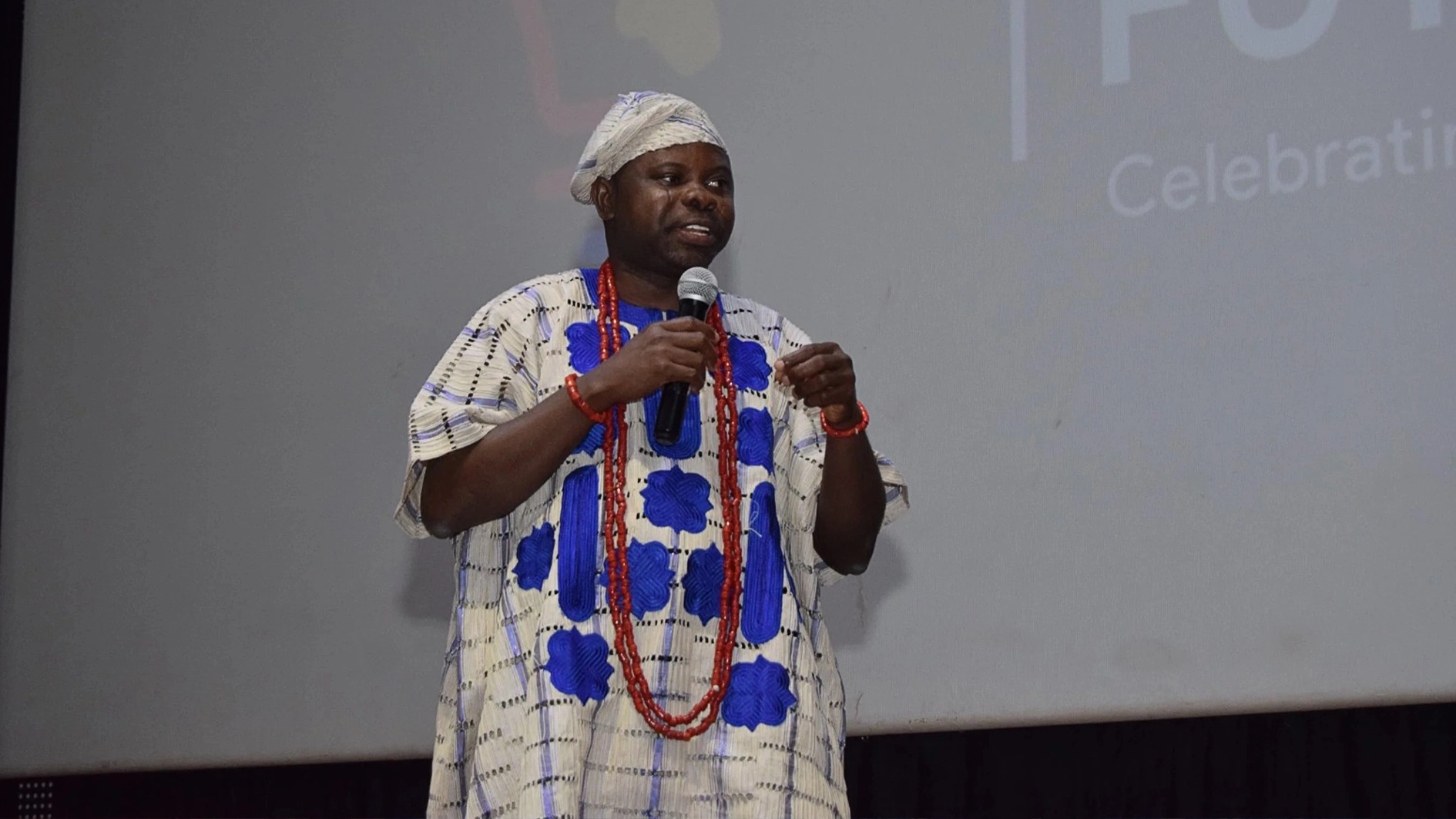
A Professor of African History and African Diaspora Studies at Florida International University, the United States, Saheed Aderinto, has described documentaries as powerful tools for preserving history, correcting misconceptions and challenging stereotypes.
Aderinto stated this in Ibadan during the screening of Women of Fuji, the second episode in the Fuji Documentary Series, which explores the contributions of women to the development of Fuji music.
The historian and filmmaker said the documentary was conceived to document the often-overlooked role of women in Fuji music while challenging long-held stereotypes surrounding the genre.
According to him, the film traces the history of women in Fuji music from 1977 to the present, highlighting the obstacles they encountered and the strategies they adopted to thrive in a music tradition largely dominated by men.
“The documentary is about the history of women in Fuji, the history of the genre, how it began, its politics and economy, why women are subdued in the genre and how they fought and overcame the challenges confronting them.
“We demonstrate the transformation not only in the type of Fuji women are performing but also the challenges they have faced and overcome,” he said.
Aderinto explained that Women of Fuji celebrates women as leaders, innovators and cultural voices who have used Fuji music to address social issues while preserving Yoruba cultural values.
He argued that documentary filmmaking plays a critical role in correcting historical inaccuracies and combating bias.
“Documentaries can be used to correct mistakes of the past and fight stereotypes and bias. Once people know their history, there is a possibility that such knowledge will empower them to do something meaningful with themselves,” he said.
The professor also noted that advances in technology and social media had expanded opportunities for women and young people interested in indigenous music.
According to him, talented individuals can now produce, distribute and promote Fuji music independently without the traditional barriers associated with the industry.

“A talented person without a band can sing Fuji by leveraging technology,” he added.
Aderinto described Fuji as the most dominant Yoruba musical tradition, noting that the genre has remained a platform for social commentary and holding political leaders accountable.
Earlier, the Rector of The Polytechnic, Ibadan, Dr. Taiwo Lasisi, lauded Aderinto for promoting Yoruba history and cultural heritage through documentary filmmaking.
Represented by the institution’s Deputy Rector, Mrs. Olayide Salawu, Lasisi said the documentary would help students deepen their understanding of Yoruba history, culture and identity.
She noted that self-discovery and innovation begin with a proper understanding of one’s cultural identity.
Also speaking, the Dean of the Faculty of Business and Communication Studies, Mr. Femi Adedokun, described the documentary as an inspiration to women, saying it reinforces the message that they can excel despite societal barriers.
“The documentary has been an eye-opener to the role and contributions of women in Fuji music both in Nigeria and the diaspora,” he said.
Among the female Fuji artistes featured in the documentary are Alake Alasela, Karimotu Aduke, Asisatu Amope, Mutiat Amope, Fatimo Asande, Foluke Awoleye, Fausa Makeba and Solape Florangba.
The screening was held in honour of the late Dr. Kehinde Faniyi, former Dean of the Faculty of Business and Communication Studies, The Polytechnic, Ibadan.
The Fuji Documentary Series debuted in 2024 with Mr Fuji: Barry Wonder, a documentary paying tribute to Fuji music icon, Sikiru Ayinde Barrister.

