Follow Us on Google News
 Follow Us on Google Discover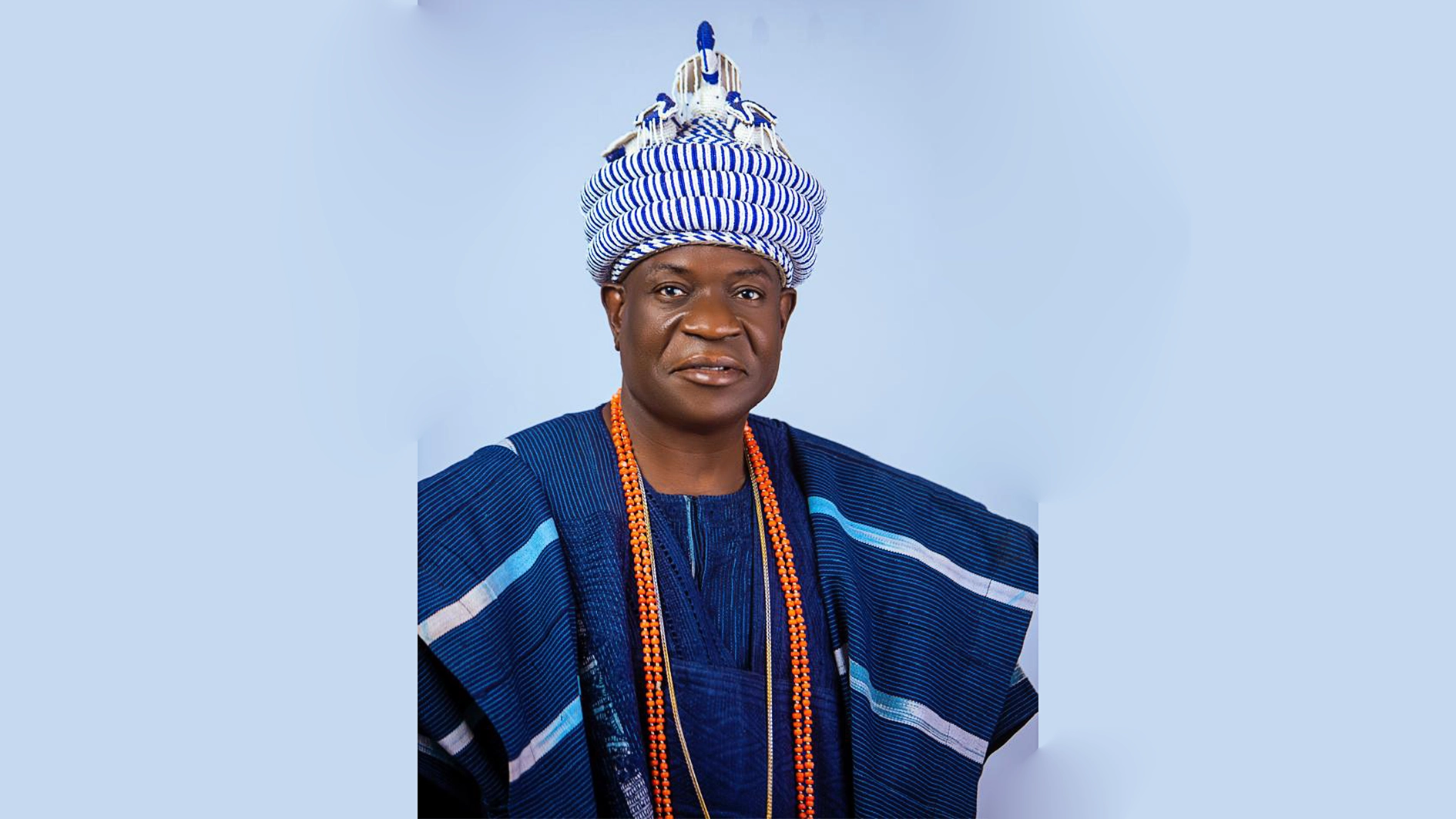
As he marks his 10th year anniversary on the throne amid numerous developmental milestones that have improved the lives of his people, the Adeboruwa of Igbogbo Kingdom, Oba Semiudeen Orimadegun Kasali is unrelenting in his efforts to lift lives in the kingdom as he has announced plans to launch a foundation that would support education and other areas of community development, SULIYAT TELLA writes.
Before he became the Adeboruwa of Igbogbo Kingdom, Oba Semiudeen Orimadegun Kasali’s life followed a different path. His career was built around interpreting laws, representing the state and resolving legal matters, not sitting on a traditional stool.
For years, he worked as a lawyer and public servant. He worked at the law firm of Pinheiro & Oguntade and later joined the Lagos State Civil Service, where he served as a Chief State Counsel at the Ministry of Justice. The palace was not a destination he had planned for himself.
“I never had any inclination. When it happened, I wholeheartedly received it as God’s calling,” he said.
Ten years after ascending the throne of Igbogbo Kingdom, Lagos State, Oba Kasali is reflecting on a journey that took him from the courtroom to the palace and placed him at the centre of conversations about the relevance of traditional institutions in modern Nigeria.
Born on October 28, 1968, in Okobaba area of Ebute Metta, Lagos, to the family of late Paa Idowu Kasali and late Alhaja Sidiqat Kasali, Oba Kasali spent his early years away from the palace.
He attended United Native African Primary School, Odunfa Street, Ebute Metta, before proceeding to Denton Grammar School, Ebute Metta. After his secondary education, he attended St Gregory’s College, Obalende, Lagos, for his A-Level studies.
In the 1990/91 academic session, he gained admission to study Law at the University of Ibadan. After graduating, he proceeded to the Nigerian Law School and became one of the first sets of students called to the Bar at the Abuja campus in 1997/1998.
His legal career began at Pinheiro & Oguntade, where he worked briefly before proceeding to Obafemi Awolowo University, Ile-Ife, for his Master’s degree in Law.
In 2000/2001, he joined the Lagos State government through the State Civil Service Commission and was deployed as a State Counsel to the Ministry of Justice.
Despite his professional background, becoming a traditional ruler was not a path he had envisaged. Although he was born into a royal lineage through his mother, who belonged to the Emugoriade branch of the Ijaolu Royal Family, Oba Kasali said he did not know he could one day occupy the throne.
“Along the line, I got to know that I come from a royal background. My late mother belongs to the Emugoriade royal family, a branch of Ijaolu Royal Family,” he said.
When the opportunity came, he saw it as a responsibility rather than attainment of a personal ambition.
His emergence as monarch, however, was not without challenges. Like many traditional institutions where succession can generate competing interests, the process generated disagreements and legal disputes.
“It took the intervention of the state government through the relevant ministry in charge of chieftaincy affairs. Certain meetings were called before conclusions were eventually made,” he said.
According to him, Igbogbo had experienced a prolonged traditional leadership crisis in the past, with consequences for the community.
“We have had an experience like that before. For almost 19 years, there was a struggle. So many lives were lost. Properties were damaged. Development was at a standstill,” he said.
That history, he explained, influenced his decision to prioritise dialogue and mediation.
“As a legal person, I consider it one of those things that will happen. It is even better if you want to go through the constitutionally approved measure rather than going through any other means that will create chaos within the community,” he said.
According to Oba Kasali, his legal background has remained useful in navigating the responsibilities of the throne.
He described his years as a lawyer and public servant as part of the experiences that prepared him for traditional leadership, particularly in managing disputes and balancing different interests.
He recalled how his university education exposed him to courses in philosophy and religious studies, courses he did not realise would later become useful in his role as a traditional ruler.
Beyond his personal transition, one of the issues the monarch has continued to raise is the place of traditional institutions in Nigeria’s current governance structure.
Across the country, traditional rulers remain important figures within their communities, serving as cultural custodians, mediators and links between residents and government. However, their constitutional roles remain limited.
Oba Kasali believes traditional institutions require clearer recognition and defined responsibilities.
“The general body of traditional institutions in Nigeria resolved that government should give us a constitutional role,” he said.
However, he added that the conversation should not only be about granting roles, but also defining what those roles should be.
According to him, traditional rulers already contribute in areas such as conflict resolution, security and community engagement.
“We are still playing that mediatory role in the palace. We are still serious stakeholders in the security architecture within our various domains,” he said.
He argued that strengthening traditional institutions would require both legal recognition and responsible conduct from those who occupy royal stools.
For him, the dignity of the institution depends partly on the actions of the individuals who represent it.
“My own advice with regards to that is for my fellow Obas to look inward and see what they can do on their part to safeguard the sacredness of that position,” he said.
He identified two principles he believes are important for traditional rulers: contentment and comportment.
“I believe that if you comport yourself as a royal father, you get due regards for that position. And when you are content with whatever you have, you will not get yourself involved in something that will tarnish the image of that stool,” he said.
Since ascending the throne in July 2016, Oba Kasali has built relationships with other traditional rulers within Ikorodu Division, a relationship he described as important in learning and navigating the responsibilities of leadership.
Among the monarchs he has interacted with are the Ayangburen of Ikorodu; Oba (Dr.) Kabiru Adewale Shotobi, the Ranodu of Imota; His Royal Majesty, Oba Mudashiru Ajibade Bakare-Agoro, the Obateru of Egbin Kingdom; His Royal Majesty, Oba (Dr.) Adeoriyomi Oluwasesan Abdul-Akeem Oyebo (Ademoyebo III), and the Sekumade of Ipakodo, Oba Bashir Aremu Sotonwa, among others.
The monarch said interactions with traditional rulers who have spent several years on their thrones have provided him with lessons in managing the expectations that come with the institution.
He recalled receiving guidance from older monarchs, including the late Awujale of Ijebuland, Oba Sikiru Kayode Adetona, whom he visited after his emergence as Adeboruwa of Igbogbo.
Those encounters, he said, shaped his understanding of patience, humility and the responsibility attached to traditional leadership.
Within Igbogbo, Oba Kasali has also relied on the support of community leaders, political figures and development stakeholders in pursuing projects and initiatives for the town.
He acknowledged the contributions of elders and leaders, including Chief Olorunfunmi Bashorun and Senator Adeseye Ogunlewe, as well as other stakeholders who have supported efforts aimed at strengthening the community.
Oba Kasali said that when he assumed the throne, one of the major concerns before the community was infrastructure, particularly the state of roads.
He stated that over the years, interventions from government and elected representatives have contributed to improvements in the area.
He specifically highlighted the roles of Senator Tokunbo Abiru, House of Representatives member, Babajimi Benson; and member of the Lagos State House of Assembly, Aro Moshood Abiodun, in attracting development initiatives to Igbogbo.
The monarch also recognised the contributions of former and present chairmen of Igbogbo/Bayeku Local Council Development Area, Sesan Daini and Olalekan Hamed Aroyewun respectively in supporting local development efforts.
According to him, the progress recorded in Igbogbo has been a result of cooperation between the traditional institution, government, community associations and residents.
“The result of that is what we are seeing across the town – the improvement in the road network, the educational sector and the health sector.
“I cannot lay claim to everything that is happening in Igbogbo. It is a manifestation of God-answered prayers at this particular period in the history of the town,” he said.
Beyond physical infrastructure, Oba Kasali said efforts had been made to improve government presence and accessibility within the community. One of such interventions, he said, was the facilitation of an immigration office in Igbogbo, which he described as part of efforts to bring government services closer to residents.
He said such developments were achieved through collaboration among stakeholders rather than the efforts of one individual or institution.
The monarch also acknowledged the role of the Igbogbo Development Association, youth groups, community leaders and political representatives in sustaining development initiatives.
“The improvement we are seeing today is because of the collaborative efforts of the Igbogbo Development Association and the community leaders, including the youth,” he said.
One area that has received attention in the activities marking his 10th year on the throne is education.
As part of programmes commemorating the anniversary, the palace organised a free Computer-Based Test training for 500 Senior Secondary School students across six public schools in Igbogbo.
The programme, themed, “10 Years of Royal Excellence with Knowledge – Free CBT Training for 500 SS3 Students,” was designed to prepare students for the Unified Tertiary Matriculation Examination.
Students from Zumratul Islamiyah Grammar School, Community Secondary School, Bayeku; Lagos State Model Girls College, Agunfoye; Reri Secondary School, Oreta; Oreyo Grammar School and Civil Service Model College participated in the training.
The initiative provided students with practical CBT experience, examination strategies and career guidance ahead of the examination.
For Oba Kasali, the anniversary was an opportunity to create a lasting impact beyond celebrations.
“Aside from merriment only, we are planning something as a give-back,” he said.
He disclosed plans to launch a foundation that would support education and other areas of community development, including assistance for market women, artisans and people living with disabilities.