 Follow Us on Google News
 Follow Us on Google Discover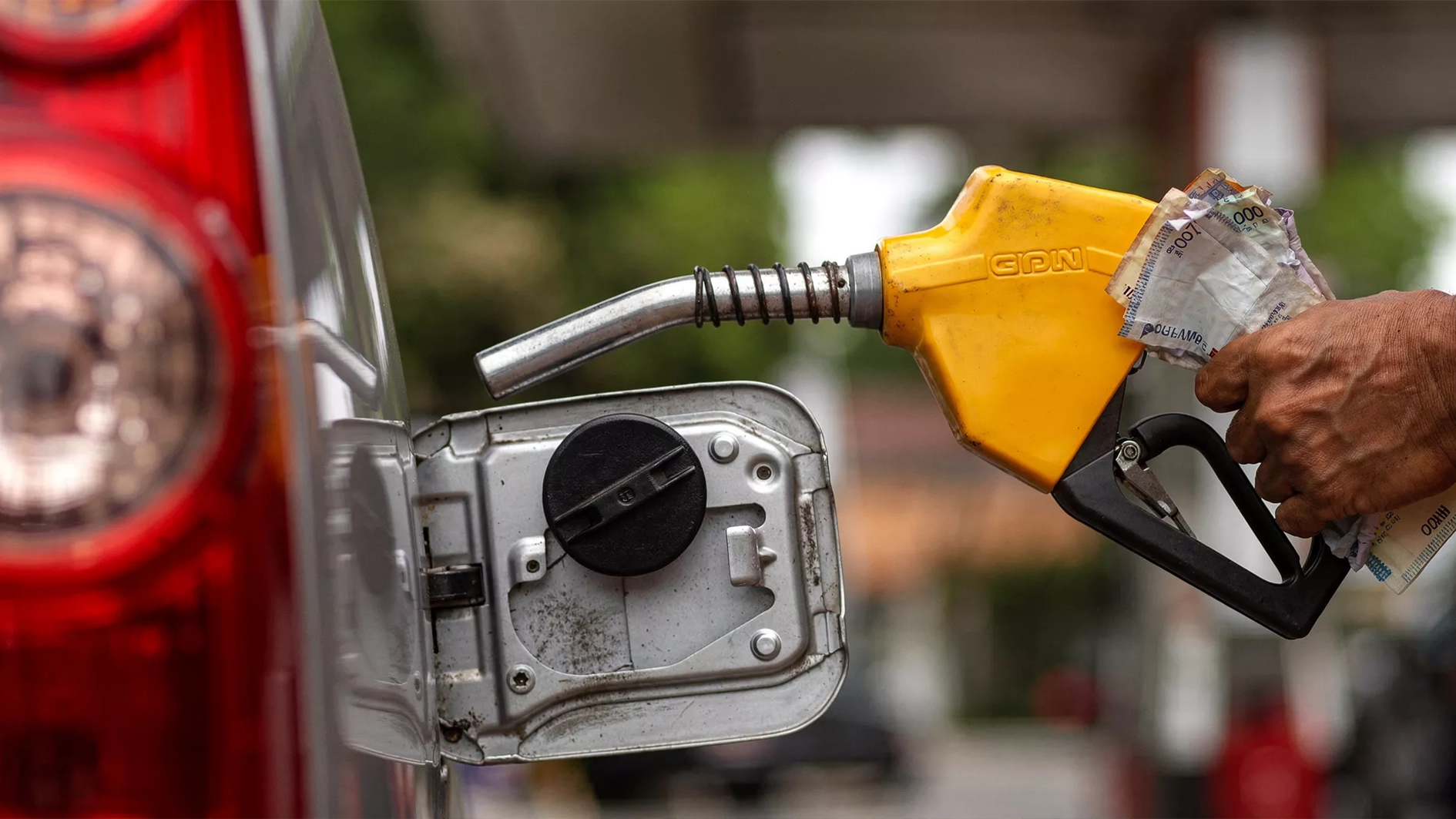
The Federal Government has directed petroleum marketers to immediately reflect the recent decline in global crude oil prices on the pump prices of petroleum products, warning against profiteering under the deregulated market.
It is also intensifying consultations with the marketers and industry regulators to curb arbitrary fuel pricing and ensure Nigerians benefit more quickly whenever global crude oil prices fall.

Minister of State for Petroleum Resources (Oil), Heineken Lokpobiri, gave the directive yesterday at the 2026 Nigerian Midstream and Downstream Petroleum Regulatory Authority (NMDPRA) General Counsel and Legal Advisers Forum in Abuja.
The forum, with the theme, ‘Beyond Compliance: Driving Regulatory Certainty and Investment Confidence in Nigeria’s Petroleum Sector’, brought together regulators, legal advisers and operators to discuss regulatory certainty and investment in the petroleum industry.
Lokpobiri said the easing of geopolitical tensions in the Middle East and the subsequent decline in international oil prices should be reflected in domestic petroleum prices.
“With the de-escalation of tensions between Iran and the United States (U.S.), there is an expectation that the prices of Premium Motor Spirit (PMS) and other petroleum products will be adjusted downward accordingly,” he said.
He stressed that while the downstream petroleum sector has been fully deregulated, the government would continue to monitor the market to prevent excessive profiteering at the expense of consumers.
The minister said: “In a deregulated market, prices should be determined primarily by market forces. However, deregulation does not mean the absence of regulation.
“The NMDPRA has a statutory responsibility under the Petroleum Industry Act (PIA) to ensure not only product availability but also to prevent exploitative practices and excessive profiteering,” he said.
Speaking at the event, the Authority Chief Executive of NMDPRA, Rabiu Umar, said the forum was designed to deepen collaboration between regulators and industry legal advisers, arguing that effective regulation depends not only on laws but also on constructive engagement between regulators and operators.
Umar said the focus of the industry had evolved from building a compliance culture to creating regulatory certainty capable of attracting long-term investment.
“The broader objective is to create a petroleum industry characterised by certainty, predictability, transparency and confidence, where investors can commit capital with clarity and operators can make long-term business decisions with confidence,” he added.
ALSO speaking with State House Correspondents after the Federal Executive Council (FEC) meeting chaired by President Bola Tinubu at the Presidential Villa, Abuja, the Minister of Finance and Coordinating Minister of the Economy, Taiwo Oyedele, said the Federal Competition and Consumer Protection Commission (FCCPC) and the Nigerian Midstream and Downstream Petroleum Regulatory Authority (NMDPRA) were already working within the framework of the Petroleum Industry Act (PIA) to address concerns over pump price adjustments.
He observed that marketers often respond immediately to increases in international crude oil prices by raising pump prices based on replacement costs but are slower to reduce prices when crude prices fall, citing old inventories purchased at higher costs.
According to the minister, government is working to ensure that market forces are not used to exploit consumers while allowing operators to remain commercially viable.
FCCPC and NMDPRA have the statutory responsibility under the PIA to ensure that fuel prices remain market-reflective without encouraging anti-consumer practices, Oyedele noted.
He also defended the Tinubu administration’s post-subsidy policies, arguing that government interventions had substantially moderated the impact of rising global energy prices on Nigerians.
“Some have asked what Nigeria is doing while other countries reduce taxes on fuel. In our case, those taxes have already been suspended. The President approved the suspension of Value-Added Tax (VAT), excise duty and the surcharge on petroleum products. Without those measures, pump prices would have been significantly higher than they are today,” he said.

