 Follow Us on Google News
 Follow Us on Google Discover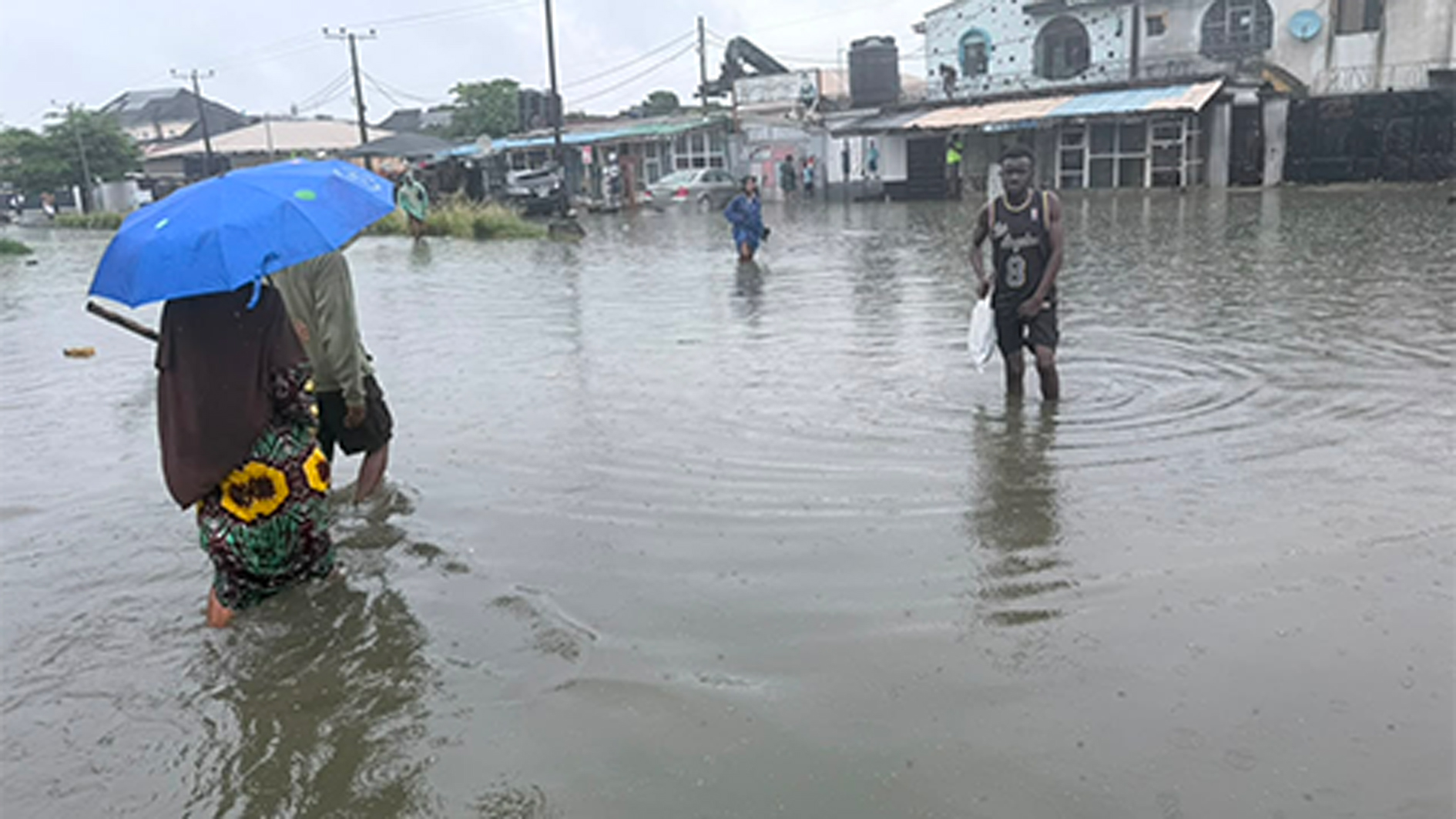
• Residents fault drainage, flood control as homes, vehicles submerged
• Govt orders dredging of 28 drainage channels after flash floods
Flooding triggered by heavy rainfall has displaced many residents across Lagos, while numerous motorists were stranded after their vehicles were submerged and damaged, forcing many businesses to close.

The situation has renewed concerns over the state’s drainage infrastructure, waste management and flood control measures, with many residents insisting that Lagos cannot continue to experience widespread flooding whenever it rains.
Yesterday, a video showing officials of the Lagos State Government clearing drainage channels while rain was still falling drew criticism, with residents accusing the government of reacting only after floodwaters had inundated communities.
Heartbreaking footage also emerged showing residents watching helplessly as floodwaters swept away a man inside his wooden kiosk, with no immediate rescue in sight.
Property worth millions of naira was also damaged after a fence collapsed onto vehicles parked inside a mechanic’s workshop.
Speaking with The Guardian, a creative consultant, Nosa Iyamu, said: “The road leading into Lekki is a major corridor and, whether at the Chevron axis or the Atlantic side, the objective should be to channel floodwater into the surrounding water bodies. However, Lagos is a low-lying coastal city and is highly vulnerable to flooding. When it rains, the water does not drain quickly enough.
“Another challenge is the blocked and narrow drainage channels. There is a major canal in Ikota that a contractor has been working on for years, yet no one is asking why the project has stalled. I also do not understand the design of Ikota Road. Water pools in the middle of the road instead of flowing into the gutters. The drains are blocked, so who is responsible for maintaining them? Lagos experiences flooding every year, yet there appears to be no lasting solution.”
He added: “In the past, attention was focused mainly on Victoria Island and Lekki. Today, however, areas such as Ikeja, Ikotun, Gbagada and Ejigbo are also severely affected by flooding. The state’s central drainage system requires urgent attention. While the government says it has undertaken several interventions, much more still needs to be done.”
On the impact of the coastal road, Iyamu said: “The government also needs to examine the effect of the coastal road. Water that should naturally flow into the lagoon is now being obstructed. Overall, Lagos has a serious drainage problem.”
Another resident, Wisdom Sotomchukwu, said the flooding had left many families in distress.
“I have not slept since yesterday because my apartment is flooded. Many people in my neighbourhood have been pumping water out of their homes and do not know what to do. I am unhappy with the situation. There is flooding, the roads are in poor condition, there is no water supply and no electricity, yet we claim to have a government. Tax revenue should be used to improve road infrastructure and strengthen flood control measures.”
He added: “I have been evacuating water from my apartment since last week, but this morning I gave up mopping because I was exhausted. I had to step out to clear my head. Lagos is one of Africa’s most important cities. It should be one of the best places to live, not a city where residents constantly battle flooding.”
Speaking also, a resident of Festac Extension, Jakande Estate, who identified himself simply as Uche, said: “The situation is crazy. There is no proper drainage and I am stuck at home today instead of going to the market.”
“Now I am at home, losing money by staying at home. An opportunity lost cannot be regained, and that is the situation.”
Also in parts of Surulere, residents and commuters were left stranded as severe flooding along Lawanson Road disrupted movement, damaged property and renewed concerns over the city’s drainage infrastructure despite the recently constructed drainage system.
A visit to the affected area revealed roads submerged in floodwater, making it difficult for pedestrians and motorists to move around.
Many shops along Lawanson Road were flooded, with shop owners seen scooping water out of their premises.
Business activities slowed considerably as traders struggled to prevent water from entering their shops, while street vendors hurriedly moved their goods to safer locations.
It was observed that the rainfall exposed persistent drainage challenges in the area.
Refuse washed into drainage channels appeared to have contributed to the blockage of waterways, causing floodwater to remain on the roads for several hours after the rain had subsided.
Speaking with affected residents, many expressed frustration over what they described as a recurring problem whenever there is heavy rainfall. They called on the relevant authorities to improve drainage systems, ensure regular desilting of canals and enforce proper waste disposal to reduce the risk of flooding.
For commuters, the experience was both stressful and costly. Many spent hours in traffic, while others were forced to walk long distances through floodwater because of the increase in commercial transport fares.
The flooding also raised public health concerns, as stagnant water mixed with refuse poses a risk of waterborne diseases and environmental pollution.
Residents urged government agencies and the public to work together to address the underlying causes of flooding, noting that improved infrastructure, effective drainage maintenance and responsible environmental practices are essential to preventing similar incidents in the future.
MEANWHILE, the Lagos State Government has called for calm and understanding from residents following the widespread flash flooding experienced in many parts of the state over the past two weeks, with Governor Babajide Sanwo-Olu approving the immediate maintenance dredging of 28 additional primary drainage channels across the state.
Speaking against the backdrop of the heavy downpours that caused flash flooding in many communities, the Commissioner for the Environment and Water Resources, Tokunbo Wahab, said the rainfall was an extreme weather event that produced an unusually high volume of water within a short period, overwhelming drainage channels in some locations and resulting in temporary flooding across parts of Victoria Island, Lekki, Ikeja, Gbagada, Mushin, Mafoluku and several other areas.
According to the commissioner, the incident was not peculiar to Lagos, as similar heavy rainfall also affected other African countries on the same day, as well as parts of North America, resulting in flooding in several cities. He noted that while Lagos shares coastal and hydraulic characteristics with many of these cities, it has a far more complex hydrological system because of its extensive network of lagoons, tidal water bodies, rivers and creeks, as well as its significantly higher rainfall intensity.
He explained that the interaction between the Atlantic Ocean, the Lagos Lagoon and the state’s numerous rivers and creeks, particularly during periods of high tide, naturally slows the discharge of stormwater into the sea, resulting in temporary inundation in some low-lying areas whenever exceptionally heavy rainfall occurs.
Wahab assured residents that the Lagos State Government remains fully on top of the situation through continuous monitoring of drainage infrastructure, flood-prone locations and other critical waterways, adding that emergency response agencies have remained on the ground to ensure floodwaters recede as quickly as weather conditions permit while providing support where necessary.
The commissioner stressed that while the state government continues to invest significantly in drainage construction, channelisation, desilting and other flood control infrastructure, residents also have an important role to play in reducing the impact of flooding.
He urged residents to desist from indiscriminate disposal of refuse into drains, canals and waterways, illegal reclamation of wetlands, construction on drainage alignments and other activities that obstruct the free flow of stormwater, noting that such actions worsen flooding during periods of intense rainfall.
Wahab said the effects of climate change are becoming increasingly evident across the world, with coastal cities experiencing more frequent and intense rainfall events.
“Lagos is not exempt from these realities. However, the state government remains steadfast in its commitment to building a flood-resilient city through sustained infrastructure development, environmental enforcement and active collaboration with residents,” he said.
He reiterated that protecting Lagos from the impacts of flooding is a shared responsibility and called on all residents to support government efforts by keeping drainage channels free of waste and reporting any activity capable of obstructing the free flow of stormwater.
He also advised motorists to avoid driving through flooded roads during heavy downpours and appealed to residents, particularly those in flood-prone areas, to heed weather advisories and comply with safety instructions issued daily by the relevant government agencies, including the ministry.
He reaffirmed the Lagos State Government’s commitment to safeguarding lives and property through proactive flood management measures and urged residents to continue cooperating with the government in building a cleaner, safer and more resilient Lagos.

