 Follow Us on Google News
 Follow Us on Google Discover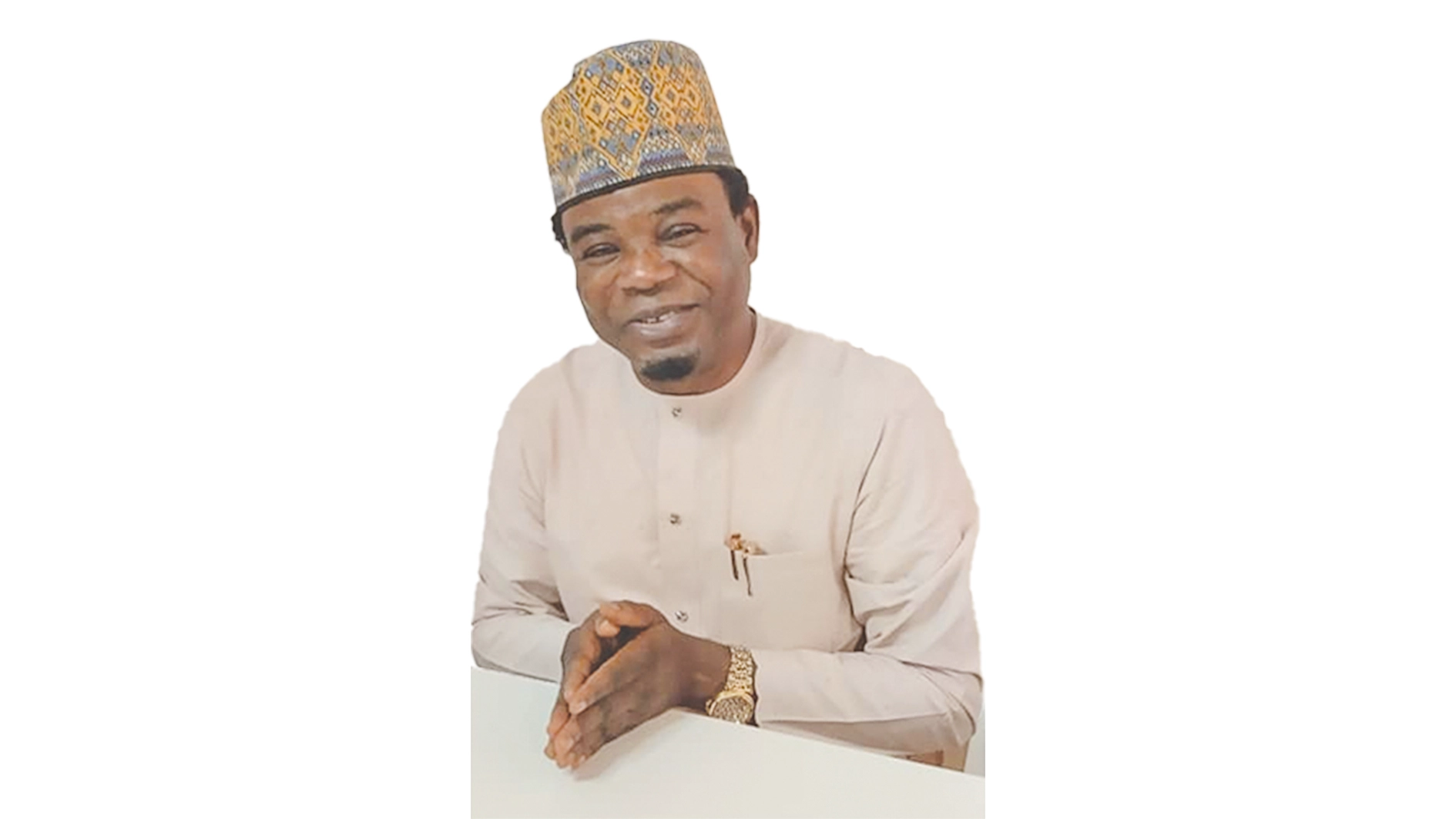
Dr Maurice Vunobolki is a chartered accountant, development economist and candidate of the Peoples Democratic Party (PDP) for the 2027 governorship election in Adamawa State. He spoke with LEO SOBECHI on Nigeria’s democratic journey, the crisis of internal party democracy, his movement between the PDP and All Progressives Congress (APC), and why he believes Adamawa voters have consistently resisted political godfatherism.
Looking back at Nigeria’s Fourth Republic, what are your observations?

I beleive Nigerians have become more conscious of the importance of democracy and, more importantly, the need for good governance. Over the years, citizens have become increasingly enlightened and now demand more from those they elect into office. They expect governments to improve the economy, create jobs, secure lives and property and provide opportunities that improve the quality of life.
Compared with when democracy returned in 1999, Nigerians today are far more politically aware. People are no longer passive observers. They openly criticise government policies, demand accountability and insist that elected leaders fulfil the promises they made during campaigns. That growing political consciousness is one of the biggest gains of democracy.
Despite the challenges confronting Nigeria, democracy has still delivered certain benefits. We have witnessed improvements in infrastructure, stronger international relations, and greater citizen participation in governance. There is also greater public awareness of rights and responsibilities than there was several decades ago.
That is why I do not think Nigerians are looking towards any form of military intervention. People now understand that democracy, despite its imperfections, offers opportunities for participation, accountability and peaceful change of leadership. The challenge is not democracy itself but ensuring that democratic institutions function effectively and that those entrusted with power remain accountable to the electorate.
Some critics say the situation within political parties undermines this optimism about democracy.
Unfortunately, many political parties are currently being manipulated. Internal democracy has been weakened because powerful interests often determine outcomes instead of ordinary party members. That is one of the biggest threats to Nigeria’s democratic development.
Political parties are expected to be institutions where members freely choose those who will represent them. Primaries should reflect the wishes of delegates and party members. Sadly, what we often witness is the influence of powerful individuals who impose candidates or manipulate internal processes to favour their preferred aspirants.
When members begin to feel that their votes and opinions no longer matter, the result is frustration, litigation and internal divisions. That explains why virtually every major political party has experienced one crisis or another over candidate selection and leadership.
This problem is not limited to one political party. Even within the ruling APC, there have been complaints about candidate imposition and the dominance of vested interests. Similar challenges have also affected opposition parties.
If Nigeria’s democracy is to mature, political parties must embrace transparency and fairness. Members should be allowed to vote freely during primaries, while party leaders must respect the outcome. Once internal democracy is strengthened, many of the conflicts currently affecting political parties will naturally reduce.
You once left the APC, later returned, and then went back to the PDP. What informed those decisions?
My political journey has always been guided by principles rather than convenience. I was among those who contributed to the formation of the APC.
In 2011, I contested the Adamawa governorship election under the National Transformation Party (NTP). Following the legal disputes over the tenure of the then-governor, the matter eventually reached the Supreme Court, which paved the way for the 2012 governorship election. During that period, several opposition parties came together because of a collective determination to challenge the PDP administration.
I aligned with the then Action Congress of Nigeria (ACN) and served as chairman of its campaign in Adamawa. The objective was to build a united opposition capable of offering the people an alternative platform.
At that time, elections were not as transparent as they are today. There was no BVAS or IReV portal. The power of incumbency was enormous, and election results could easily be manipulated. Those challenges influenced political calculations across the country.
When the APC was eventually formed, many of us believed it would become a strong opposition platform built on fairness and internal democracy. However, political developments continued to evolve. Former Governor Murtala Nyako moved into the APC, and new alignments emerged, prompting some of us to return to the PDP.
Ahead of the 2015 elections, we expected transparent governorship primaries within the PDP. Unfortunately, that did not happen. A governorship candidate was imposed without a proper primary election. Since the process did not reflect democratic principles, we returned to the APC and supported Senator Umar Bindow, who eventually became governor.
I remained in the APC until the 2019 elections, when I sought the party’s senatorial ticket. We purchased nomination forms, campaigned extensively across the senatorial district and prepared for the primary election.
To our surprise, on the day of the primary, electoral officials informed us that they had received instructions from Abuja that serving senators would be granted automatic tickets. That decision came after aspirants had invested time, energy and resources in campaigning.
Naturally, many of us felt disappointed. If such a decision had already been taken, there was no reason to ask aspirants to buy nomination forms and participate in campaigns.
That experience reinforced my concerns about internal democracy. I have always believed that every aspirant deserves a fair opportunity to test his popularity before party members. Once that opportunity is denied, confidence in the process is eroded.
The consequences became obvious during the general election. The APC lost the senatorial districts where candidates were imposed and eventually lost the governorship election in Adamawa.
That episode convinced me to leave the APC because I believed there was no longer a level playing field for genuine competition. I joined the PDP in 2020 and remained there until the legal crisis within the party created uncertainty over its future earlier this year.
At that period, there were unresolved court cases concerning the PDP leadership, and many political stakeholders were uncertain about the direction the party would take. Together with other political associates, including Governor Ahmadu Umaru Fintiri, we temporarily aligned with the APC, hoping for a more accommodating political environment.
However, while I was in the APC, I carefully observed developments within the party. I am someone who studies situations closely before making decisions. Having experienced candidate imposition in 2019, I quickly recognised similar signs emerging again.
I did not want to become a victim of the same circumstances twice. Besides, the Electoral Act places restrictions on movement between parties once nomination processes begin. Rather than wait until it became too late, I decided to return to the PDP before the process advanced further.
For me, the PDP remains the traditional political platform in Adamawa State. Since 1999, apart from the brief interruption between 2015 and 2019, the party has consistently enjoyed widespread support across the state.
The APC’s victory in 2015 was largely due to internal disagreements within the PDP. Once those issues were resolved and transparent primaries were conducted, the electorate returned the PDP to power in 2019.
Looking at Adamawa’s electoral history, the voting pattern has remained fairly consistent. The people have repeatedly demonstrated confidence in the PDP whenever they believe the party has conducted itself fairly. That history influenced my decision to return.
By the grace of God, I have now secured the PDP ticket to contest the 2027 governorship election, and I believe the people of Adamawa will ultimately decide the outcome based on their own independent judgment.
Who are your political godfathers?
I do not have a political godfather. I have never believed that political success should depend on the influence of one powerful individual. Rather, I believe in collaboration with people who share the same vision and commitment to public service. For me, the real godfathers in any democracy are the voters. They are the ones who decide who occupies public office.
History has also shown that godfatherism has never had a lasting hold on Adamawa politics. Governor Ahmadu Umaru Fintiri did not emerge because a godfather imposed him on the people. He emerged because the electorate believed in his candidature and voted overwhelmingly for him.
If you study the political history of Adamawa, you will discover that leaders who emerged did so largely because they enjoyed popular support rather than because they were products of political imposition. That culture remains one of the strengths of politics in the state.
Apart from the youth population, Adamawa has influential political figures such as Atiku Abubakar, Nuhu Ribadu and Governor Ahmadu Umaru Fintiri. How can you persuade voters to look beyond these powerful interests?
The assumption that Adamawa politics revolves around political heavyweights is not entirely correct because history tells a different story.
Take the APC presidential primary in 2014 as an example. Atiku Abubakar, who is the Waziri of Adamawa, contested against Muhammadu Buhari and Rabiu Musa Kwankwaso. Despite being one of the state’s most prominent political figures, Adamawa delegates voted massively for Kwankwaso during the primary. That clearly demonstrated that state delegates make independent decisions and are not controlled by personalities.
The same can be said of Mallam Nuhu Ribadu. He has held important national offices and enjoys considerable public recognition. Yet, when he sought elective positions in Adamawa, he was unable to secure victory. His profile alone was not enough to determine the outcome because the electorate made its own decision.
Governor Fintiri’s emergence in 2019 provides another example. At the time, influential political interests opposed his ambition. Nevertheless, he secured the PDP ticket through the support of party members and went on to defeat a sitting governor in the general election. That victory again confirmed that the ultimate decision rests with the people.
More recently, attempts by influential interests to determine candidates within the APC also met resistance. The outcome further reinforced the point that Adamawa voters cannot easily be manipulated.
The people of Adamawa value transparency, fairness and openness. They are uncomfortable with attempts to impose candidates or force political choices on them. If anyone approaches politics with the mindset of an emperor, they are likely to face resistance from the electorate.
As we approach another electoral cycle, several factors will shape the electorate’s choices. One of them is the performance of the present administration. Governor Fintiri has undertaken projects in infrastructure, education, healthcare and empowerment. Many people believe they have benefited from those programmes, and naturally, they will assess whoever seeks to succeed him based on their expectations for continuity or improvement.
Personally, I have continued to engage directly with communities across the state. During the local government elections, I campaigned alongside PDP candidates across the state because I believe politics should be about connecting with the people rather than relying on incumbency or elite influence.
The outcome of those elections also demonstrated that there are limits to the power of incumbency. Ultimately, voters made their own decisions.
That is why I remain confident that no election in Adamawa should be regarded as a walkover simply because a candidate enjoys elite backing or has previously held important offices. The history of the state consistently shows that the electorate is prepared to reject political calculations whenever they believe another candidate deserves their support.
As we move towards the 2027 governorship election, I expect the same tradition to continue. The people will examine the records, programmes and character of those seeking office before making their choice.
I have confidence in the people because they have shown over the years that they cannot easily be swayed by political godfatherism. They believe in fairness, transparency, and credible leadership, and those values will continue to shape the state’s political future.

