 Follow Us on Google News


 Follow Us on Google Discover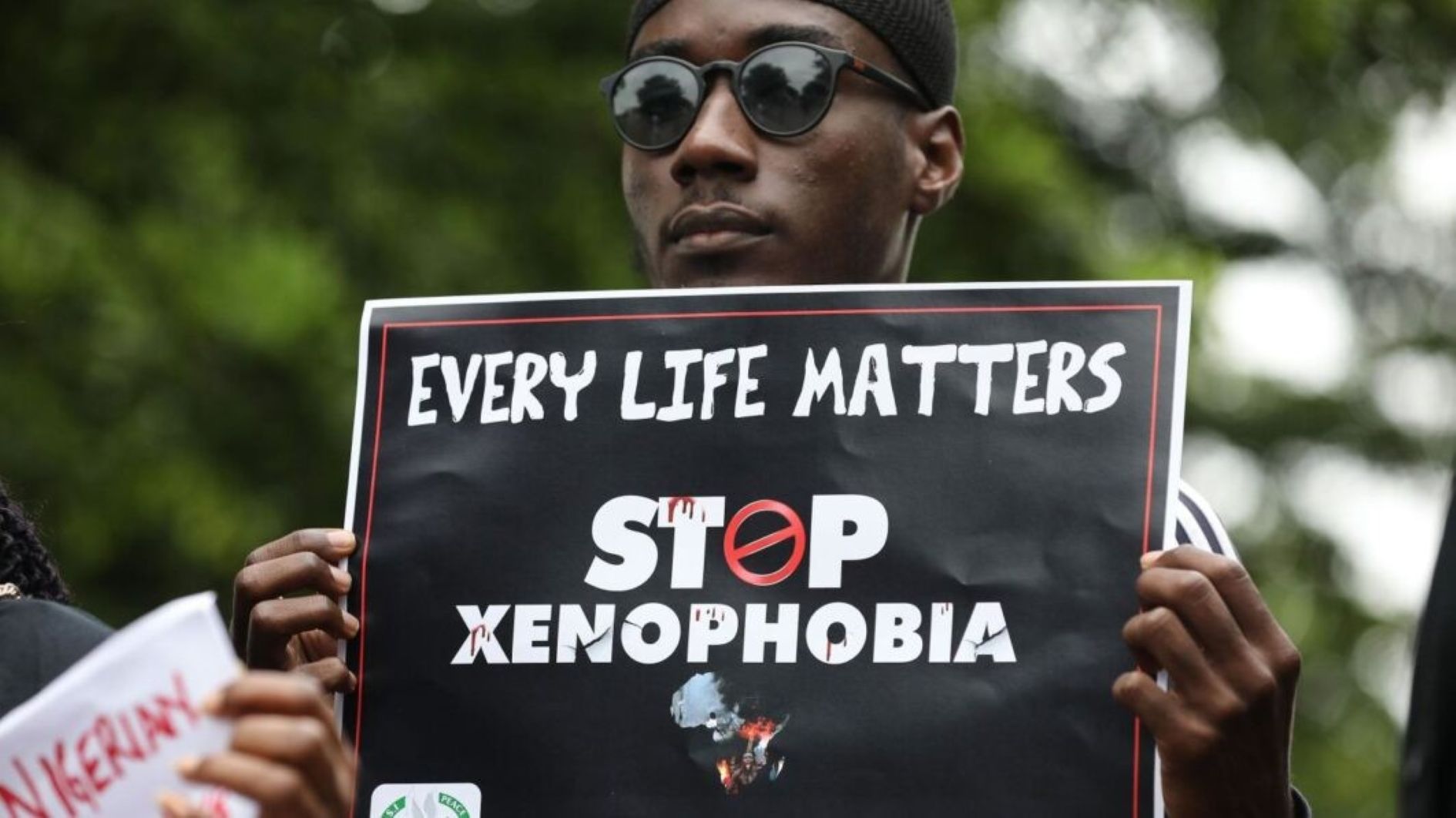
By Steve Arowolo
The recurring outbreaks of xenophobic and, more accurately, Afrophobic sentiments in South Africa have become one of the most contentious political and moral issues confronting contemporary Africa. Images of angry youths protesting against undocumented migrants, foreign-owned businesses and alleged criminal networks have attracted widespread condemnation across the continent. Critics often portray these incidents as evidence that South Africahas abandoned the African philosophy of Ubuntu; the belief in our common humanity and mutual dependence.
Yet such a conclusion may be premature. Ubuntu s not necessarily threatened by the recurring outrage of some South Africans against migrants. If anything, these episodes should challenge African political leaders to reflect on why millions of their citizens feel compelled to leave their countries in search of security, employment and dignity elsewhere. Properly understood, the South African migration crisis could strengthen rather than weaken Ubuntu by compelling governments across Africa to fulfil their primary obligation: making their own countries places where citizens can live and prosper.
Ubuntu, derived from the Nguni expression umuntungumuntungabantu; “a person is a person through other people”; is one of Africa’s greatest philosophical contributions to global ethical thought. It teaches that our humanity is realized through our relationships with others, emphasizing compassion, solidarity, reciprocity and respect for human dignity. As Archbishop Desmond Tutu observed in ‘No Future Without Forgiveness’, Ubuntu is not merely about kindness; it is about recognizing that our destinies are interconnected. Likewise, philosopher Mogobe B. Ramose argues that Ubuntu is the moral foundation upon which African societies can build justice, peace and development.
However, Ubuntu has never implied the absence of law, borders or responsible governance. It does not require governments to ignore illegal migration, organised crime or the legitimate concerns of their citizens. Nor does it sanction violence or collective punishment against innocent people because of their nationality. Instead, Ubuntu demands that governments protect both the dignity of citizens and the rights of lawful migrants within a framework of justice.
It is therefore essential to distinguish between the legitimate grievances expressed by many South African youths and the unlawful methods adopted by some individuals or groups. The concerns deserve serious attention; violence does not.

South Africa remains one of Africa’s largest and most diversified economies. Yet it also suffers from exceptionally high unemployment, especially among young people, widening inequality, inadequate housing, strained public services and rising crime. According to Statistics South Africa, youth unemployment remains among the highest globally, leaving millions of young people frustrated and economically marginalized.
In many communities, these socio-economic pressures have fostered perceptions that undocumented migration contributes to competition for scarce jobs, housing, healthcare and business opportunities. Whether every perception is supported by empirical evidence is less important than recognizing that public policy cannot ignore the lived experiences and frustrations of ordinary citizens.
Many South African youths believe that government institutions have failed to manage immigration effectively. They question weak border controls, delays in asylum processing, corruption within immigration systems and the inability of law enforcement agencies to address criminal networks operating across national boundaries. These concerns should not be dismissed simply because some are expressed through emotionally charged language.
Every sovereign nation possesses the right; and indeed the obligation; to regulate immigration according to its laws. No country can sustain an immigration system perceived by its citizens as ineffective or unfair without risking social tension. Supporting the right of South Africans to demand effective immigration management is therefore neither xenophobic nor inconsistent with Ubuntu.
However, legitimate concerns about undocumented migration must never become justification for violence, intimidation or discrimination against innocent foreign nationals. Collective blame violates constitutional democracy, international human rights norms and the ethical principles that Ubuntu seeks to uphold. Many migrants are law-abiding residents, entrepreneurs, professionals and refugees who contribute significantly to South Africa’s economy and social fabric. To equate all foreign nationals with criminality is both morally indefensible and factually inaccurate.
The more profound lesson lies elsewhere. The recurring anti-migrant protests are sending a message that extends far beyond South Africa’s borders. They expose a broader crisis of governance across Africa.
Why do millions of Africans leave countries rich in natural resources for uncertain lives elsewhere? Why do young people risk dangerous journeys across deserts and seas in search of opportunities unavailable at home?
The answers point less to migration itself than to governance failures.
Across many African countries, persistent corruption, poor leadership, insecurity, unemployment, weak institutions and inadequate public services continue to undermine citizens’ confidence in their governments. Schools deteriorate, hospitals remain underfunded, electricity supplies are unreliable, industries stagnate and youth unemployment continues to rise. Under such conditions, migration becomes not merely an aspiration but, for many, an act of survival.
Seen from this perspective, the frustrations expressed by South African youths constitute an unintended referendum on governance across the continent. Their protests, however imperfectly articulated, raise uncomfortable questions for African leaders. If governments provided security, quality education, reliable healthcare, economic opportunities and accountable institutions, would so many citizens feel compelled to emigrate?
This is the conversation the African Union should prioritize. Rather than treating migration solely as a humanitarian challenge, it should recognize migration as a governance issue. The African Union’s Agenda 2063 envisions an integrated, prosperous and peaceful continent. Yet continental integration cannot succeed if large numbers of citizens are displaced by economic desperation, conflict or institutional failure.
Regional cooperation should therefore focus on improving governance standards, combating corruption, promoting youth employment, strengthening border management and encouraging responsible labour mobility. Free movement of persons under the African Continental Free Trade Area should be accompanied by stronger institutions capable of managing migration effectively and fairly.
It would be intellectually dishonest to dismiss every concern raised by South African youths as simple xenophobia. Equally, it would be morally indefensible to excuse violence against fellow Africans. Both positions oversimplify a far more complex reality.
The challenge before African leaders is not to condemn South African frustrations from a distance while ignoring the conditions that produce ‘forced migration’ of their citizens. Instead, they should ask why citizens continue to leave their countries in large numbers. Migration itself is not inherently negative; throughout history people have migrated in pursuit of education, commerce and opportunity. The problem arises when migration is driven primarily by governance failures that leave citizens with few meaningful alternatives.
Ubuntu demands more than expressions of solidarity. It calls for responsible leadership that enables every African to flourish at home while respecting the dignity of those who choose or are compelled to move elsewhere. It insists that governments create societies where citizens remain because they have hope, not because they lack the means to leave.
The recurring tensions in South Africa should therefore be understood as a wake-up call rather than the death of Ubuntu. Properly interpreted, they challenge African governments to invest in infrastructure, education, healthcare, industrialization, job creation and the rule of law. They remind political leaders that patriotism cannot be sustained where governance fails and opportunity is absent.
Ultimately, the future of Ubuntu will not be determined by periodic anti-migrant protests. It will be determined by whether African governments respond to the deeper message those protests convey. If leaders address corruption, strengthen democratic institutions, create employment and restore public confidence, migration will increasingly become a matter of choice rather than necessity. Citizens who feel secure, valued and economically empowered are less likely to abandon their homelands in search of dignity elsewhere.
The grievances of many South African youths should therefore be heard; not because they justify hostility toward foreign nationals, but because they expose the consequences of decades of poor governance across parts of Africa. Listening to those grievances does not require abandoning compassion. Rather, it requires confronting uncomfortable truths while rejecting violence, collective punishment and unlawful discrimination
Far from signaling the end of Ubuntu, South Africa’s migration crisis may yet become the catalyst for its renewal. It can inspire a new continental commitment to accountable leadership, responsible migration management and inclusive development. If African leaders heed this warning, Ubuntu will emerge not diminished but strengthened; transformed from a noble philosophical ideal into a practical blueprint for governance, justice and shared prosperity across the continent.
Steve Arowolo is a Nigerian, a Policy Consultant, a TEDx Speaker and the former pioneer National President of the Skilled Foreign Nationals in South Africa (NPC).
He writes from Asokoro Abuja, Nigeria via [email protected]

