 Follow Us on Google News
 Follow Us on Google Discover
Former Attorney-General of the Federation (AGF), Kanu Agabi, yesterday called for the urgent repatriation of billions of dollars allegedly stashed abroad, saying the present generation would have failed in its duty if the country’s looted wealth remained outside Nigeria.
The Senior Advocate of Nigeria (SAN) made the call during his keynote address at the public presentation of Electronic Evidence, Second Edition (With Evidence Act, 2011) and A Compendium of Cases on Electronic Evidence (Volume II, 2020–2025), authored by a retired high court judge, Justice Alaba Omolaye-Ajileye.
The event also featured the launch of the Justice Alaba Omolaye-Ajileye Educational Foundation for Indigent Students.
Addressing an audience that included the Director-General of the Department of State Services (DSS), the Chairman of the Economic and Financial Crimes Commission (EFCC), senior judicial officers, lawyers and academics, Agabi said the recovery of funds allegedly hidden abroad should become a national priority.
“As I see the Director-General of the DSS and the Chairman of the EFCC sitting beside themselves, I want to say this: We have billions – hundreds of billions – abroad,” he declared.
Warning that the country could no longer afford to delay action, the elder statesman added, “This generation will have failed if we do not bring back those funds. That is what we must do now. Whatever encouragement we can give to those who have money stashed abroad to bring it back, let us give it to them.”
Beyond asset recovery, Agabi urged Nigerians not to surrender to pessimism despite the nation’s economic and governance challenges. He described Nigeria as a resilient country with the capacity to overcome its present difficulties, stressing that every nation had endured periods of adversity before attaining stability and prosperity.
Agabi cautioned against narratives that deepen national divisions, saying: “We should stop stigmatising the nation as an artificial creation. We should stop rejecting the Constitution as a product of the military. We should stop emphasising the things that divide rather than those that unite. We should unite.”
He also mounted a spirited defence of the judiciary, insisting that while no judicial system is perfect, Nigeria’s judges deserve greater encouragement than condemnation. He warned that public criticism alone would not strengthen the institution, particularly at a time it has continued to face enormous pressures and public scrutiny.
The former attorney-general noted that though some judicial officers had fallen short of expectations, the overwhelming majority had remained faithful to their oath despite numerous temptations. According to him, “the surprising thing is not that some judges have fallen, but that the vast majority of them have resisted.”
Agabi disclosed that the courage, competence, and sacrifices of Nigerian judges had played a critical role in preserving the country’s democracy and constitutional order.
Meanwhile, he described Justice Ajileye as an exemplary jurist whose integrity and scholarship had earned him respect within and outside the legal profession, adding that he is a man whose conduct, both in public and in private, has never brought him under any kind of suspicion.”
Agabi further commended the publication of the books on electronic evidence, describing them as timely interventions that would deepen legal knowledge in one of the fastest-evolving areas of law and contribute to documenting Nigeria’s legal history.
On the other hand, he also questioned the practice of retiring experienced judicial officers while they were still intellectually productive, wondering why the nation failed to deploy their expertise in legislative and other public institutions after retirement.
For his part, the former Chairman of the Body of Benchers, Wole Olanipekun, who chaired the occasion, tasked jurists on the effective application of cybercrime law, and for greater unity among stakeholders in Nigeria’s justice sector, while warning members of the Bench, Bar and other justice sector institutions that justice can only thrive where there is cooperation and mutual support.
Meanwhile, the Chairman of the Economic and Financial Crimes Commission (EFCC), Ola Olukoyede, noted that financial crimes had become one of Nigeria’s greatest threats, fueling insecurity, terrorism and economic hardship. He appealed for stronger collaboration among law enforcement agencies, the judiciary and citizens in tackling corruption and cybercrime.
Agabi seeks return of stolen funds stashed abroad, urges support for judiciary
Date: 3 July 2026 4:06am WAT
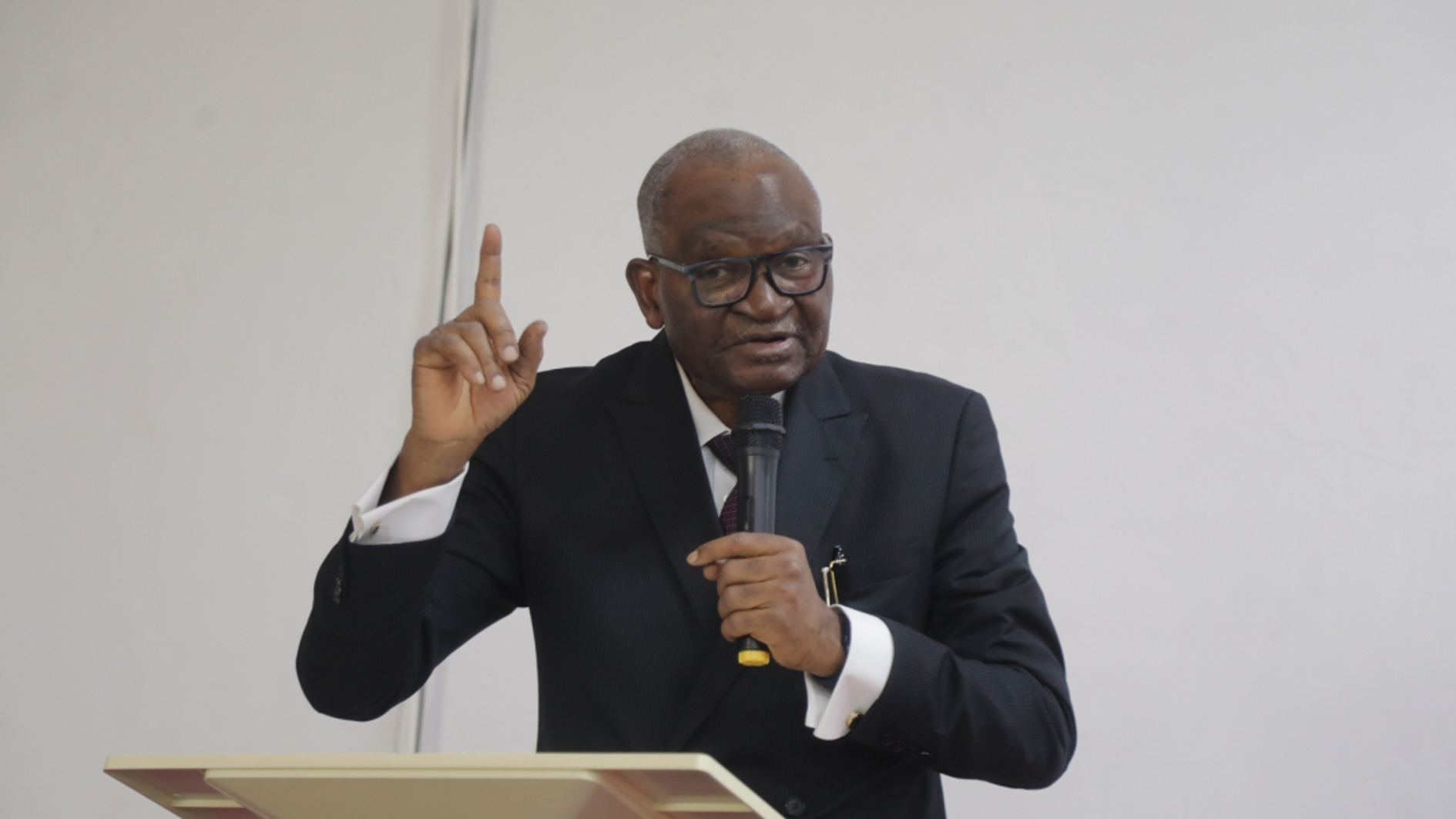
Nigeria's foremost legal icons, Chief Kanu Agabi
Nigeria's foremost legal icons, Chief Kanu Agabi

