 Follow Us on Google News


 Follow Us on Google Discover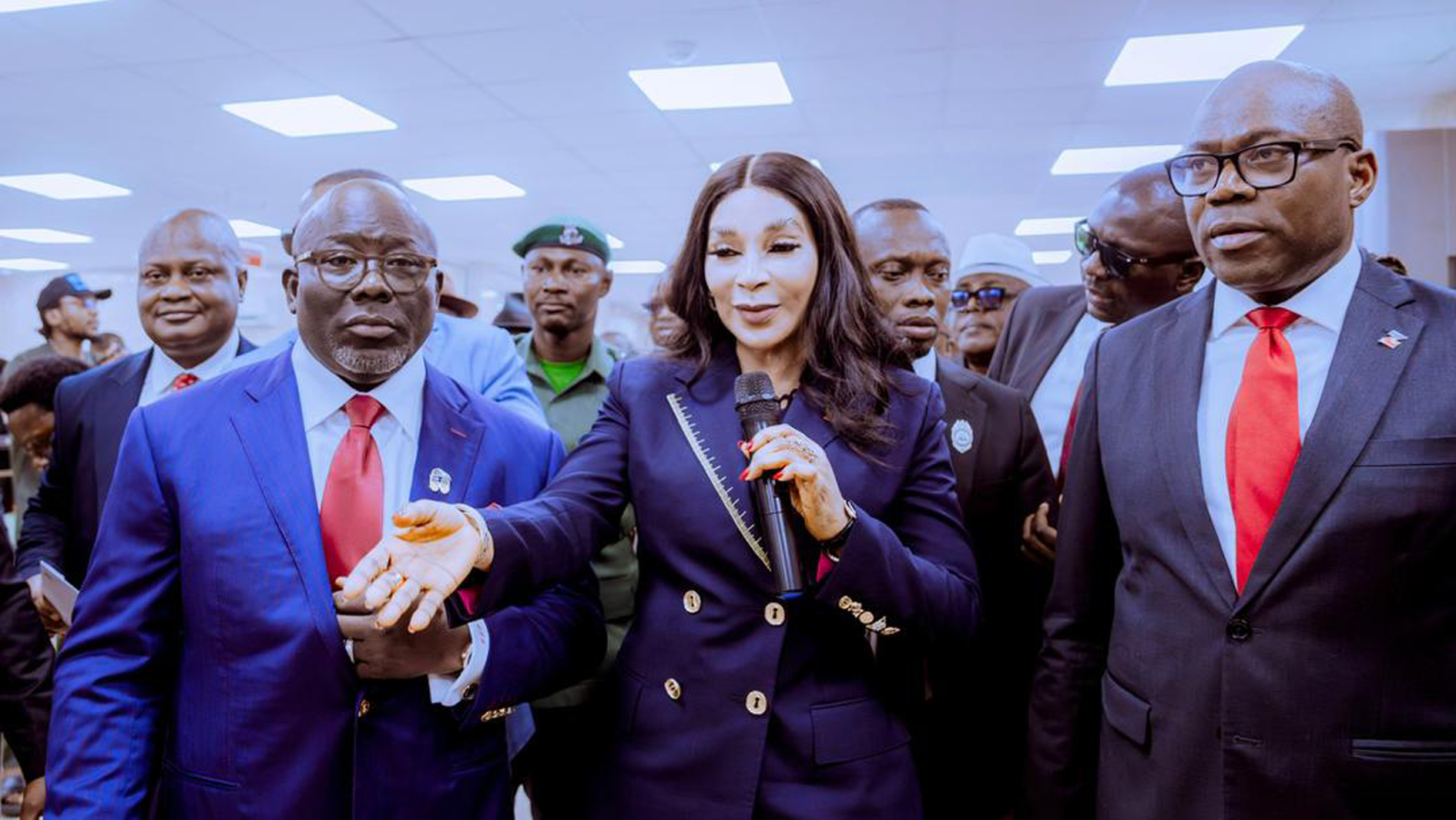
By Festus Ahon
For any government, the true measure of success lies not in the number of projects it executes but in the lasting impact those initiatives have on the lives of ordinary citizens. In Delta State, the administration of the Governor Sheriff Oborevwori is increasingly focused on building an economy driven by infrastructure, private investment, human capital development and improved public welfare.
Three years into the implementation of his M.O.R.E. Agenda—Meaningful Development, Opportunities for All, Realistic Reforms and Enhanced Peace and Security, the administration is steadily translating campaign promises into visible outcomes. Across urban centres and rural communities alike, roads are opening up isolated settlements, investors are showing renewed confidence, workers are benefiting from welfare reforms, technical education is receiving unprecedented attention, while deliberate policies are creating an environment where businesses can flourish.
Perhaps one of the clearest demonstrations of growing investor confidence came with the inauguration of Zenith Bank Plc’s 19th branch in Delta State, located in Osubi, Okpe Local Council. The event represented far more than the commissioning of another banking facility.
For residents of Osubi and neighbouring communities, it marked the arrival of the first commercial bank in the area after years of agitation. For decades, individuals and businesses had travelled considerable distances to access banking services. Today, that challenge is gradually becoming history.
Governor Oborevwori described the development as a strong vote of confidence in Delta State’s economy and the opportunities available to investors. His remarks reflected a broader economic reality. Financial institutions do not establish new branches without carefully evaluating security, commercial viability, infrastructure and future prospects. Zenith Bank’s decision to deepen its presence in Delta sends a clear message that the state has become an increasingly attractive investment destination.
The governor also commended the management of the bank for fulfilling its promise to establish the branch, noting that government had worked closely with the private sector to make the investment possible.
Equally symbolic was the disclosure by Zenith Bank’s Group Managing Director and Chief Executive Officer, Dr. Adaora Umeoji, that Oborevwori donated the land on which the branch now stands.
According to her, the governor’s action demonstrated not only generosity but also his determination to remove obstacles to investment and encourage private sector participation in economic development. Her commendation echoed what many investors increasingly acknowledge that beyond rhetoric, Delta State is implementing practical policies that make investment easier.
Those reforms were further highlighted during the Delta State government’s Town Hall Meeting organised in collaboration with the Presidential Enabling Business Environment Council (PEBEC). The meeting brought together government officials and representatives of the organised private sector to review reforms designed to improve the ease of doing business.
Representative of the governor, Commissioner for Finance, Sir Fidelis Tilije, outlined several initiatives already transforming the state’s business landscape. Among them are the digital indexing and archiving of Certificates of Occupancy, automation of government revenue collection systems, institutionalisation of responsible land investment policies and strengthening of commercial dispute resolution through Small Claims Courts.
Although these reforms may appear administrative, they directly address long-standing concerns raised by investors regarding land administration, bureaucratic bottlenecks, multiple taxation and delays in resolving commercial disputes.
By simplifying procedures and improving transparency, the administration is reducing the cost of doing business while increasing investor confidence. This approach reflects a growing recognition that economic development is driven not only by government efforts but also by private sector participation. No economy, however, can attract sustained investment without adequate security.
Governor Oborevwori has repeatedly maintained that peace and security remain fundamental pillars of development. That commitment was demonstrated following the arrest of two suspected electric cable vandals by the Delta State Police Command.
Commending the operation, the governor praised both the police and local vigilante members for protecting critical public infrastructure. The arrest underscored the administration’s determination to safeguard investments that directly impact electricity supply, businesses and the quality of lives of residents.
Protection of public infrastructure has become increasingly important as government continues to invest heavily in roads, schools, hospitals, electricity and other public facilities. Infrastructure destroyed by criminals ultimately delays development and increases the cost of governance.
While creating an enabling environment for businesses remains a priority, the administration has also recognised that sustainable development must improve the welfare of workers. This philosophy informed the governor’s announcement of a Workers’ Housing Scheme during the 2026 International Public Service Week celebration.
Affordable housing has remained one of the biggest challenges confronting many civil servants throughout their careers and even after retirement.
The proposed housing scheme seeks to bridge that gap through partnerships involving the Ministry of Housing, the Delta State Mortgage Trust Bank and private developers. Designed with flexible payment arrangements, the programme is expected to provide affordable homes for both serving and retired public servants.
Describing housing as dignity, the governor emphasised that workers who dedicate their productive years to public service deserve decent accommodation. The initiative complements existing staff welfare programmes, including housing and vehicle loan schemes, while reinforcing government’s commitment to improving workers’ living standards.
The administration has also maintained regular payment of salaries and pensions, expanded digital governance, strengthened institutional capacity and investment in continuous staff training. Together, these reforms seek to build a modern public service capable of delivering efficient services to citizens.
Human capital development remains another defining feature of the administration. Recognising that economic growth depends largely on skilled manpower, the government has invested significantly in technical and vocational education. The Model Technical College in Oghareki, Ethiope West Local Council, represents one of the latest examples. Expected to be commissioned soon, the institution has been described by government officials as a world-class facility capable of competing favourably with similar institutions across Nigeria.
Beyond the impressive buildings lies a broader objective which is to equip young people with practical skills required for employment, entrepreneurship and industrial growth. Technical education is increasingly recognised globally as a critical driver of economic diversification, especially in developing economies seeking to reduce unemployment.
By expanding access to modern technical colleges, the Oborevwori administration is positioning Delta’s youths to participate more effectively in emerging industries.
Infrastructure development has equally remained one of the administration’s strongest areas of intervention. Across the state, communities that had suffered decades of neglect are beginning to experience the dividends of development. In Ughelli South Local Council, work is progressing steadily on internal roads linking Eyara and Imode communities.
For residents, the project represents the fulfillment of a demand that had remained unmet for more than eight years. Beyond easing transportation, the roads will improve access to farms, stimulate commerce and reduce travel time for residents.
Commissioner for Works (Highways and Urban Roads), Comrade Reuben Izeze, described the project as evidence that no community would be left behind under the M.O.R.E. Agenda. That same philosophy is evident in neighbouring Okwagbe Community, where government is constructing the first internal road network since the community was established.
Historically known as one of the largest commercial centres in Urhobo land, Okwagbe had surprisingly lacked basic internal road infrastructure despite its economic importance. The ongoing intervention is expected to transform transportation, improve commercial activities and enhance the overall appearance of the historic community.
Equally important is the administration’s insistence on quality. Rather than celebrating project completion alone, the state government has consistently warned contractors against substandard work, insisting that every project must comply strictly with approved engineering specifications. This emphasis on quality ensures that public funds deliver lasting value.
Energy infrastructure is another sector receiving renewed attention. In Isoko Nation, where electricity challenges have persisted for years, the state government has initiated interventions aimed at improving power supply.
According to the Commissioner for Energy, Engr. Michael Anoka, rehabilitation of the transmission line between Emevor and Ozoro has commenced, while plans are advancing to revive the long-abandoned Ozoro 132KV substation project.
Although the project requires significant investment, its eventual completion promises a permanent solution to electricity supply challenges across the area. Reliable electricity remains one of the most important ingredients for industrialisation, business expansion and improved living standards.
Taken together, these initiatives reveal a development strategy that goes beyond isolated projects. Roads support commerce. Electricity powers industries. Banks promote financial inclusion. Technical colleges develop skilled manpower. Housing improves workers’ welfare. Security protects investments. Institutional reforms attract private capital. Each complements the other in building a stronger economy.
Ultimately, development is most meaningful when citizens experience measurable improvements in their daily lives. Whether through easier access to banking services in Osubi, new roads in Eyara and Okwagbe, improved electricity prospects in Isoko Nation, affordable housing for workers or modern technical education for young people, the Oborevwori administration is pursuing an integrated model of governance that combines infrastructure with institutional reforms and human development.
As Delta State continues its journey under the M.O.R.E. Agenda, these interconnected investments suggest an administration seeking not merely to execute projects, but to create the conditions for long-term economic growth, inclusive prosperity and sustainable development for present and future generations of Deltans.

