 Follow Us on Google News
 Follow Us on Google Discover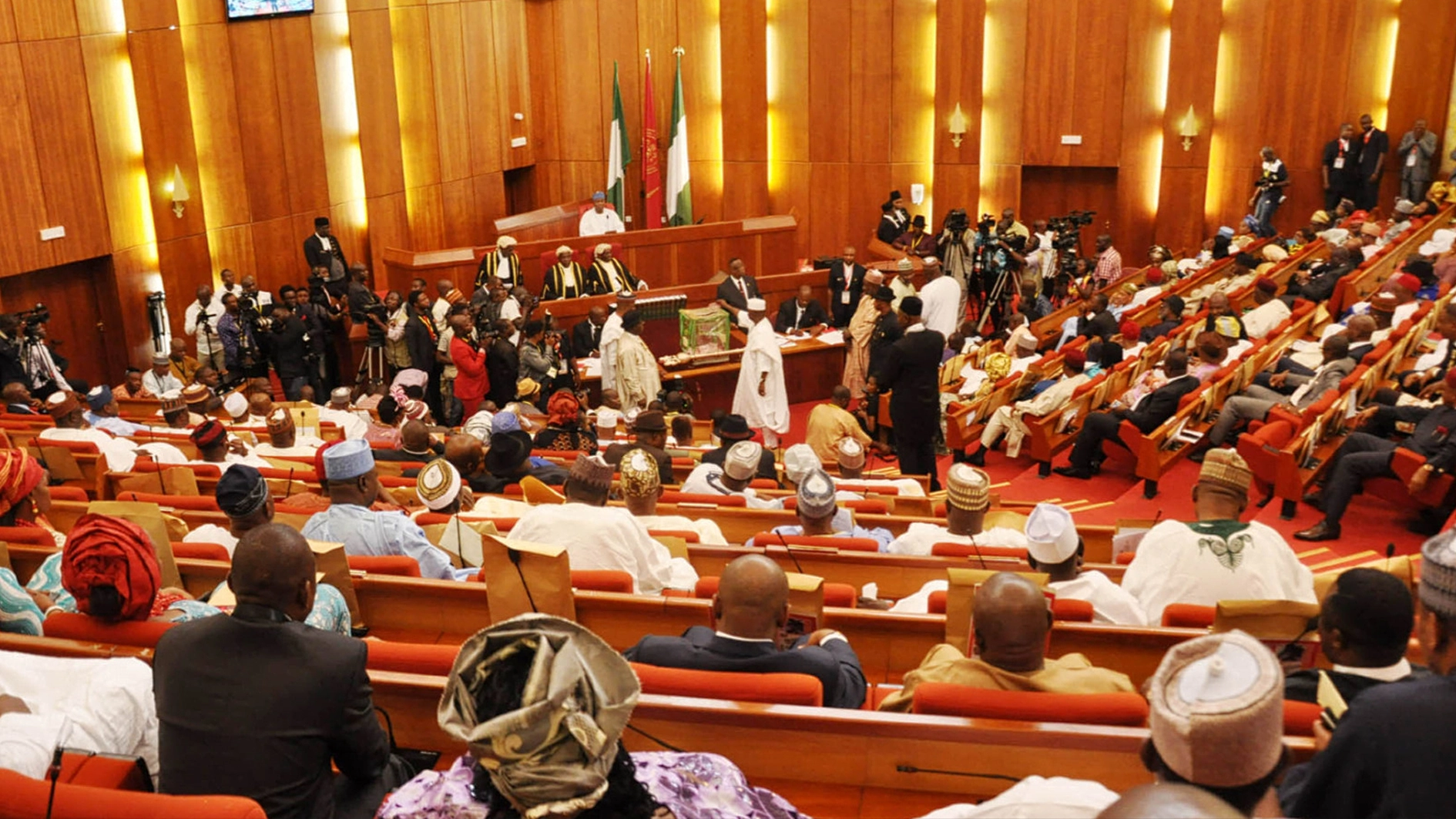
The Nigerian Senate on Tuesday witnessed an emotional debate over the country’s worsening security crisis, with the upper chamber rejecting any policy of rehabilitating former Boko Haram fighters, insisting that terrorists should face justice rather than reintegration into society.
The position emerged during deliberations on a motion sponsored by Senator Abdulaziz Musa Yar’Adua (Katsina Central) on the escalating attacks, abductions and killings of serving and retired military personnel across the country.
The motion was prompted by the recent death of retired Major General Rabiu Abubakar, former Director of Defence Information, who died in captivity after being abducted by bandits in Katsina State.
While the Senate unanimously adopted resolutions aimed at strengthening intelligence gathering, deploying modern security technology and supporting victims’ families, the debate took a dramatic turn when senators pushed additional prayers demanding tougher action against terrorists and rejecting their rehabilitation.
Senator Joseph Igiagbe Ikpea from (Edo Central) in an additional prayer expressed his opposition to rehabilitation of criminals.
Senator Adams Oshiomhole who seconded the prayer argued that granting rehabilitation and reintegration programmes to terrorists amounted to rewarding criminality while their victims continued to suffer.

The former Labour Leader declared,
“It does not make even common sense to grant pardon, rehabilitate and integrate criminals into society.”
He insisted that individuals responsible for mass killings, abductions and destruction of communities should face the full weight of the law instead of being returned to society through government-sponsored programmes.
Oshiomhole’s remarks drew audible support from senators across the chamber before the additional prayer was adopted by voice vote.
Earlier, Senator Osita Izunaso (Imo West), while seconding the motion, argued that the original prayers did not go far enough.
Although the motion commended security agencies and urged stronger intelligence gathering, Izunaso maintained that Nigerians expected concrete results rather than routine appeals.
“We have to mandate them to ensure that these people are arrested and brought to book.”
Referring to the killing of Major General Rabiu Abubakar, he noted that reports surrounding the circumstances of the retired officer’s death had raised serious questions.
“We are all following the incident… There have been stories that some people know those who were involved.”
His intervention prompted Senator Yar’Adua to introduce an additional prayer urging the Federal Government to ensure that those responsible for the killing of the late general and similar attacks are arrested and prosecuted.
Senate Leader Opeyemi Bamidele also proposed that the gravity of the security situation required direct engagement with the Presidency.
He urged that a Senate delegation led by the leadership should meet President Bola Tinubu to formally present lawmakers’ concerns over the deteriorating security situation nationwide.
“A delegation of the Senate led by the Senate leadership should interface with Mr. President to present the concerns of the Senate on the current insecurity situation in the country.”
The proposal received overwhelming support and was adopted as part of the Senate’s resolutions.
Throughout the debate, lawmakers described an increasingly dangerous security environment where even retired military officers—once responsible for defending the nation—have become targets of terrorists and bandits.
Several senators warned that insecurity had reached alarming proportions, with attacks spreading across multiple states and affecting ordinary citizens, academics, security personnel and former military commanders alike.
Senator minority leader, Abba Moro recounted how a professor was shot dead near a police checkpoint after refusing to abandon his vehicle for armed men.
Another lamented that security personnel themselves increasingly lacked adequate equipment and support to confront heavily armed criminal gangs
Responding to some criticisms directed at the security agencies, Deputy Senate President Barau Jibrin cautioned against portraying the military as ineffective.
He acknowledged that insecurity remained a major national challenge but defended the Armed Forces for their sacrifices.
“Our men and women in uniform are doing their best. They are working very hard.”
Barau noted that terrorism and banditry had assumed regional dimensions across West Africa.
“No country is immune from terrorism.”
He stressed that while more needed to be done, the Senate should recognise the successes already recorded by security agencies against terrorist groups.
Earlier, Senator Yar’Adua had painted a grim picture of the growing attacks on serving and retired military personnel, describing the killing of Major General Rabiu Abubakar as a painful reminder of Nigeria’s worsening security crisis.
He listed several senior military officers who had either been abducted, murdered or held captive in recent years, warning that terrorists were increasingly targeting individuals who once occupied sensitive operational and intelligence positions.
According to him:
“The death of retired Major General Abubakar represents not only a personal tragedy but also a painful national loss and a stark reminder of the scale and persistence of insecurity confronting the nation.”
Following the debate, senators observed a minute’s silence in honour of the late Major General Abubakar and all Nigerians killed by terrorism, insurgency, banditry and kidnapping.
The Senate subsequently resolved to observe a minute’s silence for Major General Rabiu Abubakar and other victims of violent crimes, Send a Senate delegation to condole with his family, the Katsina State Government and the Nigerian Army.
The senate also Commended the Armed Forces and other security agencies for their sacrifices.
They re-echo the call to
Strengthen intelligence gathering, surveillance, early warning systems and inter-agency collaboration.
They also urged for greater collaboration with traditional rulers, religious leaders and local communities and accelerate the deployment of modern security technologies.
They mandate security agencies to arrest and prosecute those responsible for the killing of Major General Rabiu Abubakar.
The also resolved to send a Senate delegation to brief President Bola Tinubu on the worsening security situation.
The debate reflected growing impatience within the Senate over the country’s persistent security challenges, with lawmakers insisting that while support for security agencies must continue, government must prioritise justice for victims and ensure that terrorists are prosecuted rather than rewarded with rehabilitation programmes.

