 Follow Us on Google News
 Follow Us on Google Discover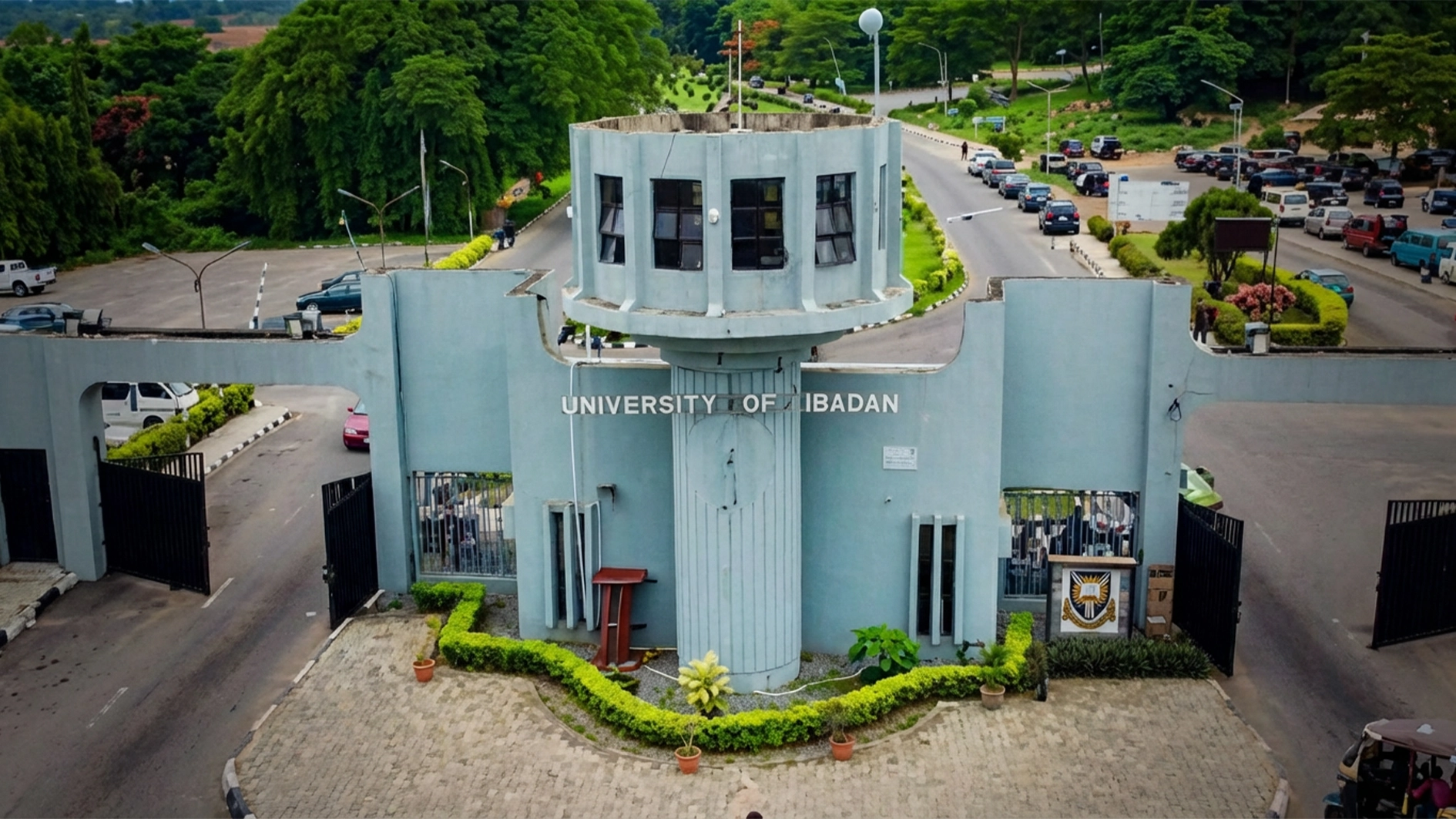
Former Vice-Chancellor of the University of Ibadan, Prof. Idowu Olayinka, has called on the Federal Government to urgently increase investment in postgraduate education, warning that Nigeria’s aspiration for sustainable national development would remain unattainable without deliberate funding for advanced research, infrastructure, and human capital development.
Olayinka made the call while delivering the keynote address at the maiden Postgraduate School Discourse of Chrisland University, Abeokuta.
The lecture was themed: “Consolidating postgraduate education in Nigerian universities.”
The Professor of Geology stated that postgraduate education transcends the mere acquisition of higher degrees. According to him, it serves as a critical engine of innovation, research excellence, and national development across diverse fields, with direct implications for society’s well-being and progress.
Identifying inadequate funding as the single biggest obstacle confronting postgraduate education in Nigeria, Olayinka noted that many prospective master’s and doctoral students lack the financial capacity to complete their programmes.
He added that universities themselves are grappling with poor infrastructure, inadequate research facilities, and a shortage of qualified academic staff to effectively supervise and mentor postgraduate students.
“Most people who want to pursue postgraduate education don’t really have the funding to see them through. Many are working in secondary schools or other places just to make ends meet, and paying tuition becomes a major challenge,” he said.
The former vice-chancellor argued that government-funded scholarships and bursaries would significantly ease the burden on students and enable them to focus fully on their academic work.
He maintained that with adequate financial support, students would be able to complete their PhD programmes within three to four years and subsequently begin to supervise another generation of researchers.
Beyond the financial constraints faced by students, the don lamented the poor state of infrastructure in many institutions.
He said erratic electricity supply, lack of water, and dilapidated laboratories continue to undermine scientific research and innovation across Nigerian universities.
“Most departments do not have adequate facilities. There are problems with electricity, water and other infrastructure. Some laboratories rely on refrigerators that must be maintained at specific temperatures continuously, but we do not have the luxury of a constant power supply,” he explained.
He further illustrated the challenge with the rising cost of running generators. “A department may have a generator, but if diesel costs almost N2,000 per litre, how do you sustain research? Funding remains the major challenge,” he added.
Olayinka also stressed the urgent need to address the shortage of academic staff in Nigerian universities. He said the current human resource deficit makes it difficult for institutions to provide adequate supervision and mentorship for master’s and PhD students.
The scholar expressed concern that only about 15 per cent of university graduates in Nigeria proceed to postgraduate studies. He described the figure as grossly inadequate for a country seeking technological advancement, economic growth, and global competitiveness.
Olayinka emphasised that postgraduate education occupies the highest level of the education system and directly influences the quality of teaching and learning at lower levels.
He explained that a weak apex would have a ripple effect across the entire education structure.
“The university is at the apex of the education system. Below it are colleges of education, polytechnics, secondary schools and primary schools. If the apex is weak, the effect will trickle down to every other level,” he said.
The former vice-chancellor, therefore, urged government policies that would actively encourage more Nigerians to pursue postgraduate education.
He also called for stronger institutional capacity within universities to deliver quality postgraduate training that meets global standards.
Earlier in her welcome address, the Vice-Chancellor of Chrisland University, Prof. Oyedunni Arulogun, described postgraduate education as the engine room of knowledge creation, research excellence, technological innovation, and national development.
Arulogun said the maiden discourse marked the beginning of a tradition of intellectual engagement aimed at strengthening scholarship, innovation, and postgraduate education within the institution.
She reaffirmed the institution’s commitment to establishing a postgraduate school distinguished by academic excellence, rigorous research, innovation, interdisciplinary collaboration, and global relevance.
According to her, the discourse would provide a platform for critical reflection on the future of postgraduate education in Nigeria while encouraging the adoption of innovative approaches to produce globally competitive, solution-driven graduates.
Also speaking at the event, the Head of Service of Ogun State, Mr Iskeel Saka, described the theme as timely and significant, particularly at a time when the country is seeking new pathways for development.
He noted that robust postgraduate education remains essential for evidence-based governance, policy innovation, and sustainable socio-economic development, adding that the state government would continue to support initiatives that strengthen the link between academia and governance.

