 Follow Us on Google News


 Follow Us on Google Discover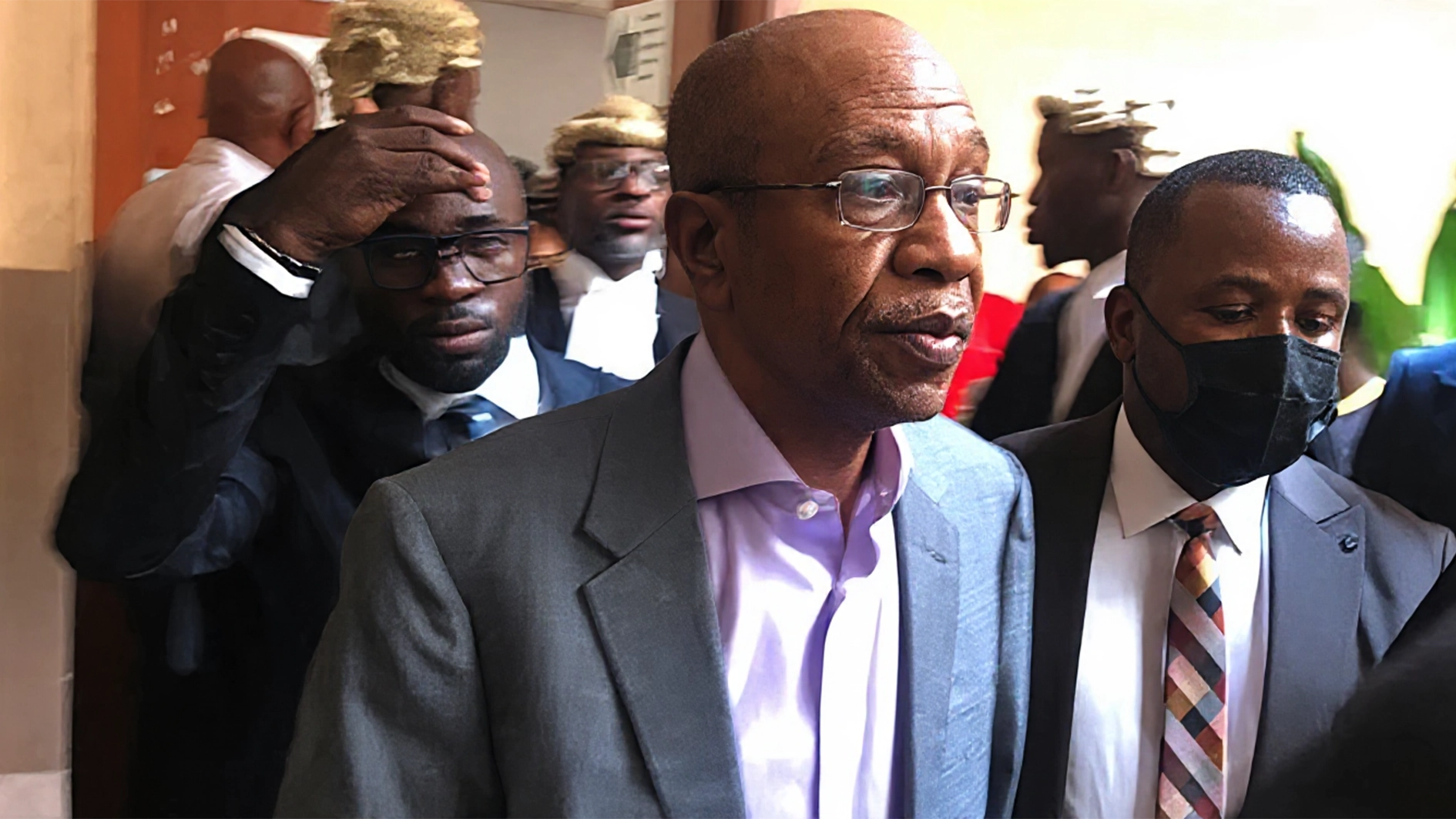
Lagos State Special Offences Court sitting in Ikeja has admitted into evidence the extra-judicial statements allegedly made by former Governor of the Central Bank of Nigeria (CBN), Godwin Emefiele, to the Economic and Financial Crimes Commission (EFCC).
The court, while ruling on the admissibility of documents, however, dismissed the objections raised by the defence team.
It admitted them and marked them as Exhibit K31.
In his ruling, Justice Rahman Oshodi held that the provisions of Section 4 of the Anti-Torture Act 2017, relied upon by Emefiele’s counsel, did not justify the conduct of a trial-within-trial to determine the admissibility of the statements.
Justice Oshodi agreed with the prosecution that the statements sought to be tendered were not confessional in nature and therefore did not require a separate trial to test their voluntariness.
The judge held that for a statement to qualify as confessional, it must contain an unequivocal admission of the alleged offences.

According to the court, none of the statements made by Emefiele contained any admission of the facts in issue. Consequently, the court dismissed the objections and admitted as exhibits the statements dated October 27 and 30, November 11, 12 and 13, 2023.
He adjourned the matter to October 6, 7 and 8, and November 11, 12 and 13, 2026, for continuation of trial.
Emefiele is standing trial alongside Henry Omoile on a 19-count charge bordering on abuse of office, receiving gratification, acceptance of gifts through agents, corruption and fraudulent property transactions involving about $4.5 billion and N2.8 billion.
Omoile is facing a three-count charge relating to alleged unlawful receipt of gifts connected with transactions involving the CBN. Both defendants have pleaded not guilty.
At an earlier sitting, Emefiele’s lead counsel, Olalekan Ojo (SAN), had urged the court to reject the statements, saying that they were obtained involuntarily through alleged oppression and torture during his client’s detention by the Department of State Services (DSS) for over 157 days.
Ojo submitted that the statements were inadmissible under the Anti-Torture Act and relevant provisions of the Evidence Act, contending that once voluntariness is challenged, the prosecution bears the burden of proving that the statements were made freely.
He said that the absence of a video recording of the interrogation undermined the credibility of the statements, describing them as “poisoned fruits.”
He further contended that the prosecution failed to provide independent evidence corroborating the alleged confessional statements and questioned the role of the legal practitioner said to have witnessed the interviews.
In response, the Director of Public Prosecutions of the Federation, Rotimi Oyedepo (SAN), said that a trial-within-trial was unnecessary as none of the statements amounted to a confession or contained any admission of wrongdoing.
Oyedepo said that the Anti-Torture Act does not mandate a trial-within-trial in such circumstances and urged the court to dismiss the objections and proceed with the substantive trial.
The court, however, upheld the prosecution’s position and admitted the statements into evidence.

