 Follow Us on Google News
 Follow Us on Google Discover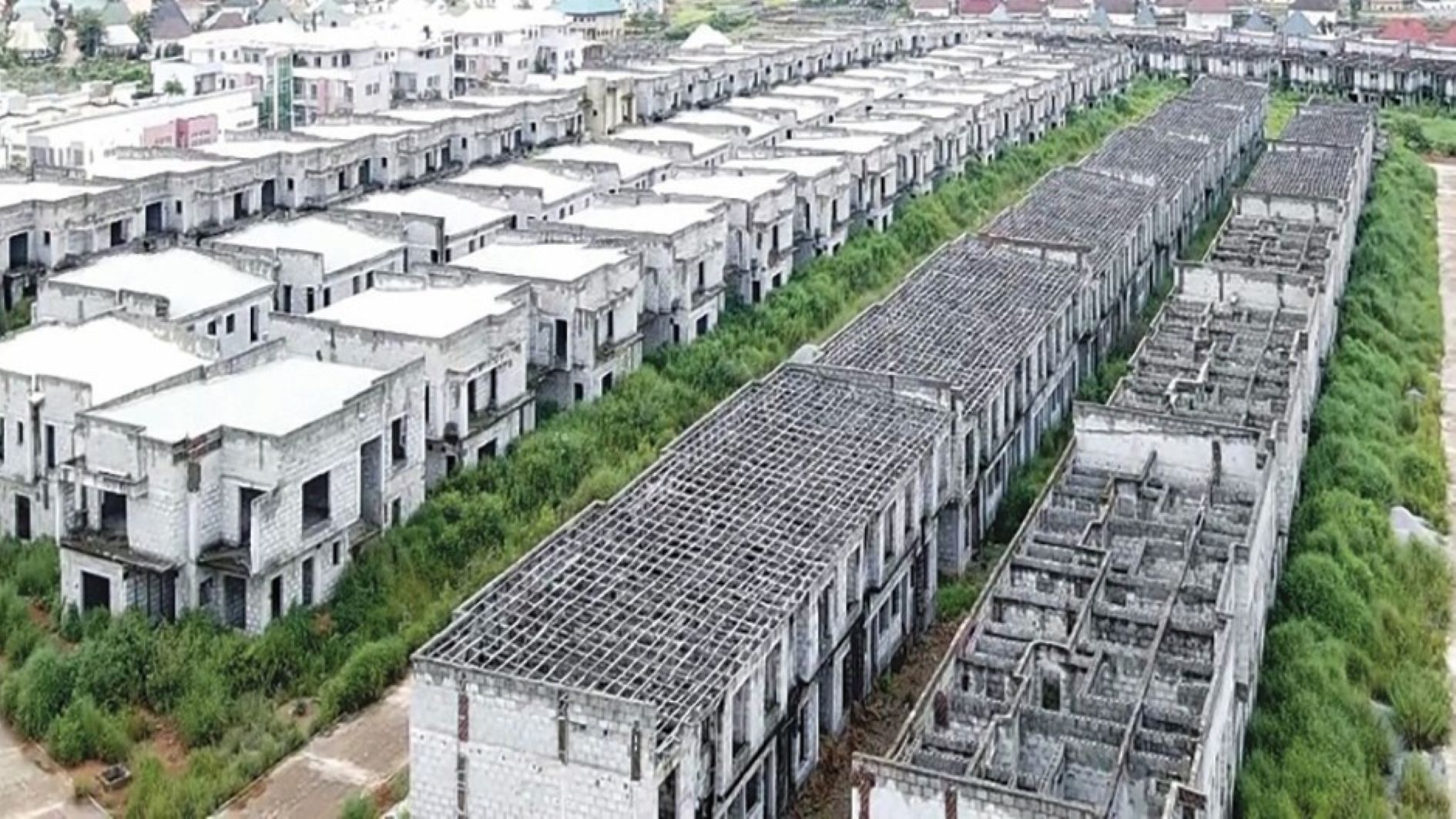
Nigeria’s battle against the 20 million housing deficit has been raging for years. While the fight has been largely unsuccessful, glittering structures fit for royalty continue to sprout up in diverse locations amid claims that these exotic, uninhabited houses are vaults for hush funds. About 1,500 of such properties have been recovered or placed under investigation in the last two years by the EFCC, which also reportedly seized about 975 real estate assets in 2024. With scrutiny of the real estate market for grievous crimes intensifying and investment in high-end properties declining, the clamour for introducing taxes on unoccupied homes and other measures is on the rise. CHINEDUM UWAEGBULAM and OWEDE AGBAJILEKE report.
For a Federal Capital Territory (FCT) that is bursting at the seams with families quartered in makeshift homes made from scraps of metal, roofing sheets, wooden planks, and sundry materials, located just metres or streets away from empty, luxurious mansions, the Abuja housing paradox is a troubling scenario.
With Nigeria’s housing deficit allegedly standing at between 17 and 28 million homes according to unofficial sources, the Abuja shortfall, which exceeds 1.7 million, succinctly illustrates the stark housing crisis that the city faces, as well as a system that prioritises luxury properties over low-cost housing. Interestingly, the entire country is mired in the same accommodation quagmire.
One of the victims of this absurd system is Frederick Akpeji, a producer at a broadcast station, who was compelled to move from Lugbe in the Abuja Municipal Area Council (AMAC) to Bwari, a satellite town bordering Kaduna State.
Explaining the decision to relocate as being driven purely by economic realities, Akpeji, who said that he could no longer cope with the high cost of accommodation in the city, added: “I didn’t really have a choice, so I had to do what I did because rent in Lugbe where I lived then became unbearable, and moving to Bwari was the only option that fit my budget.”
He, however, described the daily commute from Bwari to his office in the city as exhausting and time-consuming, noting that it has taken a toll on both his productivity and personal well-being.

He said: “Every day, I spend hours on the road going to and from work. Sometimes, I leave home before dawn and return late at night. It’s draining, but I have to keep going because of my job.
“There are so many of us in this situation; people are being forced farther away from the city, yet our workplaces remain here. Until something is done about affordable housing and transportation, the struggle will only continue.”
Across the city centre, the growing emergence of makeshift shelters underscores the deepening housing challenge that the FCT is facing.
One striking example is a structure located just beside The Guardian Bureau in Jabi, Abuja, where a crude shack serves as both a carpentry workshop during the day and a dwelling at night, despite lacking basic facilities such as a toilet.
One of the occupants, who gave his name only as Ayo, lamented that occupants take turns bathing in a makeshift structure at night and in the morning to avoid the public’s prying eyes.
He described the experience as both humiliating and distressing, noting that the lack of basic amenities in the FCT, including accommodation, has made daily living a constant struggle.
“It’s not something anyone should have to go through,” he said. “We wait until it’s dark or in the wee hours of the morning before we can bathe just to avoid being seen. There is no privacy; no dignity. We don’t have the money to rent houses because we can’t afford them.”
At dusk in Abuja, the lights flicker on across rows of luxury apartments in Maitama, Asokoro, and other privileged neighbourhoods. Balconies gleam, gates stand tall, and security guards pace quietly. Yet, behind many of those polished doors, there is no laughter, furniture, or life, but only silence.
With families squeezing into single-room apartments in locations like Mpape and Durumi, where they are battling rising yearly rents, eviction threats, and challenging living conditions, including poor infrastructure and high density, the city saddles millions of Nigerians with a bleak future as far as the dream of decent housing is concerned.
But in a strange twist, the city that they struggle to live in is dotted with thousands of empty homes. This contradiction, empty houses amid a housing crisis, has become one of the most troubling issues in Nigeria’s urban landscape, especially in major cities like Abuja, Port Harcourt and Lagos.
According to recent data released by the National Housing Data Technical Committee under the Federal Ministry of Housing and Urban Development, Nigeria faces a housing deficit of about 14.9 million units. Yet, a significant number of completed buildings that remain unoccupied, particularly in high-end districts, are linked to affordability.
With about 40 per cent of Nigerians living below the poverty line and earning just about N137,430 per year, they cannot afford high rents in city centres due to inflation and the exchange rate.
Multidimensional poverty is higher in rural areas, where 72 per cent of people are poor, compared to 42 per cent in urban areas. With inflation eroding incomes, most urban residents simply cannot afford the rents attached to these properties.
Developers, on the other hand, continue to build for high-income earners, expatriates, and investors, leaving a wide gap between supply and actual demand. However, beyond affordability lies a deeper, more complex issue: the role of real estate as a haven for illicit wealth.
Real estate industry as a haven for hush funds
OVER the years, the real estate market has become one of the most exploited channels for laundering illicit funds, and the Economic and Financial Crimes Commission (EFCC) is focusing on it as the sector is largely informal, with weak regulatory oversight and high-value transactions often conducted in cash, which makes it an attractive avenue for money launderers, prospects of converting illegal proceeds into tangible assets and mask the origins of illicit funds.
Such vacant properties are not meant for rental or resale; they’re just “parked” assets, which is why they remain unoccupied. This trend contributes to artificial inflation of property prices, making homes unaffordable for the average Nigerian.
Currently, many houses available, especially in urban centres, are luxury properties that cater to the elite and expatriates, while the major demand is for affordable housing, which is largely unmet. Developers often build for profit rather than the actual housing needs of the population.
With the mortgage system being weak, most people can’t access long-term loans to buy property. Also, with high interest rates and low-income levels, most citizens can’t afford homeownership. So, houses stay empty.
The vacancy rate is more prevalent in privately owned properties than in government-owned ones. Private developers frequently construct high-end apartments targeting affluent buyers, which remain unoccupied due to affordability issues and market mismatches. Many government-built houses and housing schemes remain unoccupied due to bureaucratic delays, high costs, and limited access to mortgage financing.
Additionally, poor maintenance and mismanagement contribute to long-term vacancies. Similarly, some privately owned high-end residential and commercial properties, particularly in prime locations, often experience the highest vacancy rates.
With real estate often used as a hedge against inflation or currency depreciation, The Guardian investigation revealed that speculative investment among the elite thrives, and investors also build and hold properties waiting for the right time to sell, not to occupy or rent them. Land ownership disputes, lack of title documentation, or unfavourable tenancy laws discourage renting or selling.
However, investigations by the EFCC have repeatedly flagged the property market as a major channel for money laundering. The sector’s largely informal structure, combined with weak regulatory oversight and heavy reliance on cash transactions, makes it attractive for individuals seeking to conceal illegal funds.
In some cases, the properties are linked to suspicious financial flows, with authorities estimating that a significant share of illicit funds is routed through real estate.
This explains why the EFCC has been actively engaging with stakeholders, including members of the Nigerian Institution of Estate Surveyors and Valuers (NIESV), to combat money laundering.
The agency has also intensified scrutiny of real estate transactions, mandating that firms conduct thorough customer due diligence and adhere to anti-money laundering (AML) laws. This includes requiring registration with the Special Control Unit against Money Laundering (SCUML) to monitor and reduce the risk of the real estate sector being exploited for illicit purposes.
With limited data access, many property transactions are unrecorded or conducted off-market and via cash, making it difficult to track the source of funds and to detect collusion with professionals to hide illegal transactions.
Of particular concern is a growing number of properties, including luxury estates and hotels, under investigation by anti-graft agencies, for alleged links to unexplained wealth. About 1,500 properties said to have been recovered or placed under investigation by the EFCC in the last two years are in Abuja. The EFCC reportedly seized about 975 real estate assets in a single year (2024). These properties include houses, duplexes, estates and landed assets.
Last year, the Commission handed over 753 Abuja duplexes linked to the former governor of the Central Bank of Nigeria (CBN), Godwin Emefiele, to the Ministry of Housing and Urban Development.
Investigations also revealed that the majority of the 220 high-value homes and parcels of land recovered by the Independent Corrupt Practices and Other Related Offences Commission (ICPC) within the same period are in Abuja.
While investigations are ongoing, there are indications that most of the properties estimated at trillions of naira were proceeds of corruption, underscoring the depth of illicit funds that have flowed into the sector.
Late last year, the anti-graft agency announced the recovery of N37.44 billion and $2.353 million through asset seizures and forfeitures.
Corroborating the sleazy nature of some deals in the sector, the Civil Society Legislative Advocacy Centre (CISLAC), in a report, alleged high-level money laundering in the real estate sector, claiming that corrupt Nigerians were engaging estate firms to conceal illicit funds.
The document titled: ‘Nigeria’s Dirty Money and Real Estate: How Money Laundering through Real Estate Impacts Nigeria’s Fight against Corruption’, signed by CISLAC’s Executive Director, Auwal Musa, noted that the real estate sector is dominated by informal agents who control over 95 per cent of the market.
According to the report, while some real estate agencies operating in the sector are registered in foreign jurisdictions, many also reside in tax havens, adding that there is a consolidation of dirty deals in the sector, a development taking a negative toll on the government’s mass housing policy.
“The Nigerian real estate sector has long provided opportunities for persons and companies to launder illegally acquired funds. The share of real estate services in nominal Gross Domestic Product (GDP) is estimated at around seven per cent per annum. It is a significant contributor to the economy and has the capacity to fast-track the nation’s economic growth if adequately structured.
“However, corrupt money channelled into the economy through the real estate sector can distort the market and inflate real property prices. Lagos is the most expensive city in Africa. In the affluent suburb of Ikoyi, the average price of three-bedroom apartments was N140 million ($388,906) in 2018, while five-bedroom apartments sold for an average price of N350 million ($972,266).
“This affluence is in contrast to about 70 per cent of the total population of Lagos, currently living in informal housing and slums. The housing deficit in Lagos is estimated to be around 2.5 million units. In major centres such as Lagos, Abuja, Ibadan and Kano, housing demand is growing at about 20 per cent per year. Inflated prices are, at least in part, driven by proceeds of corruption laundered through the real estate market, the report stated.
“The Nigerian real estate sector is the second most vulnerable to money laundering, next to the Bureau De Change operators. Nigerian law enforcement authorities, especially the anti-corruption agencies, are improving their responses to money laundering, especially non-conviction-based approaches to asset seizures, which have yielded significant results in the effort to recover corrupt assets,” the report stated.
Also reacting to the growing use of Nigeria’s real estate sector as a channel for laundering illicit funds, an Abuja-based legal practitioner, Eseroghene Mudiaga-Erhueh, expressed deep concern, warning that the trend has become entrenched and increasingly normalised.
She noted that while money laundering through property is a global phenomenon, its visibility and social acceptance in cities such as Abuja present a more troubling dimension.
According to her, proceeds from crimes such as cyber fraud, drug trafficking, kidnapping, and human trafficking are routinely funnelled into luxury real estate acquisitions.
“Once embedded in real estate, these funds are effectively cleaned, while the properties are admired for their luxury and location rather than scrutinised for the origins of the wealth,” she said.
She therefore called for stronger action by anti-graft agencies to make enforcement more visible and sustained, while also urging tax authorities at both the federal and state levels to intensify scrutiny of high-value property transactions, especially where acquisitions appear to exceed declared income.
Also blaming weak oversight and poor transparency for the widespread laundering of money through property acquisitions is an Abuja-based realtor, Kizito Obi, who noted that many high-value properties across major cities, including Abuja, Lagos, and Port Harcourt, remain unoccupied, with unclear ownership structures that make it difficult to trace true beneficiaries.
The absence of a comprehensive system linking property ownership to verified identities, he said, has created loopholes for corrupt individuals to conceal illicit wealth.
He proposed renumbering houses and mandating the linkage of property ownership to Bank Verification Numbers (BVN) as a practical solution to improve accountability. “If individuals are required to tie property purchases to their BVN, it becomes easier to question how such assets were acquired,” he said.
Obi also expressed concern over the soaring cost of real estate, noting that even modest flats in some parts of Abuja currently sell for as much as $2 million, describing this as disproportionate when compared to similar markets internationally.
“I was in Egypt recently, where someone was bragging about their highbrow areas and how much houses are going for. When I told the person that flats go for as much as $2 million in Abuja, he could not believe it,” he said.
KYC protocols and anti-money laundering regulations
AS part of efforts to sanitise the sector, The Guardian learnt that estate firms are now required to conduct strict customer due diligence, comply with Know-Your-Customer (KYC) protocols, and align with anti-money laundering regulations. While these measures are aimed at sanitising the industry, claims of them having unintended consequences abound
Developers and agents acknowledged that the heightened scrutiny has slowed transactions, especially in the luxury segment, as prospective investors, particularly Nigerians in the diaspora, are becoming more cautious, wary of regulatory bottlenecks and investigations.
There are also international dimensions to the crisis. Reports have traced hundreds of high-value properties in places like Dubai to politically exposed Nigerians, raising concerns about capital flight and the use of offshore real estate markets to warehouse wealth. Back home, the impact is visible as high-end apartments sit empty, while demand for affordable housing continues to soar.
For public affairs analyst Tope Adeyemi, the persistent opacity in property ownership across Abuja and other major urban centres fuels illicit financial flows, and without urgent reforms, the sector will remain vulnerable to abuse.
“Today, you find entire estates with houses sitting empty, and nobody can clearly say who owns them. That is a major red flag. If every property is properly numbered and linked to an individual’s Bank Verification Number, it becomes easier to trace ownership and ask legitimate questions about how such assets were acquired. Without that level of transparency, the real estate sector will continue to serve as a haven for illicit wealth.
“The prices we are seeing, especially in Abuja, are not normal by any standard. You have ordinary flats going for millions of dollars, which raises serious concerns about the source of funds driving these transactions. The government must go beyond rhetoric and enforce accountability by making public details of seized properties and how they are managed. Otherwise, we risk allowing corruption to recycle itself within the very system meant to fight it,” he said.
Wanted: A national property registry
COMPOUNDING the problem of transparency in the sector is the absence of a comprehensive property registry and monitoring system. Consequently, many real estate transactions in Nigeria remain undocumented or occur off-market, making it difficult for authorities to track ownership, occupancy status, or sources of funds.
Experts argued that this opacity allowed both tax evasion and illicit financial flows to thrive. To address this, they are calling for the creation of a national property registry linked to land records and tax systems. Such a database, they said, would help identify vacant properties, improve transparency, and support better policy decisions. There is also growing support for introducing vacancy taxes.
The Federal Capital Territory Administration (FCTA) has already considered imposing levies on unoccupied buildings in Abuja, where hundreds of luxury homes in districts like Maitama and Asokoro remain empty. The goal is to compel owners to rent, sell, or repurpose their properties.
However, implementing such a policy is not straightforward. Under Nigeria’s constitutional framework, property taxation falls within the jurisdiction of local governments, raising legal and administrative questions about enforcement.
The FCTA has an estimated housing deficit of 1.7 million in Abuja, largely due to an increase in the number of unoccupied buildings. It disclosed that 600 such have been identified in the highbrow districts of Maitama, Asokoro, Wuse, Apo, and Gwarimpa. The buildings are, however, beyond the means of most civil servants, leading them to seek more affordable accommodation on the outskirts of the city.
Apart from experts advocating the establishment of a monitoring system and a national property registry to identify, track, and verify vacant properties, the registry should be linked to land registration and tax records to ensure transparency and accuracy. Implementing this system would require collaboration with key stakeholders in the real estate and built environment sectors.
They also canvassed the enactment of legislation that would empower tax authorities to enforce vacancy taxes. This, they say, would involve amending existing tax laws and introducing new legal provisions where necessary to close loopholes and ensure compliance.
By implementing these measures, they said, the government can effectively regulate unoccupied properties, reduce housing shortages, and promote a more efficient real estate market.
A former Chairman, Lagos State Branch of NIESV, Mr Gbenga Ismail, told The Guardian that the EFCC has been around for a while, and its scrutiny of all transactions has indeed impacted real estate transactions.
“Obviously, the segment most affected is high-priced real estate assets. Therefore, most investment-related transactions have been affected. The commercial real estate market is also not too deep, so the overall effect may not be too impactful, as the majority of the volume of real estate transactions is largely residential real estate and mid-level family/single dwellings transactions,” he said.
The President, International Real Estate Federation (FIABCI) for Africa and Near East Region, Mr Adeniji Adele, an estate surveyor, agrees that “the much-talked-about scrutiny might increase the transparency and deter illegal activities in the real estate sector, potentially leading to more cautious transactions. It could also encourage compliance with regulations, which might temporarily slow down deals but could ultimately improve the sector’s credibility and stability in the long run.
According to Adele, “the luxury and high-end property segment might feel a more pronounced impact due to increased scrutiny. These segments often involve larger transactions and may be more prone to irregularities or questionable practices, making them more susceptible to regulatory scrutiny. It may also lead to declining transactions in this sector as investors might be scared because of the bureaucracy in our system.”
New tax on unoccupied houses
THE Real Estate Developer of Nigeria (REDAN) suggests that imposing a tax on unoccupied houses is a reasonable and necessary measure to address the country’s housing deficit and affordability crisis.
According to its President, Akintoye Adeoye: “With millions of Nigerians struggling to secure decent housing while numerous homes remain vacant, a policy that discourages prolonged property idleness is essential. The economic and social costs of housing shortages are too significant to ignore.
“In a well-functioning real estate market, investors and developers prioritise returns on their investments. It is, therefore, unusual for legally acquired properties to remain unoccupied for extended periods of time. This raises concerns about the motives behind such vacancies, warranting further scrutiny,” he said.
Introducing a tax on unoccupied homes, he said, would encourage property owners to either rent or sell their vacant properties, thereby increasing housing availability and easing rental market pressures.
Adeoye added: “REDAN has consistently emphasised the need for affordable housing that aligns with the income levels of most Nigerians. However, for real progress to be made, the government must implement policies that improve access to mortgages, allowing more people to become homeowners.
“Limited access to mortgage financing remains a major obstacle in Nigeria’s housing sector. Without an efficient and affordable mortgage system, homeownership will remain out of reach for many, leaving numerous properties unoccupied,” the REDAN boss stated.
For an estate surveyor and valuer, Mr Sola Enitan: “Since property taxes are within the purview of local councils, the responsibility to impose and collect such taxes lies with them. Any attempt by the federal or state governments to impose this tax directly would violate constitutional principles.”

