 Follow Us on Google News
 Follow Us on Google Discover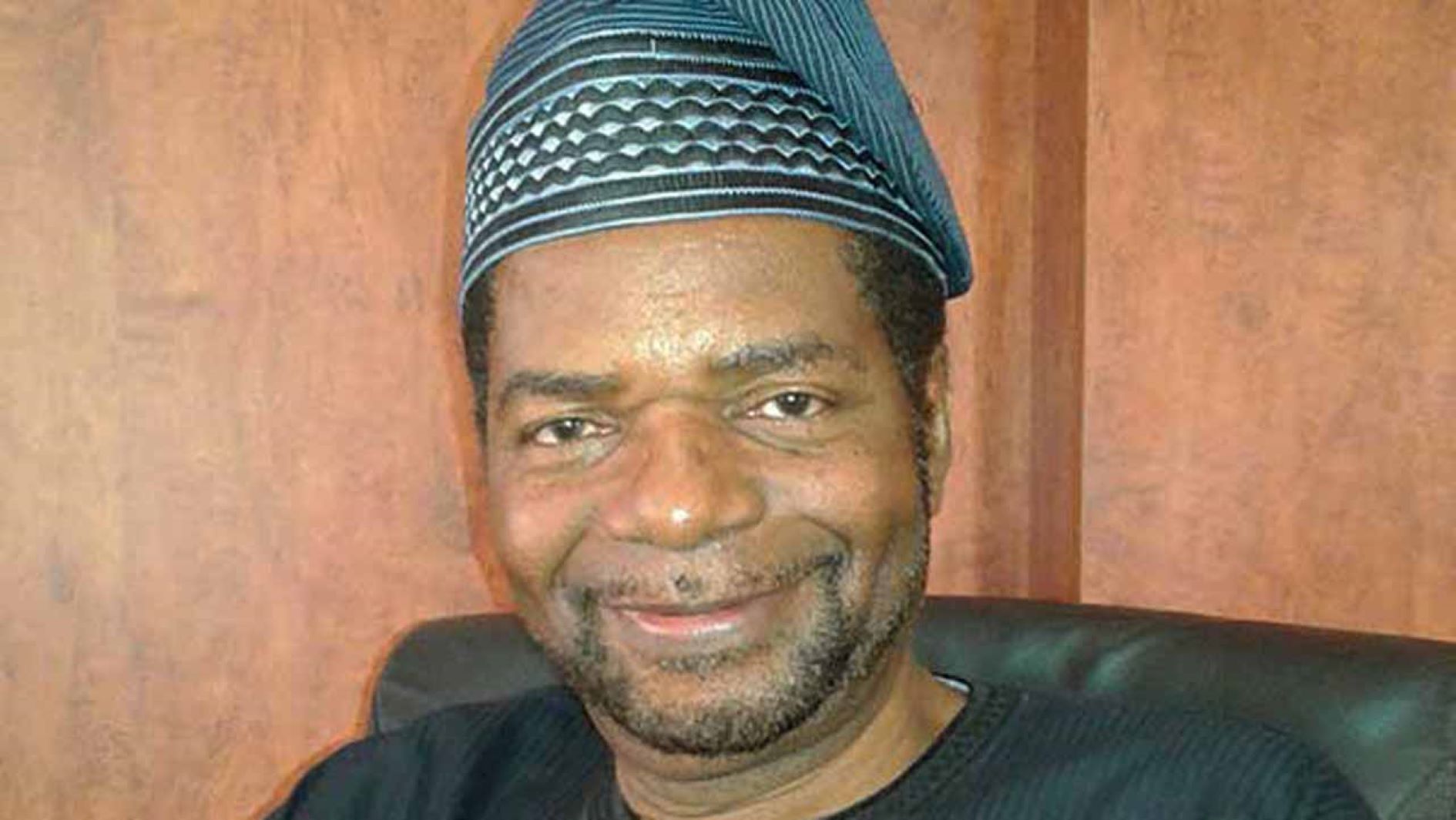
• Says Adeniyi Saga Exposes Failure At Centre Of Government
• Recommends Career Administrator To Head Bureaucracy
• Canvases Audience Of CORFEPS Leadership With President
A former Director-General of the Bureau of Public Service Reforms (BPSR), Dr. Goke Adegoroye, has urged President Bola Tinubu to use the impending appointment of a new Head of the Civil Service of the Federation (HCSF) to begin a reset of the federal bureaucracy, warning that the decline in leadership effectiveness at the top of the civil service has weakened the federal bureaucracy.
Adegoroye, a retired Permanent Secretary of the Federal Capital Territory Administration (FCTA) and National Publicity Secretary of the Council of Retired Federal Permanent Secretaries (CORFEPS), made the call yesterday in an open letter to the President ahead of the retirement of the incumbent HCSF, Dame Didi Esther Walson-Jack, who is due to leave office on August 27, 2026, on attaining the mandatory retirement age of 60.
He said the appointment of the next Head of the Civil Service presents Tinubu with an opportunity to reverse what he described as the steady decline in quality of leadership within the federal bureaucracy, arguing that the effectiveness of the civil service depends largely on the quality of those appointed to lead it.
Adegoroye argued that while Section 171(3) of the Constitution gives the President the discretion to appoint any serving permanent secretary as Head of the Civil Service, the exercise of that power should be guided by the need to strengthen the bureaucracy rather than satisfy narrow interests.
According to him, the constitutional provision merely establishes eligibility, while the responsibility for choosing a candidate with the competence, administrative experience and leadership capacity required to lead the federal civil service rests squarely with the President.
Adegoroye also linked the trending Presidential Foreign Intervention Promotion Council (PFIPC) saga, involving one Adeniyi Adeyemi Mathew, to what he described as the erosion of leadership and coordination within the bureaucracy. He stated that the controversy exposed serious lapses in the operations of key government institutions.
Drawing from his experience as Director (Special Duties) in the Office of the Secretary to the Government of the Federation during the Olusegun Obasanjo administration, he said such anomalies would ordinarily have been flagged and referred to the President for investigation through internal administrative processes.
He argued that the episode exposed weaknesses in coordination at the centre of government, warning that overlapping responsibilities and the growing reliance on officials outside the traditional civil service structure had weakened institutional accountability.
According to him, it was difficult to understand how no desk officer in the Office of the Secretary to the Government of the Federation (OSGF), the Office of the Head of the Civil Service of the Federation (OHCSF) or the Office of the Accountant-General of the Federation detected what he described as the apparent irregularities until the Nigeria Investment Promotion Council (NIPC) raised the alarm.
“I still believe that down the line, there should be a minute trail of objections to this case which would have been spotted by officers, as an apparent scam. That these two offices are now principal actors in this national embarrassment, with their conflicting letters, is symptomatic of the absence of coordination in that office, unless they were so instructed by their principal, in which case their acquiescence is a reflection of both their poor quality and personal integrity as permanent secretaries and the unsuitability of their deployment to those offices,” he argued.
The retired permanent secretary said the impending retirement of Walson-Jack had revived concerns within the civil service over who succeeds her, noting that although the Constitution permits the President to appoint any serving permanent secretary as HCSF, successive administrations had increasingly elevated officers from professional cadres ahead of career administrators.
He maintained that the trend had steadily weakened the administrative leadership of the civil service, arguing that the office of the HCSF requires extensive experience in administration and human resources management.
He further argued that sustained civil service reform requires political backing from the Presidency, recalling that major reforms introduced during the Olusegun Obasanjo and Umaru Musa Yar’Adua administrations were driven by strong political commitment.
He noted that the momentum for reform had diminished in subsequent years, leaving institutions such as the Bureau of Public Service Reforms with reduced influence over the direction of the federal bureaucracy.
To illustrate the shift, Adegoroye cited a 2014 Federal Civil Service Commission (FCSC) promotion exercise in which 169 officers competed for 23 vacancies in the administrative cadre, while only 25 candidates contested 28 vacancies in the procurement cadre, a development he said accelerated the rise of professional cadres into the top hierarchy of the civil service.
He said the imbalance had triggered repeated disputes within the civil service, recalling that groups of administrative officers had challenged the promotion process in court after they were overtaken by colleagues from newer professional cadres.
He also cited the case of 97 deputy directors whose grievances eventually reached the National Industrial Court after what he described as years of delayed promotion, arguing that such developments had steadily eroded confidence in the system and weakened the traditional administrative cadre.
He added that as of April 2026, the Federal Civil Service had 17 medical doctors, including a dental surgeon and an optometrist, and three veterinary doctors serving as permanent secretaries among more than 40 cadres operating across the service.
The development, he said, had resulted in officers being deployed to positions outside their areas of competence, citing the deployment of accountants to Political Affairs and medical doctors to Establishment and Pension.
He emphasised that the mismatch in deployments has affected morale across the service, with experienced directorate officers increasingly finding themselves reporting to permanent secretaries whose professional backgrounds did not adequately prepare them for broad administrative responsibilities. He argued that this had contributed to declining confidence in decision-making within ministries and undermined institutional effectiveness.
“The current trend smacks of a conspiracy of the professionals against the generalists in administration, human resources management and even planning, who are now branded as ‘those who cannot pass’ in the so-called written examinations to become permanent secretaries.
“The HCSF is, ipso facto, the chief human resources manager of the federation. The position requires extensive experience in administration and human resources management. The appointment of accountants, medical doctors and other professionals with no such cognate experience falls short of this requirement and should be discontinued,” he advised.
While stressing that his intervention was not an attack on any professional group, Adegoroye said every cadre deserved the opportunity for its best officers to attain the rank of permanent secretary.
However, he maintained that the office of the Head of the Civil Service occupies a unique position as the government’s chief human resources authority and should be reserved for officers with extensive administrative experience, institutional memory and a deep understanding of public service rules.
Adegoroye also cited findings from his assessment of leadership effectiveness among the 11 Heads of the Civil Service who served between 1999 and 2024, saying the study showed a steady decline in leadership quality, with the last three office holders recording the lowest ratings.
According to him, all three were appointed from professional cadres rather than the administrative cadre, a development he said coincided with the decline in leadership effectiveness across the federal civil service.
He urged Tinubu to make competence, institutional memory, knowledge of public service rules, human resources management capacity, integrity and the courage to resist political interference the determining factors in appointing the next HCSF.
According to Adegoroye, the next Head of the Civil Service should possess a thorough understanding of the mandate of the Office of the Head of the Civil Service of the Federation, demonstrate mastery of the Public Service Rules and Financial Regulations, possess the capacity to drive meaningful reforms, and have the courage to resist undue political interference in the discharge of official responsibilities.
Adegoroye also urged the President to make his position on civil service reforms clear, arguing that uncertainty over the direction of reform had contributed to declining morale within the bureaucracy.
Quoting public administration scholar Ladipo Adamolekun, he maintained that “a president gets the civil service he deserves,” stressing that the responsibility for rebuilding confidence in the public service ultimately rests with the country’s leadership.
“The way to start is to strive to let competence and professionalism; capacity and institutional memory; and character and integrity take the centre stage in the execution of the presidential powers that the Nigerian Constitution has vested in you to make federal appointments. Please, let the appointment of the next HCSF that you are about to make signal a new beginning for the Nigerian bureaucracy,” he said.
Adegoroye also renewed his appeal for the President to grant the leadership of the Council of Retired Federal Permanent Secretaries (CORFEPS) an audience, saying repeated efforts by the body to meet with Tinubu over the past three years had been unsuccessful.
“I am unable to rationalise how, more than three years now into your administration, the executive of CORFEPS… have not been able to secure an appointment to meet directly with you,” he said.

