 Follow Us on Google News


 Follow Us on Google Discover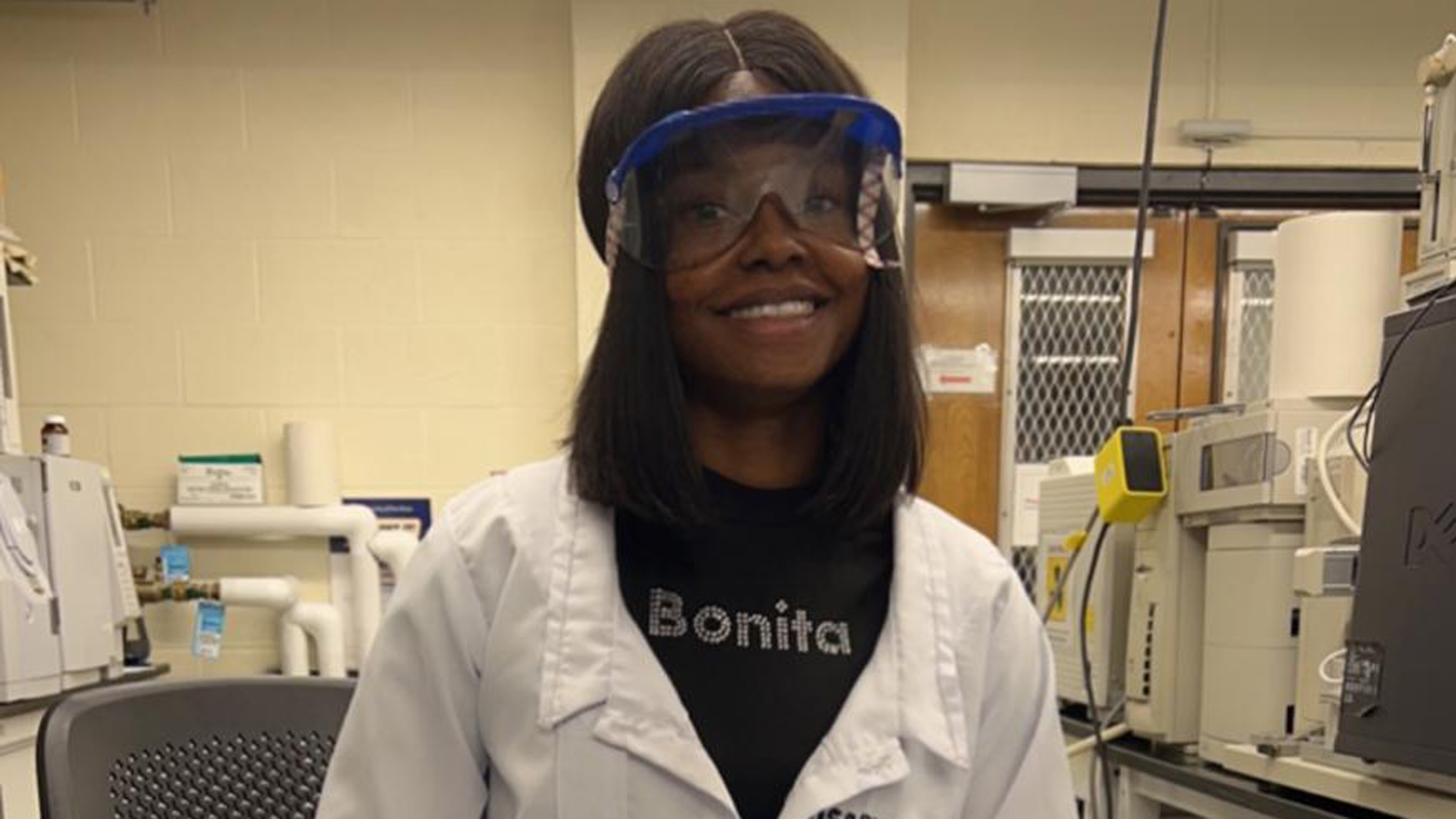
When we speak of environmental pollution and ecological degradation in developing economies like Nigeria, the public imagination immediately conjures up images of smoking factory chimneys, oil spills in the Niger Delta, or vast plains of municipal plastic waste. Rarely, if ever, does the eye turn toward the pristine, sterile environment of the scientific laboratory. Yet, behind the closed doors of academic, pharmaceutical, and industrial quality control laboratories lies an invisible but highly toxic ecological footprint.
Every year, millions of metric tons of hazardous organic solvents such as acetonitrile, chloroform, hexane, and methanol are consumed globally to extract, separate, and analyze chemical compounds. These processes, while vital for validating the safety of our medicines and the purity of our water, generate a massive, parallel stream of toxic chemical waste that presents a profound disposal challenge for nations with developing infrastructure.
Sct. Faith Osabuohien, an industrial chemist and emerging authority in Green Analytical Chemistry (GAC), has spent years advocating for a fundamental paradigm shift in how laboratory research is conducted. By engineering novel, eco-compatible analytical frameworks, optimizing solvent-free extraction methodologies, and pioneering sustainable chemical waste management systems, she is tackling laboratory pollution at its source.
Osabuohien in an interview with The Guardian explored her research, the global mechanics of Green Analytical Chemistry, and how her technical leadership is charting a sustainable path for industrial science in West Africa and beyond.
Let us begin with the core philosophy driving your career. To the layperson, chemistry is inherently associated with chemicals, many of which are known to be hazardous. What exactly is Green Analytical Chemistry (GAC), and how does it challenge traditional methodologies?
Thank you for this platform, I’m truly grateful to be here to talk more about my GAC methodology. To understand Green Analytical Chemistry, one must first recognize that for over a century, the primary metrics of success in analytical laboratories have been purely performance-driven: sensitivity, selectivity, speed, and cost. If a method could detect a part-per-billion contaminant in a pharmaceutical batch, it was deemed excellent, regardless of whether it generated liters of halogenated hazardous waste in the process.

GAC changes the equation by introducing environmental sustainability as a mandatory performance metric. It is governed by 12 core principles-originally conceptualized by Anastas and Warner and later tailored to analytical science by Gałuszka, Migaszewski, and Namieśnik. These principles mandate the elimination or minimization of reagents, the reduction of energy consumption, the prioritization of multi-analyte methods, and, crucially, the integration of automated, automated waste treatment directly within the testing workflow.
My work focuses heavily on the direct application of these principles to industrial quality control and environmental monitoring. We are not trying to change what science discovers; we are changing how science discovers it. We are proving that you can achieve the exact same level of parts-per-billion precision without leaving an ecological scar.
A major focal point of your research and professional practice is the elimination of hazardous solvents during the extraction phase. Why is the extraction phase targeted so aggressively by green chemists?
In any standard analytical workflow, whether you are testing active pharmaceutical ingredients (APIs) or evaluating environmental samples, the raw sample can rarely be injected directly into an analytical instrument like a High-Performance Liquid Chromatograph (HPLC) or a Gas Chromatograph (GC). You must first separate the target molecules from the complex sample matrix, a process known as extraction.
Traditionally, this requires liquid-liquid extraction (LLE) or solid-phase extraction (SPE), both of which consume large volumes of petrochemical-derived solvents. These solvents are volatile organic compounds (VOCs). They are toxic to laboratory personnel, flammable, and highly resistant to natural biodegradation. When a single industrial lab runs hundreds of quality control tests a day, the volume of solvent waste accumulates exponentially. My research targets the extraction phase because it represents the single largest source of chemical waste in the entire analytical cycle. If we can make extraction green or solvent-free, we eliminate the vast majority of laboratory-generated pollution at the point of origin.
Let us dive into the technical specificities of your work. How does a chemist actually perform a complex extraction without using traditional chemical solvents? What are the mechanisms at play?
It requires utilizing advanced materials science and alternative physical states of matter. One of the main methodologies we look at is Solid-Phase Microextraction (SPME). Instead of using liters of solvent to dissolve and extract an analyte, SPME utilizes a fused silica fiber coated with a specialized polymeric stationary phase. The extraction happens directly from the sample matrix or the headspace above it. The analytes are thermally desorbed directly into the injector of the chromatograph. Zero solvent is used.
Another highly effective approach involves replacing hazardous organic solvents with eco-compatible alternatives, such as bio-derived solvents like ethanol produced from agricultural waste, or utilizing supercritical fluids, such as supercritical carbon dioxide (CO2). When carbon dioxide is compressed beyond its critical temperature (31.1 oC) and pressure (73.9 Psi), it exhibits the low viscosity of a gas and the high dissolving power of a liquid. It acts as an incredibly efficient extraction solvent, and when the pressure is released, the CO2 flashes off as gas, leaving behind a completely pure extract with absolutely zero toxic chemical residue.
My contributions lie in the meticulous optimization of these operational parameters balancing temperature, pressure, flow rate, and sorbent chemistry to prove that these green alternatives can match or exceed the recovery rates of traditional, toxic methods.
We cannot validate the safety of a life-saving medicine if the analytical process used to test it poisons the local water supply. True scientific excellence must be ecologically accountable.
You have spent a considerable portion of your career not just in research, but also in quality control environments. How do you bridge the gap between abstract green chemistry theories and the strict, unyielding realities of industrial laboratory operations?
This is the most critical hurdle we face. In industry, particularly within the pharmaceutical sector, laboratories operate under highly rigid regulatory frameworks, such as Good Manufacturing Practices (GMP) and strict British Pharmacopeia (BP) or international standards. Once an analytical method is validated, changing it requires navigating immense regulatory paperwork and costly revalidation protocols.
Therefore, industrial laboratories are naturally risk-averse and resistant to change. To bridge this gap, my approach has always been data-driven. We must speak the language of industry, which is a language of efficiency, reproducibility, and cost-effectiveness.
When I design or advocate for a green analytical method, I perform a side-by-side validation study. I demonstrate that the green method achieves the exact same limit of detection (LOD) and limit of quantification (LOQ) as the traditional method. Furthermore, I show the financial metrics: by eliminating the need to purchase expensive HPLC-grade acetonitrile and completely cutting out the third-party disposal fees for hazardous waste, the green method drastically lowers the cost per analysis. When you prove that sustainability actually increases operational profitability and protects human capital, industry leadership listens.
Let us contextualize this for Nigeria. As our local manufacturing, chemical, and pharmaceutical sectors expand to meet the demands of a rapidly growing population, what are the specific implications of your work for our national development?
Nigeria is at a unique and historic crossroads. Our industrial sectors are expanding rapidly, but our municipal and industrial waste management infrastructure is facing unprecedented strain. Many local industries still struggle with the complex logistics of safely neutralizing, storing, and disposing of hazardous chemical effluents.
If we scale up our national manufacturing and regulatory testing laboratories using legacy, waste-heavy analytical techniques, we will see a severe escalation in environmental contamination. We run the risk of toxic solvents seeping into our water tables and polluting local river systems.
My advocacy and research suggest that Nigeria does not need to follow the historical path of Western nations, who industrialized using highly polluting methods and are now spending billions trying to clean it up. We can perform an industrial “leapfrog.” By embedding Green Analytical Chemistry principles directly into our industrial workflows and, crucially, into our university curricula right now, we can train the next generation of Nigerian scientists to design inherently clean processes. We can build a robust, globally competitive industrial sector where economic expansion and environmental preservation coexist seamlessly.
You mentioned university curricula. How do you perceive your role in shifting the mindset of the next generation of scientists?
Mentorship and education are the foundational catalysts for any systemic scientific revolution. If a student spends four to six years in an academic laboratory learning that the only way to perform a titration or an extraction is by using hazardous reagents, they will carry that polluting mindset directly into their professional careers in industry.
When I instruct students, I don’t just teach them how to operate a piece of equipment or calculate a chemical yield. I teach them to look at the entire lifecycle of the experiment. I ask them: Where did this reagent come from? What is its toxicity profile? Where will it go when you pour it down the drain?
By integrating green metrics such as the Analytical Eco-Scale or Green Analytical Procedure Index (GAPI) into standard laboratory coursework, students learn to quantitatively evaluate the environmental impact of their work. We are cultivating a new generation of scientists who view green chemistry not as an optional sub-discipline, but as the default standard for all scientific inquiry.
A critical measure of any scientist’s influence is how their peers receive and implement their findings. How will fellow researchers, industrial scientists, and the wider academic community referenced and utilized your work to build a tangible impact in the field of Green Analytical Chemistry?
The reception from the international scientific community has been incredibly validating, and it underscores the urgent global demand for actionable, sustainable laboratory protocols. Much of this core research has been peer-reviewed and formally published in the Journal of Communication in Physical Sciences. This journal has established itself as an exceptional, highly rigorous, and prestigious vehicle for cutting-edge physical and chemical research, widely respected for bridging the gap between theoretical chemistry and practical, real-world applications.
Because of the journal’s extensive reach and demanding editorial standards, our findings have garnered significant traction. Fellow researchers and environmental scientists are actively referencing our optimized methodologies as a blueprint for reducing environmental toxicity in their own workflows. They utilize our published extraction parameters, mathematical validation models, and eco-scale evaluations to justify moving away from legacy, solvent-heavy practices.
Seeing other laboratories cite our data to validate their own green transitions demonstrates that our work is successfully establishing a new benchmark for sustainable research globally.
Let us look at the overarching motivation behind this immense undertaking. What are your fundamental aims in conducting this research, and what is the ultimate real-world change you intend to catalyze?
At its core, my research aims directly at safeguarding and advancing the environmental and economic sustainability of our country. Nigeria is undergoing a massive industrial awakening, but this growth must not happen at the expense of our public health or ecological heritage. My primary objective is to spearhead a systemic national transition, actively championing for expanding industries and key government officials-most notably the Federal and State Ministries of Environment in Nigeria to formally adopt these eco-compatible analytical methodologies.
By integrating Green Analytical Chemistry into national regulatory frameworks, the Ministry of Environment can establish modern, cleaner compliance standards for manufacturing, oil and gas, and pharmaceutical sectors. I want our government institutions and corporate leaders to use these methods to aggressively curb hazardous chemical effluents before they enter our ecosystems. Ultimately, my aim is to equip Nigeria with the technical tools necessary to protect our rich biodiversity, preserve our vital water tables, and position our nation as a forward-thinking leader in sustainable industrial development.
Looking ahead, what do you see as the next critical frontier in your work with Green Analytical Chemistry, and what are the broader global implications of your research?
The next crucial frontier is the optimization of green methodologies for environmental risk studies, specifically targeting emerging contaminants like Active Pharmaceutical Ingredients (APIs) and micro-pollutants in urban wastewater networks. Currently, monitoring these trace contaminants requires highly intensive sample preparation methods that ironically generate more chemical pollution than the contaminants they are trying to measure!
Developing high-throughput, automated, green analytical frameworks that can monitor environmental health in real-time without producing secondary chemical waste is a primary objective.
Globally, the scientific community must realize that our work does not exist in a vacuum. The climate crisis and global chemical pollution are interconnected challenges. We cannot truly validate the safety of a life-saving medicine if the analytical process used to test it poisons the soil and local water supplies. True scientific excellence must be ecologically accountable. My ultimate vision is to see international regulatory bodies mandate green chemistry principles as part of standard method development worldwide.

