 Follow Us on Google News
 Follow Us on Google Discover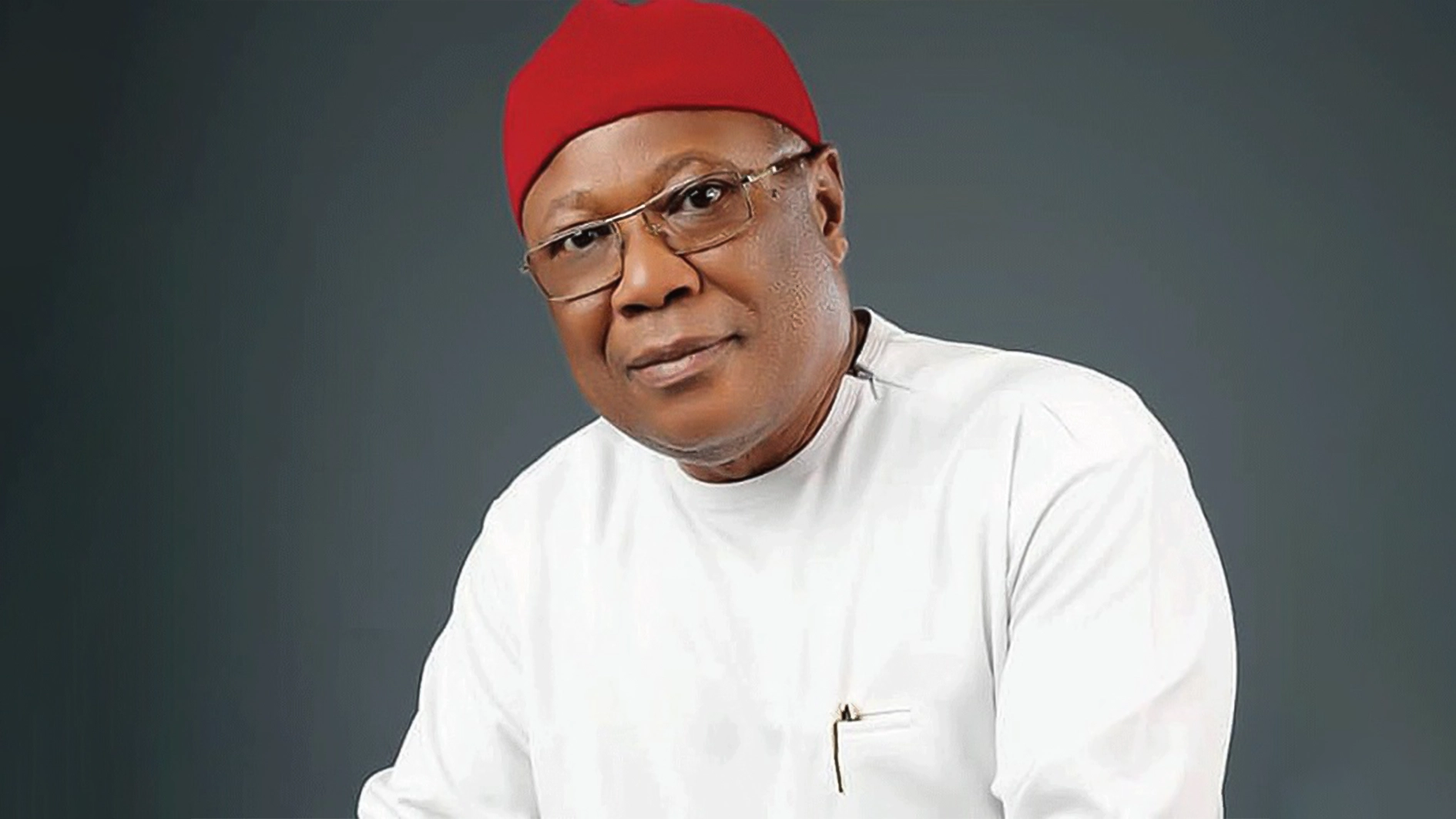
Former Nigerian Ambassador to Germany, Portugal, Cuba and Ghana, Simon Ejike Eze, says his decision to venture into politics was driven by the same ideals of service and patriotism that defined his diplomatic career. In this interview with LEO SOBECHI, he reflects on the recent Enugu North Senatorial by-election, which he describes as a “violent rehearsal”, and alleges that Governor Peter Mbah’s defection to the All Progressives Congress (APC) has imported the Peoples Democratic Party’s (PDP) culture of impunity and imposition into the ruling party.
The recent senatorial by-election in Enugu State has generated mixed reactions. How would you assess the conduct of INEC, the electorate and the political actors, and what does the outcome portend for Nigeria’s democracy?
I am only just beginning to recover from the shock of what I witnessed during and after the election. I never imagined that such a situation could occur in a democratic process.

For a long time, I believed that the Peoples Democratic Party (PDP), which governed Enugu State from 1999 until recently, did not genuinely believe in competitive elections. In my view, the outcome of elections was often predetermined under what many people described as the “Ojebego” (he is already there) culture, where candidates endorsed by the leadership emerged victorious regardless of the electoral process.
That pattern continued until the 2023 general election, when the Obidient Movement and Peter Obi’s presidential candidacy on the Labour Party platform changed the political landscape. Many candidates from other political parties won elections, demonstrating that the electorate could make independent choices.
What I witnessed during the recent by-election, however, was deeply disturbing. In my opinion, the current APC administration in Enugu has adopted the same style of politics that many people previously associated with the PDP.
I was a founding member of the APC in the state before deciding to contest the election. When several politicians defected from the PDP to the APC, I believed that long-standing members like me deserved some consideration, especially since I had previously contested the same senatorial seat.
Unfortunately, despite several attempts to meet with the party leadership, I was neither granted an audience nor given what I considered fair consideration. Eventually, I decided to seek a ticket from another political party.
During the by-election, I witnessed what I consider widespread intimidation, harassment of voters and acts of violence. Many voters appeared frightened and stayed away from polling units, leading to what I regarded as a very low voter turnout.
I also believe the process of candidate selection lacked transparency. In my opinion, the APC candidate emerged through imposition rather than a genuinely competitive process, whereas some of us in other political parties participated in recognised primary elections before emerging as candidates.
The declared winner, Senator Ikeje Asogwa, has since assumed office, and I respect that fact. However, I maintain that if the election had been conducted in a free and fair atmosphere, the outcome would have been different.
What particularly surprised me was the number of votes announced. According to the declared results, over 162,000 votes were credited to the APC candidate in the senatorial district. Yet during the governorship election, Governor Peter Mbah reportedly secured fewer votes statewide. Given what I observed at polling units, including the low turnout, I found those figures difficult to reconcile with events on the ground.
Overall, I believe the election was characterised by voter intimidation, violence and actions that undermined confidence in the democratic process.
If you say you were the most popular candidate, are you suggesting that the government settled for someone who lacked the capacity to represent the district?
That is my personal assessment. The person has now become a senator, and I respect the office he occupies. My comments are not directed at him personally. However, based on my knowledge of the district and the aspirations of our people, I believe Enugu North could have been represented by someone with stronger grassroots connections and wider acceptance.
In my view, his political background and relationship with the district do not compare favourably with mine. I believe I had greater visibility and support across the senatorial zone. That remains my opinion.
Based on what you observed during the by-election, do you think similar developments could affect the forthcoming general election?
If what happened during the by-election is repeated, then there is reason for concern. The APC controls the Federal Government as well as the Enugu State Government. Naturally, that gives the party considerable influence. However, a general election is much larger in scale and involves many more stakeholders, making it more difficult for any single interest to dominate every aspect of the process.
Another important factor is the calibre of candidates that may emerge. Strong candidates with broad public support and effective election-day structures could influence the outcome differently.
For instance, if Peter Obi remains on the ballot, I believe he will continue to enjoy substantial support across the South-East, just as he did in 2023. Whether that momentum will be sustained remains to be seen, but if it is, it could significantly shape the electoral outcome in the region.
On the other hand, if the enthusiasm witnessed in 2023 declines, then the ruling party may find it easier to consolidate its position.
I also have concerns about the neutrality of election officials. From what I observed, some ad hoc officials appeared to have political affiliations. If election officials are perceived as partisan, public confidence in the process will inevitably suffer.
Ultimately, the credibility of the 2027 elections will depend on whether INEC is able to demonstrate complete neutrality and whether security agencies discharge their responsibilities professionally.
As for me, I am still considering whether to contest again on the Labour Party platform. But I believe every candidate must first be convinced that votes will genuinely count. Without that confidence, many credible individuals may become discouraged from participating.
Looking at the Electoral Act 2026, do you think it contains enough safeguards to ensure that Nigerians vote according to their conscience?
I must admit that I have not studied every provision of the Electoral Act 2026 in detail. However, based on my experience during the by-election and discussions with legal practitioners, I have concerns about some of its provisions.
One issue that worries me is the perception that some of the safeguards introduced in previous elections have become weaker.
For example, there appears to be greater room for manual processes whenever technological systems experience difficulties. While such provisions may have been introduced to address genuine operational challenges, I believe they could also create opportunities for manipulation if not properly monitored.
During the by-election, I did not see technology playing the central role many Nigerians had expected.
That experience left me questioning whether innovations such as BVAS and the IReV portal are still being deployed as effectively as before.
Lawyers I have consulted also expressed concerns that some of the grounds previously available for challenging election outcomes have been narrowed under the new legal framework. If that interpretation is correct, then candidates may find it more difficult to seek legal redress after disputed elections.
For that reason, I believe Nigeria should continue to strengthen, rather than weaken, legal safeguards that promote transparency, accountability and public confidence in elections.
Are you saying you will not challenge the outcome of the by-election in court?
Having carefully considered the circumstances, I do not think I will proceed to court. Election litigation in Nigeria is expensive, time-consuming and emotionally draining. Although the law provides a timeframe for election petitions, the process can extend for several months. By the time such cases are concluded, the country may already be preparing for another election cycle.
Beyond that, pursuing an election petition requires enormous financial resources. It is not only about proving your case; you must also sustain the legal process from beginning to end. Given those realities, I have decided not to challenge the outcome in court.
Instead, I prefer to focus my energy on preparing for future political engagements and contributing to efforts aimed at strengthening our democratic institutions.
Based on your experience, what five things should Nigeria and Nigerians do to ensure that the 2027 general election truly reflects the will of the people?
The first thing is voter registration. Every eligible Nigerian should obtain a Permanent Voter Card (PVC). Without registration, citizens cannot participate in choosing their leaders.
Secondly, Nigerians must overcome voter apathy. Many people complain about poor leadership but fail to vote. Low voter turnout makes it easier for electoral outcomes to be manipulated. When citizens participate in large numbers, it becomes more difficult for anyone to undermine the process.
Thirdly, INEC must reaffirm its independence. The commission bears enormous responsibility because Nigerians look to it to guarantee free, fair and credible elections. Every official involved in the process must remain impartial and resist political pressure.
Fourthly, Nigerians should reject vote-buying. Selling one’s vote may provide temporary financial relief, but the consequences often last throughout the tenure of elected officials. Voters should support candidates based on competence, integrity and their capacity to deliver good governance rather than immediate financial inducements.
Even where politicians attempt to influence voters with money, citizens should remember that the ballot belongs to them. They should vote according to their conscience and in the overall interest of the country.
Finally, political parties and candidates must strengthen their election-day structures. Every polling unit should have trained and vigilant party agents who understand the electoral guidelines and are capable of monitoring the process lawfully.
From my own experience, I have realised that effective polling unit representation is critical. If I decide to contest again, I will pay greater attention to recruiting, training and supporting competent polling agents who can protect the integrity of the process within the limits of the law.
Ultimately, democracy can only thrive when all stakeholders, INEC, political parties, security agencies, election observers and voters, play their respective roles responsibly.
Your comments raise the issue of the growing influence of money in Nigerian elections. Is there any realistic way to reduce the rising cost of elections?
Yes, I believe there is. Today, candidates spend enormous amounts of money purchasing nomination forms, conducting campaigns and maintaining political structures. By the time elections are over, many have invested huge financial resources.
Unfortunately, this creates the impression that public office is an investment that must be recovered after victory. That mindset is unhealthy for democracy because elected officials should focus on public service rather than recovering campaign expenses.
Nigeria already has laws regulating campaign expenditure and prohibiting vote-buying. The real challenge lies in enforcement.
On election day, security agencies and electoral officials should ensure that nobody distributes money or other inducements around polling units. The law is clear that such practices are prohibited, and enforcement should be impartial regardless of which political party is involved.
Where violations occur, those responsible should be investigated and prosecuted. Consistent enforcement would discourage politicians from relying on financial inducements as a campaign strategy.
From what I heard during the Enugu North by-election, substantial amounts of money allegedly exchanged hands to influence voters and political actors. If such allegations are allowed to persist without investigation, public confidence in elections will continue to decline.
Another issue that concerned me was that, in some polling units, party agents reportedly did not receive copies of the results immediately after voting. Whenever established electoral procedures are not followed, suspicion naturally arises and confidence in the process is weakened.
For Nigeria’s democracy to mature, elections must be conducted in a manner that leaves no doubt about their credibility. Citizens should be able to trust that their votes will count and that election outcomes genuinely reflect the will of the electorate.
Only then can we build a democratic culture where leadership is determined by the people’s choice rather than by intimidation, financial influence or other irregularities.

