 Follow Us on Google News
 Follow Us on Google Discover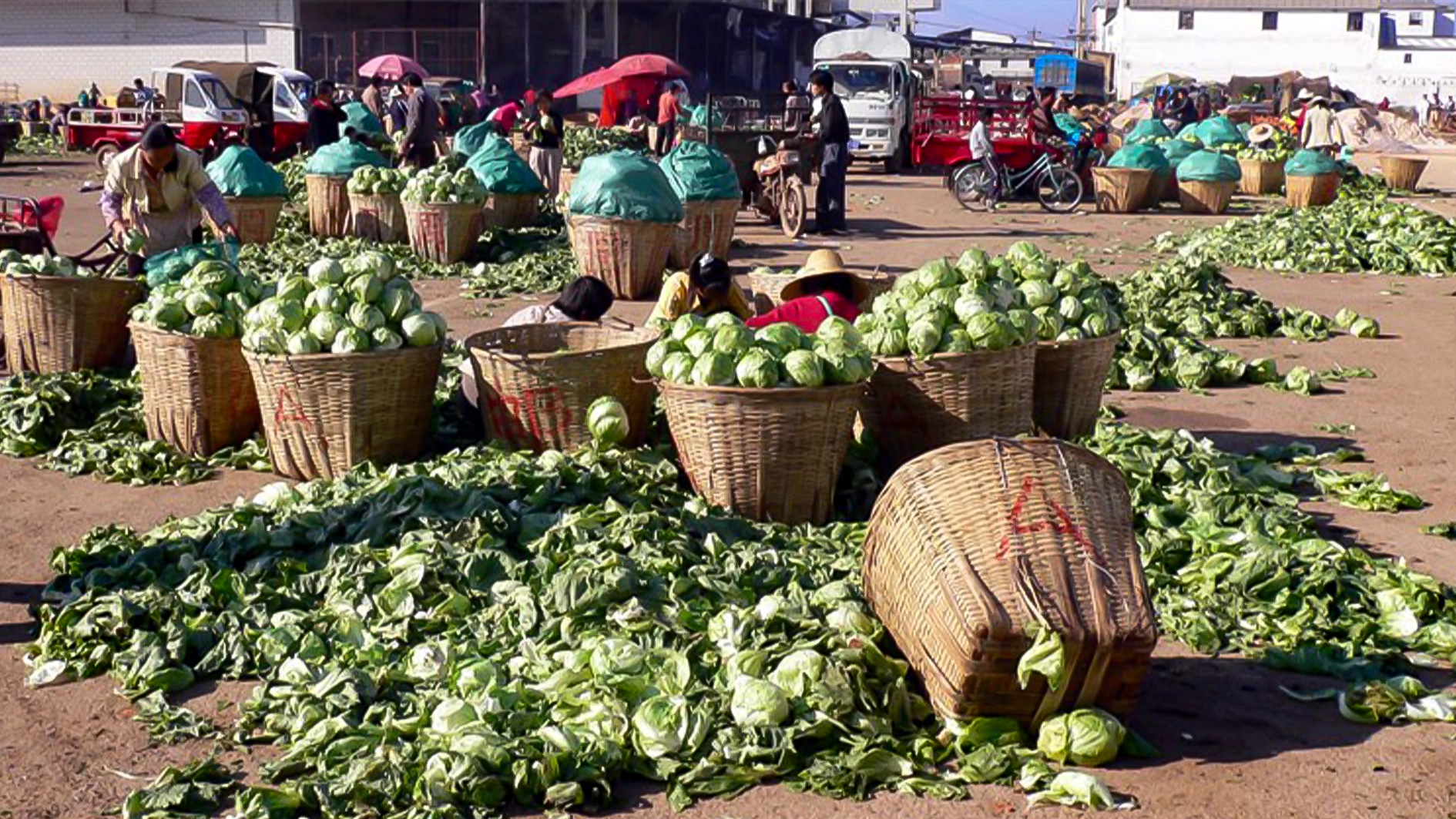
How a country facing dire food shortages and rising cost-of-living haemorrhages roughly 38 million tonnes of its farm produce yearly (mostly at the post-harvest stage) while still claiming to focus on achieving food security is the stuff that legends are made of. With knee-jerk policies and programmes in place of proven ones aimed at strengthening zero-waste food systems, ENO-ABASI SUNDAY reports that supply chain inefficiencies, including poor packaging and handling, heat and lengthy transit times in non-refrigerated trucks, routinely force fresh produce, especially fruits and vegetables, to putrefy. The worsening situation, which constitutes a direct threat to national food security and economic stability, contributes to infant mortality and worsens Severe Acute Malnutrition (SAM) as the country leads Africa in food wastage.
Rarely does a morning go by without a fleet of rickety, weather-beaten, open-air trucks snaking through the streets of Lagos State into the Mile 12 International Market, where their content – assorted agricultural produce, including fresh fruits, vegetables and grains – is emptied routinely.
Among other things, these articulated vehicles bear tomatoes compressed by their own weight, habanero peppers suffocating under the sweltering tropical sun, and several tonnes of spinach already yellowing due to natural leaf senescence and rapid chlorophyll breakdown from detachment from root systems.
Since these farm products have made their way through the LAKAJI Corridor (a transport route that spans 10 Nigerian states: Lagos, Ogun, Oyo, Benue, Kogi, Kwara, Niger, Kaduna, Kano, and Katsina, which connects the high-density consumer and industrial markets in the South-West with the massive livestock and agricultural production zones in the North), by evening of the arrival day, small heaps of rotten produce begin to dot the fringes of the market.
Markets like these in most parts of the South have, as a matter of fact, become multi-billion-naira graveyards of highly sought-after food that will never feed a single mouth. No thanks to this multi-day journey in non-conforming vehicles that turn a reasonable percentage of agricultural produce into puree or putrefied mass.
Three days after taking delivery of over 40 baskets of tomatoes, Al-Makura Ndanusa, a 43-year-old trader perched atop a wooden stool in a corner of the Mile 12 Market, found himself doing a mental calculation of the methane-belching heaps that some of his wares had become due to poor packaging/handling, heat and lengthy transit times on pothole-infested roads, which turned fresh produce into waste.

“The market value of each of these baskets of tomatoes that you are seeing here is N120, 000,” he told The Guardian a couple of weeks ago. “After sifting the bad ones, it ran into about four baskets. Now, if we are to do the mathematics, that is N480,000, but since they have been partially and seriously damaged, you can never sell the four baskets for half the actual price. The best you can get is either a quarter of the price, or slightly above that. What that means is that I would labour to sell both the good and the bad ones while praying to cover the cost of purchase,” Ndanusa lamented as he watched his wares liquefy.
Across Lagos State alone, thousands of families are either skipping dinner or settling for less nutritious alternatives because the prices of a basket of tomatoes, a basket of pepper, and bags of onions have tripled and spiralled out of the poor’s reach.
While Ndanusa struggles to come to terms with his losses in the Mile 12 Market, at Ojuwoye Market, which is centrally located off the busy Agege Motor Road, in the Mushin area of Lagos State, Madam Olabisi Ogunyinka has carefully arranged her fungus-infested tomatoes, which she calls “ata esha,” in small bowls waiting for the arrival of their buyers.
Ogunyinka, who has been in the trade for over three decades, said that the never-before-seen rising cost-of-living crisis has contributed to heavy losses experienced by perishable-item sellers “because even the rotten tomatoes are still ‘expensive’ to many buyers, some of whom shop for alternatives rather than patronise us.”
Similar scenarios play out at Ile-Epo Market, Abule Egba, and the Jakande Fruit Market located in Ketu, Lagos.
Up in the North Central, Benue State specifically, a tree crop farmer, Iornem Tenshack, told The Guardian that he has made peace with himself as he yearly watched heaps of ripe mangoes – his major source of livelihood – rot away in the sun-heated farmland before being carted away to markets many kilometres away, or being mangled in transit owing to the crater-filled stretches of rural roads that have remained unimproved for several years.
In the last two decades, the heartbeat of Nigeria’s food crisis has not been a lack of soil or sweat, but the unabating disappearance of 38 million tonnes of food grown that never made it to the dining table.
Daily, the looming impact of Post-Harvest Loss (PHL) and Food Wastage (FW) combine not only to threaten the country’s drive for food security, but also to empty billions of naira worth of farm input and resources into the drain.
While PHL occur at the beginning and middle of the food supply chain, that is, between the harvest and the moment the food reaches the retail market (that is on the farm, during transport, in storage, or during processing/packaging), FW, which refers to food that is fit for human consumption but is discarded, occurs at the end of the food supply chain. That is in retail markets/supermarkets, food service (restaurants), and at the household level.
While both PHL and FW refer to food that is produced but never eaten, the distinguishing factor in the Food Loss and Waste (FLW) umbrella situates where and why the loss occurs along the supply chain.
N5 trillion-worth of food rots yearly amid hunger and want
IT is in the midst of the above scenarios that recent data from the European Union (EU) and the National Bureau of Statistics (NBS) showcase Nigeria as leading Africa in food waste at 38 million tonnes annually, just as the FAO reports that roughly 27 to 34 million Nigerians face acute hunger.
According to the NBS, the country’s food inflation rate for May 2026 (year-on-year) stood at 16.96 per cent, up from 16.06 per cent in April 2026. This figure represents a significant shift in the checkered economic landscape.
Indeed, the fact that Nigeria is still discarding this amount of farm produce at a time when food prices are rising by over 14 per cent yearly, suggests a massive economic inefficiency on the part of the government as every tonne wasted is not just “burnt money” that could have otherwise stabilised the market and lowered costs for the average Nigerian household, but also an environmental issue being a direct threat to national food security and economic stability.
Food wastage in the country is not a novel development, but one that has increased progressively since 2014, while authorities tend to pay lip service to addressing the situation.
Further confirmation of the alarming level of food waste came last April during the commemoration of this year’s International Zero Waste Day, with the theme ‘Food Waste Reduction – Minimisation and Valorisation.’
At the event, the Deputy Ambassador, EU Delegation to Nigeria and ECOWAS, Zissimos Vergos, emphasised that Nigeria wastes roughly 38 million tonnes of food every year, more than any other country on the African continent.
While noting that globally, in 2022 alone, nearly one billion tonnes of food – almost one-fifth of all food available to consumers – was wasted, he added: “This is not just a loss of food; it is a squandering of precious resources, a missed opportunity to combat hunger, and a direct threat to our planet’s health.”
The deputy envoy further noted that food loss and waste are major drivers of environmental degradation, contributing up to 10 per cent of global greenhouse gas emissions, nearly five times the emissions of the entire aviation sector, and accounting for as much as 40 per cent of global methane emissions.
As these vital, micronutrient-dense foods rot away, families are forced to revert to cheap, starchy staples. The result is a compounding crisis of “hidden hunger”-malnutrition born from an empty stomach.
Wasted food versus human need
NIGERIA’S food insecurity and malnutrition challenge is dire. According to the United Nations Children’s Fund (UNICEF), seven per cent of Nigerian women of childbearing age suffer Severe Acute Malnutrition (SAM), just as about two million Nigerian children suffer from SAM, with only two out of every 10 affected children receiving treatment. Furthermore, malnutrition is a direct or underlying cause of 45 per cent of all deaths among children under five.
What makes the situation even more puzzling is the fact that in a country that is experiencing record food inflation and rising childhood mortality due to starvation, a N5 trillion logistics leak has gradually become an acceptable cost of doing business while mothers queue for scarce Ready-to-Use Therapeutic Food (RUTF) for their malnourished babies.
Broadly speaking, an estimated 172 million Nigerians cannot afford a healthy diet, representing approximately 78.7 per cent of the population. This is viewed from the prism of extreme deficits – those facing critical, acute nutritional emergencies – and the numbers span several vulnerable groups based on data from the United Nations Office for the Coordination of Humanitarian Affairs (OCHA) and the NBS.
However, to make sense of the volume of food wastage, an average adult consumes roughly 180 kg to 250 kg of food per year (depending on the caloric density of a diet heavily reliant on local grains and starchy tubers like yam and cassava).
Using a conservative baseline of 200 kg (0.2 tonnes) of food per person, per year, the calculation reveals that the 38 million tonnes of food wasted could theoretically feed 190 million people for an entire year. Even if strict processing, moisture loss, and non-edible parts (like peels and bones) and slash that efficiency in half are factored in, the remaining food could still comfortably feed 95 million people.
A recent General Household Survey (GHS) Panel report has it that the prevalence of food shortages varies significantly across the country’s six geopolitical zones. The data, which confirmed that 37.0 per cent of Nigerian households experienced food shortages over a 12-month period, indicated that North-East is in the lead with 53.0 per cent; South-South: 42.8 per cent; South-East: 42.7 per cent; South-West: 33.0 per cent; North-West: 31.3 per cent; North-Central: 25.7 per cent and national: 37.0 per cent.
Absence of cold chain, failure to promote sustainable consumption…
OVER the years, poor rural road networks, epileptic power supply and the absence of cold chain hubs, among others, have constituted major drivers of food wastage, just as the country’s cold-chain infrastructure deficit represents an untapped $10 billion investment opportunity.
Other major factors that facilitate food loss and waste in the country include dearth of industrial food processing and packaging capabilities, which prevent the conversion of excess seasonal harvests into shelf-stable goods, poor meal planning, over-purchasing, and the improper storage of leftovers in urban areas as well as fragmented supply chains and market volatility, which often lead to geographic mismatch, causing food to go unsold and spoil in local rural markets while urban centres experience shortages.
While innovative private-sector actors are piloting solar-powered cooling hubs in major northern and southern markets, these micro-level solutions are drops in an ocean of infrastructural deficit.
Added to these layers of problems is consumer behaviour for agricultural commodities in Nigeria, which is quite different. In many other climes, especially in Europe, grocery stores or supermarkets sell the bulk of these, as opposed to what obtains in Nigeria.
Recently, the UN Humanitarian Country Team in New York City, United States, said that “Nearly one in seven people, that is 35 million people nationwide in Nigeria, are likely to face acute food insecurity during this year’s lean season, which runs from June to August.”
The UN said the latest report makes Nigeria one of the world’s largest hunger crises, with the burden falling overwhelmingly in the northern part of the country.
Historically, investments in rural roads, storage, and cold chains across Nigeria have been highly fragmented and largely ineffective at moving the needle nationally.
Govt’s efforts to curb food wastage tepid, sloppy
WHILE 2026 data from the Rome Business School and the Nigerian Chartered Institute of Logistics and Transport (CILT) also confirm that the country loses between 35 million and 40 million metric tonnes of food yearly, not many are convinced that the government is doing enough to mitigate the economic waste.
However, in September 2025, at the Africa Food Systems Forum in Partnership with the Alliance for a Green Revolution in Africa (AGRA), the Federal Government unveiled the Nigeria Post-harvest Systems Transformation Programme (NiPHaST), to ensure a resilient, efficient, and increase harvest handling and storage system that reduces losses, enhance incomes, as well as achieve food sovereignty, according to the Minister of Agriculture and Food Security, Senator Abubakar Kyari
Among the key milestones of the initiative managed by the Federal Ministry of Agriculture and Food Security are construction of community warehouses, cold rooms, and climate-smart metal silos; directing 85 per cent of interventions to smallholder farmers, 10 per cent to secondary processing, and five per cent to tertiary linkages like commodity exchanges, as well as unlocking private sector investment to stabilise food prices and boost agricultural exports. But nearly one year after its launch, and nine months to the end of the Bola Ahmed Tinubu-led administration, the initiative is neither here nor there.
On Sunday May 17, this year, The Guardian reached out to Head of Information Department, Federal Ministry of Agriculture and Food Security, Mr Ikemefuna Ezeaja, to shed light on Nigeria Circular Economy Roadmap, the establishment of the Interministerial Circular Economy Committee, as well as the push to develop a National Plastic Waste Management Regulation, which are gestures meant to bring about structural shifts and a solution to the menace.
The ministry was also to enumerate collaborations the government is building with stakeholders to reduce food waste, lower pollution and greenhouse gas emissions, and conserve valuable resources, as well as how worried Nigerians should be, given the country’s key role in food waste on the continent. But after two months, the ministry’s spokesperson has yet to respond, but managed to send the minister’s speech at an event that had very little to do with the information requested.
In April this year, the Senate, while fast-tracking the National Food Reserve Agency (Establishment) Bill, 2026 (SB 139), lampooned the ministry for poor management of the Strategic Grains Reserves, insisting that its management of the Strategic Grain Reserves has been ‘ad-hoc’ and lacks institutional coordination.
If the ministry’s current structures were effective, many ask, “why is the National Assembly forcing a legislative overhaul to fix the country’s emergency food deployment systems?”
Asked how troubled the future of Nigeria’s food system is, if the country cannot determine how much value it can keep as opposed to how much food it can produce, Michael Akinsete, the co-founder and Chief Marketing Officer at Ecotutu, a cleantech company enabling businesses in the agriculture and health value chain said that for decades, “Nigeria’s agricultural agenda has focused largely on increasing production; we celebrate hectares cultivated, tonnes harvested, and bumper harvests, yet we pay far less attention to what happens after harvest. That is where one of our biggest challenges lies.
“The future of Nigeria’s food system will not be determined solely by how much food we produce, but by how much of that food we successfully preserve and deliver to consumers. According to the Food and Agriculture Organisation (FAO), about one-third of all food produced globally is either lost or wasted every year. In Nigeria, estimates suggest that 40–50 per cent of perishable agricultural produce is lost before it reaches consumers, translating into an economic loss of over N3.5 trillion annually. Every basket of tomatoes, peppers, vegetables, fruits, fish, or dairy products that spoils represents wasted land, water, energy, labour, and capital. It also means reduced incomes for farmers, higher prices for consumers, and lower returns for investors.
“So, the question Nigeria should be asking is no longer simply, ‘How much food did we produce?’ Rather, it should be, ‘How much food did we preserve, transport efficiently, sell, and ultimately consume? Agricultural success should therefore be measured not only by production volumes, but also by value retention, shelf-life extension, farmer profitability, and reduced post-harvest losses. Until we make that shift, we will continue producing more while losing too much of what we produce.”
The paradox where farmers produce more food, but consumers continue to face high food prices and limited availability of fresh produce is a troubling issue, but Akinsete believes that “containing food insecurity is not simply a production issue; it is also a preservation and distribution issue. When almost half of perishable produce is lost, the country is forced into a cycle of scarcity despite increased production. The consequences extend beyond agriculture as farmers are forced to sell immediately after harvest at very low prices to avoid spoilage. While investors struggle to achieve expected returns, consumers pay significantly more because less food eventually reaches the market. At the same time, food waste contributes to unnecessary greenhouse gas emissions, making it both an economic and environmental challenge.”
He emphasised: “If Nigeria is serious about achieving food security for a population now estimated at over 240 million people, reducing post-harvest losses must become a national priority. Every kilogram of food saved improves food availability, stabilises prices, increases farmer incomes, strengthens investor confidence, and reduces pressure on natural resources.”
Nigeria losing forex, war against food insecurity
ONE of those who believe that Nigeria is not only losing the war against food insecurity when food wastage thrives, but is also losing foreign exchange that would have accrued to the country if the country’s cold hub and export infrastructure were to be in place, is the Chief Executive Officer (CEO) of Produce Export Development Alliance (PEDA), Mr Adetiloye Aiyeola.
But are there quick fixes for this decade-long problem? He responded in the negative. His words: “I do not believe there is a single quick fix, but there are several actions that can begin delivering results within 12 to 24 months. The first is to stop treating cold chain infrastructure as purely an agricultural issue. It is an economic infrastructure issue. Every tonne of fresh produce that spoils is foreign exchange lost, jobs lost, and income lost for farmers and exporters.
“Secondly, we need strategically located aggregation and cold storage hubs close to production clusters rather than concentrating investments only in major cities. Produce should be cooled within hours of harvest, not after travelling hundreds of kilometres. We should also prioritise export corridors. For example, if states with high production of mangoes, avocados, vegetables, or berries are connected to functional cold chain facilities and efficient logistics to airports and seaports, exports can increase significantly without waiting for nationwide infrastructure.
“Finally, the government should encourage private investment through tax incentives, concessional financing, and long-term operating concessions. The government does not necessarily need to own every cold room. It needs to create an environment where businesses can invest confidently and recover their capital. The reality is that Nigeria already produces enough. Our biggest challenge is preserving quality long enough to reach profitable markets.”
Since up to 55 per cent of Nigeria’s fruits and vegetables are lost between the farm gate and the market because of improper crating and a severe deficit in refrigeration as state-run infrastructure fail to deliver the needed succour, Aiyeola also canvassed the treatment of post-harvest loss as a national economic emergency because it affects food security, export earnings, inflation, farmer incomes, and employment all at the same time.
With operational efficiency, technology, maintenance, customer service, and commercial discipline that the private sector brings, Aiyeola insists the government can provide land, enabling policies, infrastructure support, and financing incentives needed to ramp up needed infrastructure since many government-owned facilities fail because they are often built without sustainable operating models.
‘National integrated cold chain blueprint built around LAKAJI, other strategic agric corridor imperative’
WEARING his dual hats as Country Director for the World Agriculture Forum (WAF) and President of the Organisation for Technology Advancement of Cold Chain in West Africa (OTACCWA) said that Nigeria can fundamentally shift its mindset and capital allocation from just “growing more food” to “preserving what is grown”?
“This it can do by transitioning from a ‘grow more food’ strategy to a ‘grow, preserve, transport, process and market’ strategy. Cold chain infrastructure should be treated as essential national infrastructure, just like roads, railways, ports and electricity. If significant public or private investment became available, I would recommend a national integrated cold chain blueprint built around strategic agricultural corridors, beginning with the LAKAJI Corridor because it connects some of Nigeria’s largest food-producing and consumer markets. Nigeria must establish a National Cold Chain Infrastructure Development Programme with clear investment targets, measurable implementation milestones, and coordinated participation from the Federal Government, state governments, development partners, and private investors.”
Isong continued: “Cold chain investment therefore serves as both an agricultural and an anti-inflation intervention. Reducing post-harvest losses increases effective food supply without requiring equivalent increases in cultivated land. Lower losses improve market availability, moderate seasonal price volatility, increase farmer incomes and enhance national food security.”
“Under the AfCFTA, African markets are becoming increasingly integrated and competitive. Buyers demand consistent quality, food safety standards, traceability and reliable delivery schedules. Without a modern cold chain, Nigerian exporters struggle to satisfy these requirements consistently. As a result, neighbouring countries with stronger cold chain infrastructure often gain competitive advantages in regional markets, even where Nigeria has greater production capacity. Developing a modern cold chain ecosystem would significantly improve Nigeria’s ability to export fresh fruits, vegetables, fish, meat, dairy products, flowers and pharmaceuticals while supporting compliance with international quality and food safety standards,” the WAF boss stated.
Nigeria adopted a National Cold Chain Policy in 2023 to stimulate private investment and improve storage standards. But its implementation has continued to face challenges from energy insecurity, high diesel costs and rising electricity tariffs. The OTACCWA president noted that the National Cold Chain Policy was an important and timely policy initiative because it formally recognised the strategic importance of temperature-controlled logistics to Nigeria’s food system. “However, policy adoption is only the beginning. Implementation remains uneven, and significant work is still required to translate policy objectives into nationwide infrastructure and investment.
“The principal constraints are well known. Reliable electricity remains inadequate in many agricultural production areas. Diesel costs have increased operating expenses considerably. Financing for cold chain investments remains limited, particularly for small and medium-sized enterprises. In addition, many operators continue to face high capital costs and limited access to affordable long-term finance. I would therefore describe implementation as progressing, but more slowly than the scale of Nigeria’s food security challenge requires. The policy framework is in place. The priority now is accelerated execution supported by coordinated public-private partnerships, but majorly private.”
Akinsete agrees with Isong, but stressed that innovative financing should be made available for farmers, cooperatives, aggregators, and agribusinesses to adopt post-harvest technologies. Blended finance, equipment leasing, concessional loans, and targeted subsidies can accelerate adoption while reducing the financial burden on smallholder farmers.
“Also, Nigeria must improve rural logistics by investing in feeder roads, transport infrastructure, and organised aggregation systems that shorten the time between harvest and market. Importantly, we need better data. We cannot effectively manage what we do not measure. Nigeria should institutionalise the tracking of post-harvest losses across commodities and regions, while expanding agricultural performance indicators beyond production to include food preserved, value retained, shelf-life extended, and farmer income.

