 Follow Us on Google News
 Follow Us on Google Discover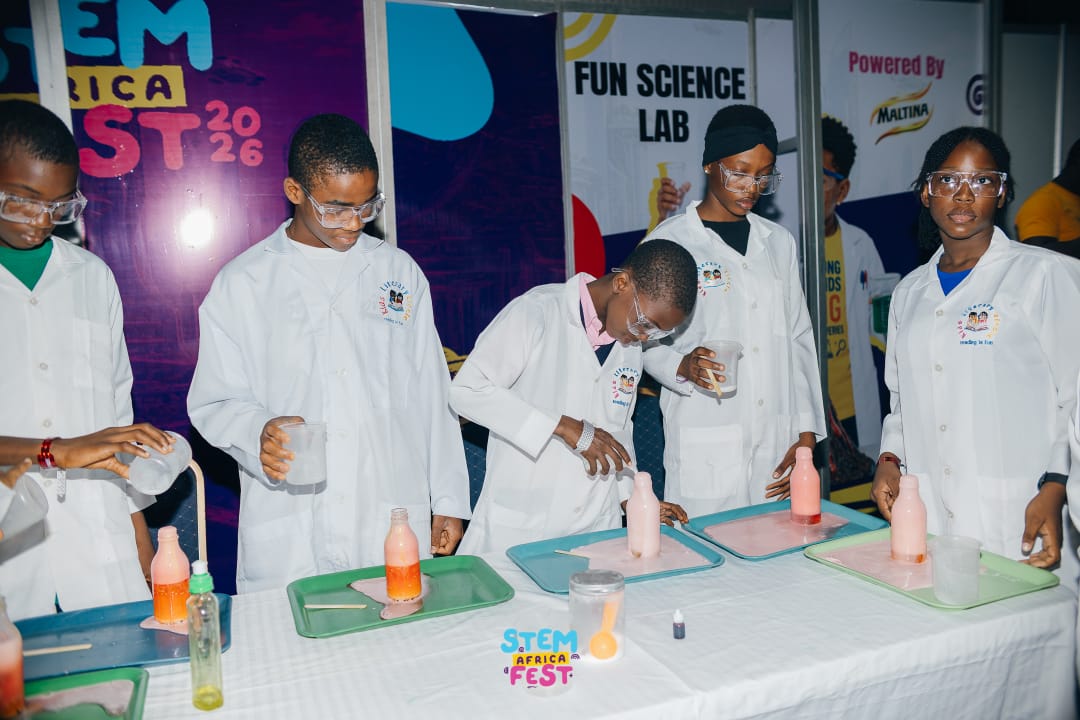
STEM Africa Fest, an annual science, technology, engineering and mathematics (STEM) education event designed to expose children to hands-on learning, returned to Lagos yesterday, with organisers urging greater integration of practical STEM education into Nigeria’s school curriculum to prepare young people for future careers.
The organisers said the initiative has reached over 25,000 children across Africa in six years, renewing calls for greater integration of practical STEM education into Nigeria’s school curriculum.
The festival, which began in 2021 during the COVID-19 lockdown, has expanded beyond Nigeria to Ghana, Sierra Leone, The Gambia, Zambia, Rwanda and Kenya, promoting experiential learning through science, technology, engineering, arts and mathematics (STEAM). The sixth edition which held in Lagos, attracted about 3,500 children and parents from all over.
Conveners, Titi Adewusi and Jadesola Adedeji, said the initiative was conceived to address the gap between classroom theory and practical learning, giving children opportunities to build, experiment and interact with emerging technologies.
According to Adewusi, this year’s theme, “Building Future Innovators”, reflects the organisers’ vision of nurturing Africa’s next generation of innovators, problem-solvers and creative thinkers.
“Children are learning the theories and we wanted to bring the real thing, hands-on. If you’re teaching a child about 3D printing, we want them to actually experience it. If you’re teaching a child about building robots or AI, we wanted them to experience it,” she said.

Adedeji, said the idea for the festival emerged from a shared desire to make science education more engaging after discussions between the founders several years ago.
She said the maiden edition, held during the pandemic, attracted over 1,000 participants globally, while the first physical edition recorded over 6,000 attendees.
They identified funding, stakeholder mobilisation and expanding the festival to other locations as some of the challenges encountered since its inception. They noted that increasing demand from different states and African countries had prompted them to adopt a partnership model that allows collaborators replicate the programme using an established framework.
They also urged governments at all levels to strengthen support for STEM education by integrating practical learning into school curricula and partnering with private organisations to improve access to science and technology education.
Adewusi said they have developed a STEM curriculum that is being implemented in some schools and expressed readiness to collaborate with the government to expand its adoption in line with the United Nations Sustainable Development Goal on quality education.
Adedeji added that government support should go beyond funding to include curriculum development, teacher training and institutional backing for STEM-focused initiatives.
Representing Access Holdings, Programme Manager for Sustainability, Ikechukwu Iheagwam, said the company’s continued support for the festival aligns with its commitment to advancing education and technology.
He said exposing children to emerging technologies such as artificial intelligence and robotics would better prepare them for the future, adding that private sector participation should complement government efforts in improving STEM education.
Some pupils who attended the festival said the practical sessions strengthened their interest in science and technology.
A student of Court Hill College, Opebi, Jason Lawal, said he participated in activities including a Rubik’s Cube challenge and an artificial intelligence masterclass where participants created short AI-generated animations. Another student of Greater Ecstasy High School, Iyana-Ipaja, Fatima Namama said attending the festival over the years had deepened her interest in laboratory science and technology. She called for wider integration of STEM education into the school curriculum and more opportunities for pupils to participate in similar learning events.
The organisers said the festival’s impact extends beyond attendance figures, noting that some former participants have returned in recent years as exhibitors in coding and robotics, reflecting its contribution to nurturing future innovators.

