 Follow Us on Google News
 Follow Us on Google Discover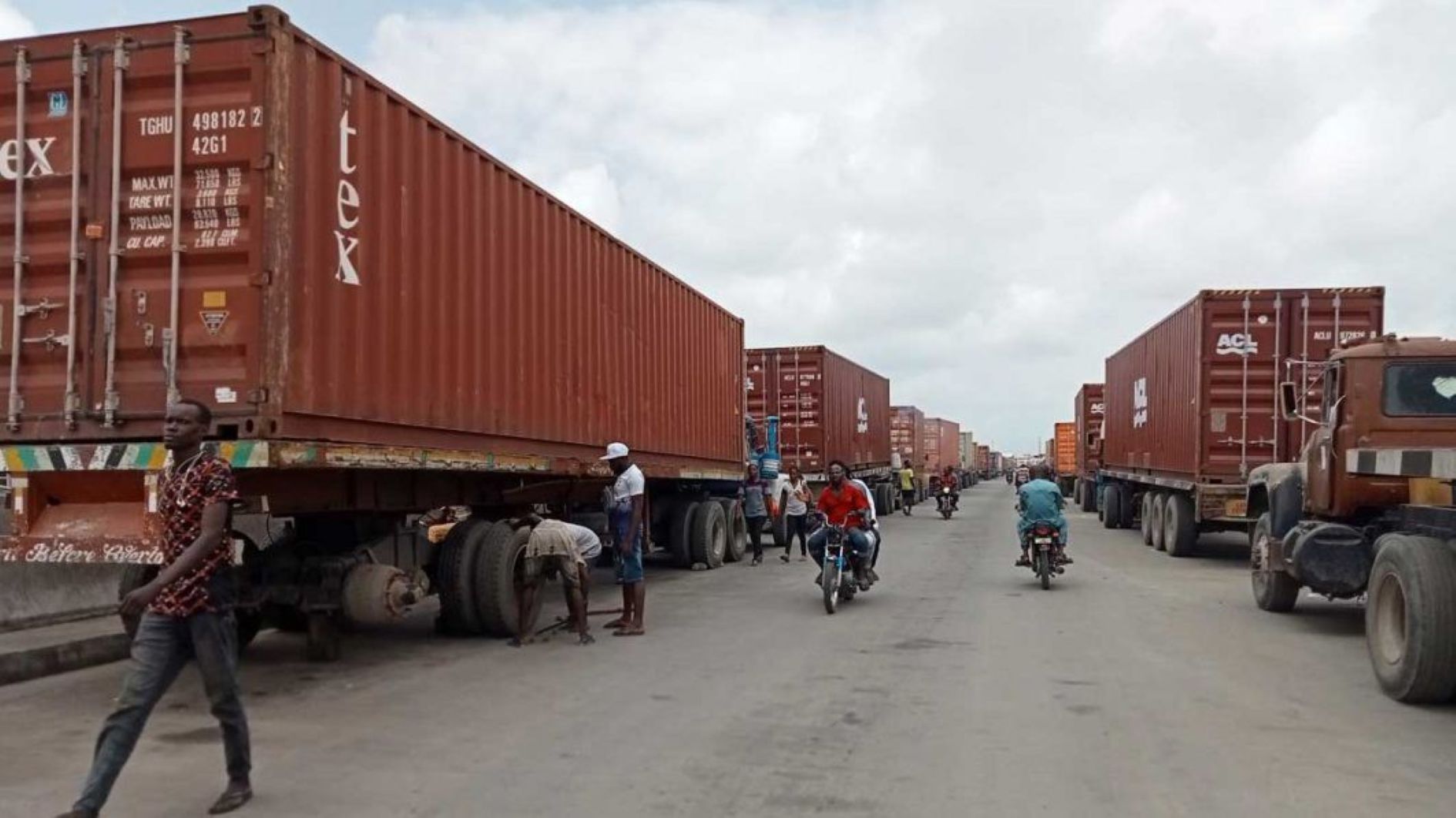
The recurring gridlock caused by fuel tankers and articulated trucks along the Apapa port corridor is, once again, taking a heavy toll on residents, businesses, commuters and the economy, with stakeholders warning that the situation could worsen unless authorities enforce stricter traffic management measures and fully integrate tanker operators into the electronic call-up system.
The congestion, which stretches across major access roads leading to Apapa and Tin Can Island ports, leaves thousands of commuters stranded for hours daily, disrupts business activities, delays cargo movement and increases the risk of road crashes and environmental hazards.
Beyond the frustration of motorists, the gridlock has become a source of economic losses, as manufacturers, freight forwarders, port users, and logistics operators struggle to meet delivery schedules, while businesses along the corridor record declining patronage.
Commenting on the situation and its effects on tanker companies, the National Secretary General of the Association of Maritime Truck Owners (AMATO), Muhammed Sani, attributed the congestion to tanker drivers forming multiple queues instead of maintaining a single lane while attempting to access fuel depots.
According to him, container trucks heading to the ports are no longer the major cause of traffic around Apapa, stressing that the bottleneck is now concentrated around depot entry points where tanker drivers abandon traffic discipline.
Sani urged the government to immediately onboard tanker operators into the electronic call-up system similar to port-bound trucks, saying such a move would ensure that tankers are scheduled from designated holding bays before proceeding to depots.

He said: “They are forming multiple queues instead of following a single lane, and that causes obstruction for trucks going to Apapa and Tin Can ports.
“The earlier this is done, the better. Tankers should be coming from freight parks where they will be scheduled to access their respective depots without blocking the roads or disrupting port operations.”
Sani also appealed to tanker operators to introduce stronger internal traffic control measures and compel their drivers to comply with the single-lane policy.
Also speaking, Secretary of the Council of Maritime Transport Unions and Associations (COMTUA), Godwin Ikeji, alleged that the persistent traffic crisis reflected a lack of political will to resolve the problem permanently.
Having worked in the transport sector for more than three decades, he argued that practical solutions had been proposed repeatedly over the years but were never fully implemented.
According to him, shipping companies should establish off-dock holding facilities for empty containers rather than allowing port roads to become clogged with trucks waiting to return empty containers.
“I will tell you frankly that either the system is not interested in eradicating it, or some people are benefiting from it because it has become a recurring decimal.
“The ports are too small to accommodate all the empty containers. Shipping lines should provide holding bays outside the ports. There are lands available. Nigeria should not continue to bear the burden of poor logistics planning by foreign shipping companies,” he said.
He called for a holistic approach that considers not only shipping companies but also truck owners, transport unions, businesses and ordinary road users affected by the congestion.
Responding to concerns over the recurring gridlock, the Lagos State Traffic Management Authority (LASTMA) said it has continued to deploy a multi-dimensional strategy that combines intensive traffic control, enforcement, technology, and inter-agency collaboration to keep traffic moving along the Apapa corridor.
Director of Public Affairs and Enlightenment Department of LASTMA, Adebayo Taofiq, in an interview with The Guardian, said the Apapa corridor was one of Nigeria’s most strategic transport routes, serving the nation’s busiest seaports and accommodating thousands of heavy-duty trucks daily.
He said LASTMA had intensified 24-hour deployment of traffic officers at critical points from Mile 2 through Ijora, Apapa, Wharf Road, and Tin Can Island to regulate traffic, prevent obstructions and respond rapidly to incidents before they develop into prolonged gridlock.
Taofiq added that the agency works closely with the Nigerian Ports Authority (NPA), Lagos State Ministry of Transportation, Nigeria Police Force, Federal Road Safety Corps (FRSC) and other major stakeholders to enforce compliance with the electronic call-up (Eto) system and discourage indiscriminate parking of articulated vehicles on port access roads.
According to him, LASTMA was also deploying technology, including the traffic management solution, automatic number plate recognition cameras, body-worn cameras and real-time traffic monitoring systems, to detect congestion and improve operational efficiency.
He said emergency response teams remained on standby to quickly remove broken-down vehicles and clear accident scenes to minimise secondary traffic congestion.
While acknowledging that heavy port activities continued to place enormous pressure on the Apapa corridor, Taofiq said LASTMA remained committed to strengthening stakeholder engagement and deploying innovative traffic management strategies to improve road safety and reduce travel delays.

